


Age as a criterion for setting priorities in health care? A survey of the German public view
- PMID: 21904600
- PMCID: PMC3164130
- DOI: 10.1371/journal.pone.0023930
Age as a criterion for setting priorities in health care? A survey of the German public view
Abstract
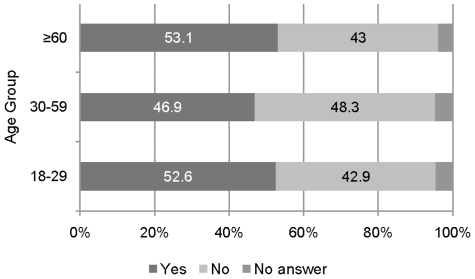
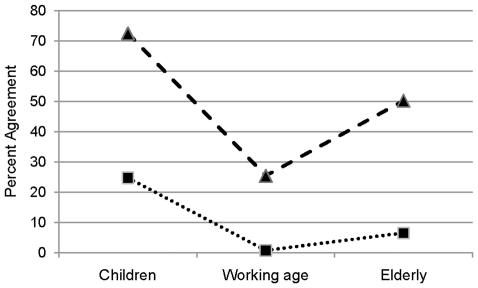
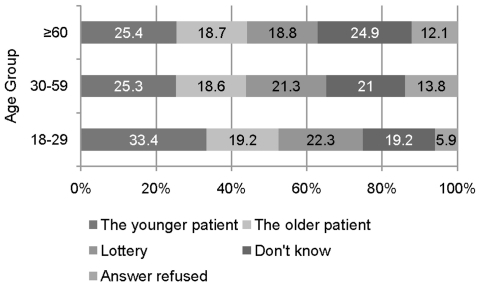
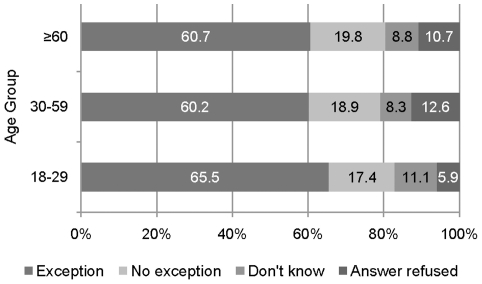
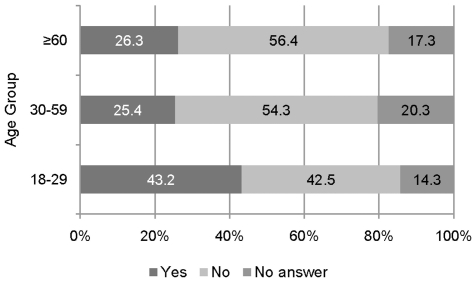
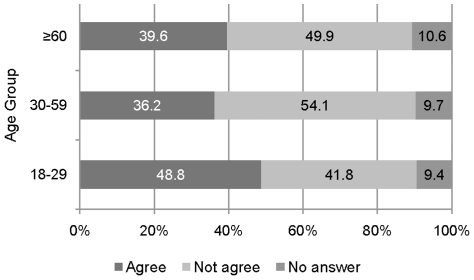
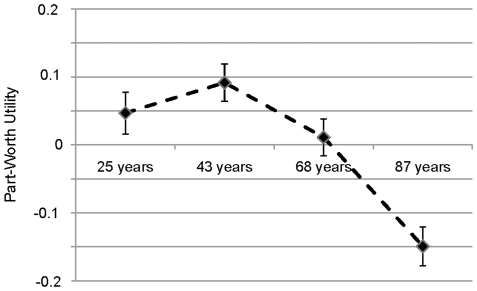
Although the German health care system has budget constraints similar to many other countries worldwide, a discussion on prioritization has not gained the attention of the public yet. To probe the acceptance of priority setting in medicine, a quantitative survey representative for the German public (n = 2031) was conducted. Here we focus on the results for age, a highly disputed criterion for prioritizing medical services. This criterion was investigated using different types of questionnaire items, from abstract age-related questions to health care scenarios, and discrete choice settings, all performed within the same sample. Several explanatory variables were included to account for differences in preference; in particular, interviewee's own age but also his or her sex, socioeconomic status, and health status. There is little evidence that the German public accepts age as a criterion to prioritize health care services.
Conflict of interest statement
Figures
References
-
- Williams A. Intergenerational equity: an exploration of the “Fair Innings” argument. Health Econ. 1997;6:117–132. - PubMed
-
- Tsuchiya A. Age-related preferences and age weighting health benefits. Soc Sci Med. 1999;48:267–276. - PubMed
-
- Murray CJ, Lopez AD, editors. Global Comparative Assessments in the Health Sector: Disease Burden, Expenditures and Intervention Packages. WHO; 1994. 196
-
- Tsuchiya A, Dolan P, Shaw R. Measuring people's preferences regarding ageism in health: some methodological issues and some fresh evidence. Soc Sci Med. 2003;57:687–696. - PubMed
-
- Busschbach JJ, Hessing DJ, de Charro FT. The utility of health at different stages in life: a quantitative approach. Soc Sci Med. 1993;37:153–158. - PubMed
Publication types
MeSH terms
LinkOut - more resources
Full Text Sources
Medical
