


Effects of SDF-1-CXCR4 signaling on microRNA expression and tumorigenesis in estrogen receptor-alpha (ER-α)-positive breast cancer cells
- PMID: 21906588
- PMCID: PMC3334320
- DOI: 10.1016/j.yexcr.2011.08.016
Effects of SDF-1-CXCR4 signaling on microRNA expression and tumorigenesis in estrogen receptor-alpha (ER-α)-positive breast cancer cells
Abstract
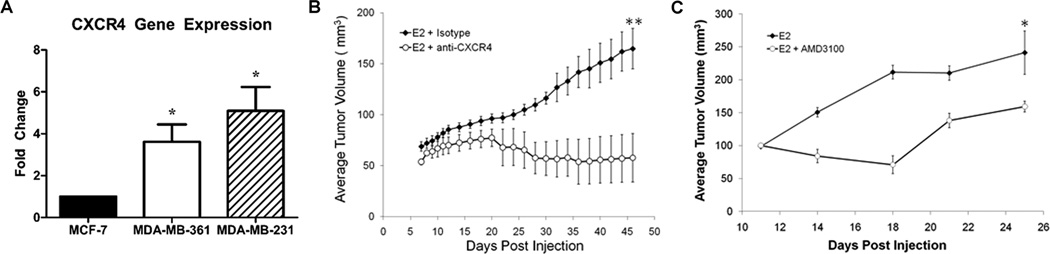
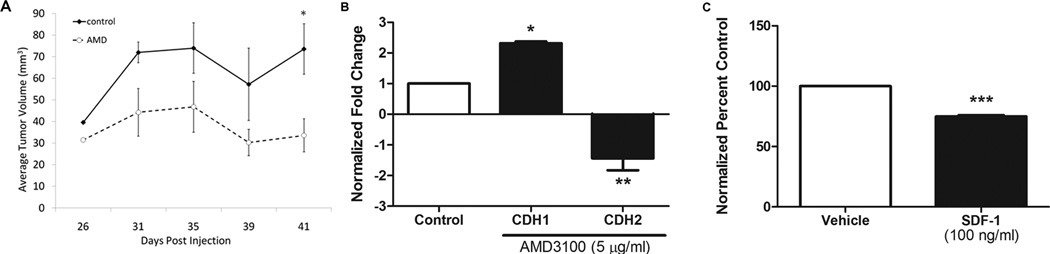
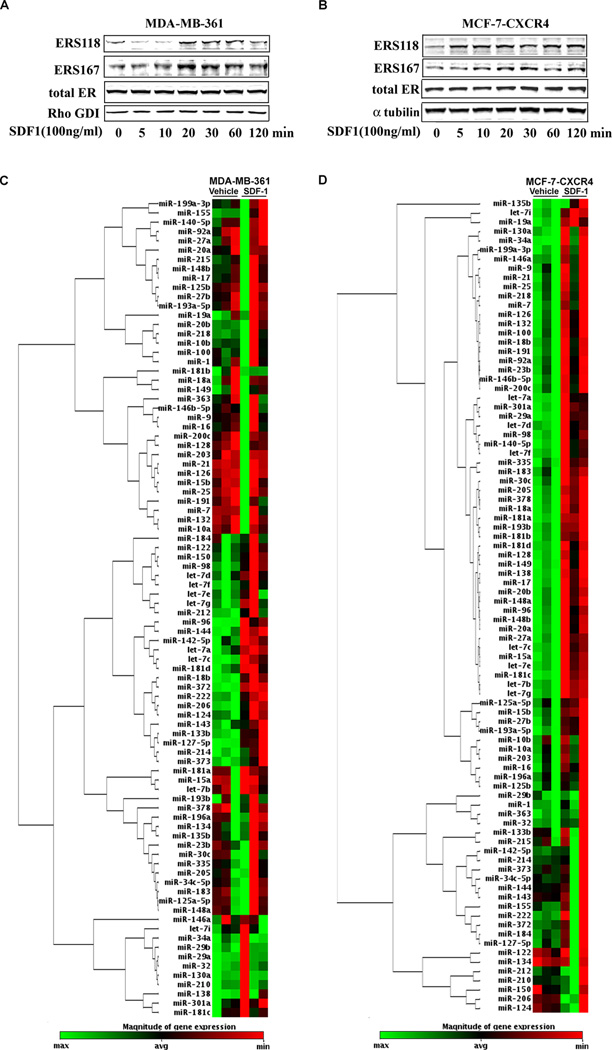
The majority of breast cancer cases ultimately become unresponsive to endocrine therapies, and this progression of breast cancer from hormone-responsive to hormone-independent represents an area in need of further research. Additionally, hormone-independent carcinomas are characterized as being more aggressive and metastatic, key features of more advanced disease. Having previously shown the ability of the stromal-cell derived factor-1 (SDF-1)-CXCR4 signaling axis to promote primary tumorigenesis and hormone independence by overexpressing CXCR4 in MCF-7 cells, in this study we further examined the role of SDF-1/CXCR4 in the endogenously CXCR4-positive, estrogen receptor α (ER-α)-positive breast carcinoma cell line, MDA-MB-361. In addition to regulating estrogen-induced and hormone-independent tumor growth, CXCR4 signaling stimulated the epithelial-to-mesenchymal transition, evidenced by decreased CDH1 expression following SDF-1 treatment. Furthermore, inhibition of CXCR4 with the small molecule inhibitor AMD3100 induced CDH1 gene expression and inhibited CDH2 gene expression in MDA-MB-361 cells. Further, exogenous SDF-1 treatment induced ER-α-phosphorylation in both MDA-MB-361 and MCF-7-CXCR4 cells, demonstrating ligand-independent activation of ER-α through CXCR4 crosstalk. qPCR microRNA array analyses of the MDA-MB-361 and MCF-7-CXCR4 cell lines revealed changes in microRNA expression profiles induced by SDF-1, consistent with a more advanced disease phenotype and further supporting our hypothesis that the SDF-1/CXCR4 signaling axis drives ER-α-positive breast cancer cells to a hormone independent and more aggressive phenotype. In this first demonstration of SDF-1-CXCR4-induced microRNAs in breast cancer, we suggest that this signaling axis may promote tumorigenesis via microRNA regulation. These findings represent future potential therapeutic targets for the treatment of hormone-independent and endocrine-resistant breast cancer.
Copyright © 2011 Elsevier Inc. All rights reserved.
Conflict of interest statement
The authors declare no conflicts of interest.
Figures
References
-
- Balkwill F. The significance of cancer cell expression of the chemokine receptor CXCR4. Seminars in cancer biology. 2004;14:171–179. - PubMed
-
- Muller A, Homey B, Soto H, Ge N, Catron D, Buchanan ME, McClanahan T, Murphy E, Yuan W, Wagner SN, Barrera JL, Mohar A, Verastegui E, Zlotnik A. Involvement of chemokine receptors in breast cancer metastasis. Nature. 2001;410:50–56. - PubMed
-
- Smith MC, Luker KE, Garbow JR, Prior JL, Jackson E, Piwnica-Worms D, Luker GD. CXCR4 regulates growth of both primary and metastatic breast cancer. Cancer research. 2004;64:8604–8612. - PubMed
-
- Jordan VC, Gottardis MM, Robinson SP, Friedl A. Immune-deficient animals to study "hormone-dependent" breast and endometrial cancer. Journal of steroid biochemistry. 1989;34:169–176. - PubMed
Publication types
MeSH terms
Substances
Grants and funding
LinkOut - more resources
Full Text Sources
Medical
Research Materials
Miscellaneous
