


Signaling pathways underlying the rapid antidepressant actions of ketamine
- PMID: 21907221
- PMCID: PMC3195863
- DOI: 10.1016/j.neuropharm.2011.08.044
Signaling pathways underlying the rapid antidepressant actions of ketamine
Abstract
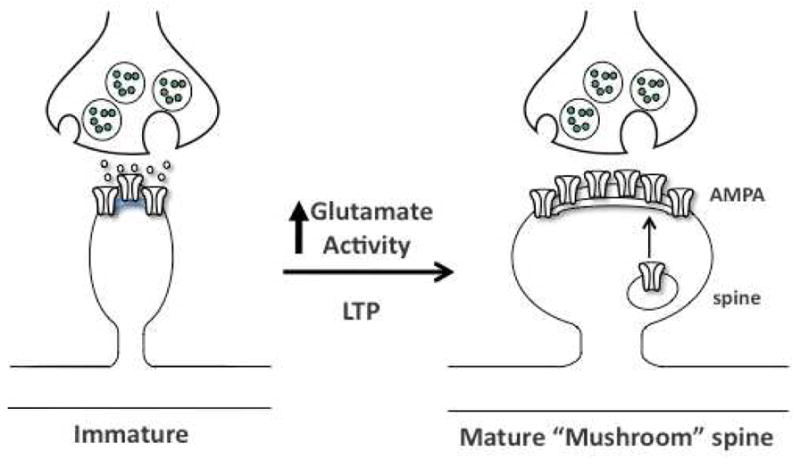
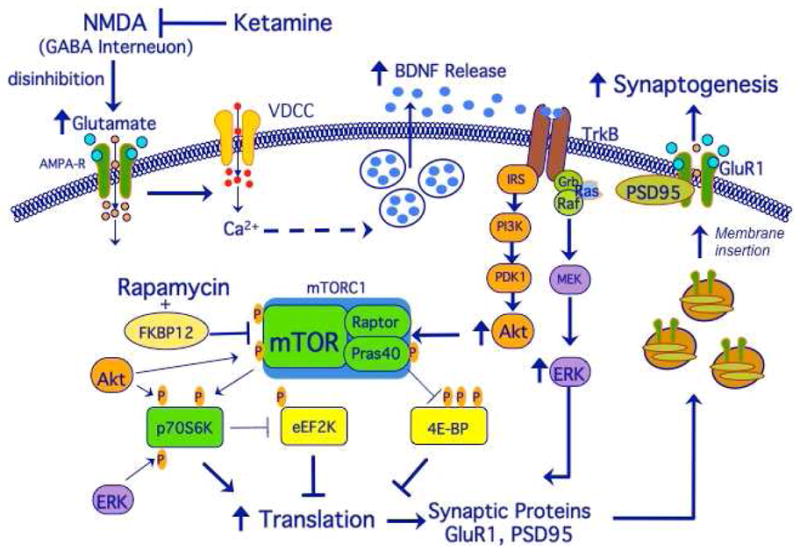
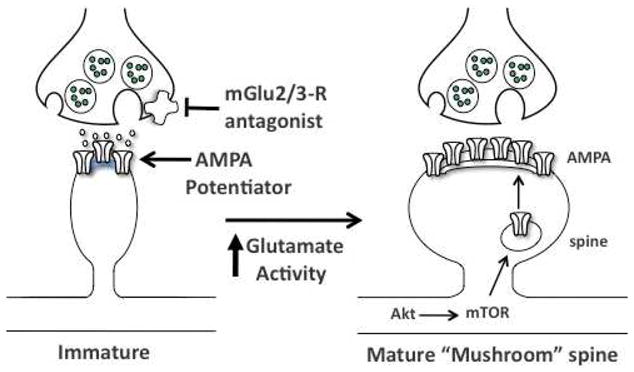
Currently available medications have significant limitations, most notably low response rate and time lag for treatment response. Recent clinical studies have demonstrated that ketamine, an NMDA receptor antagonist produces a rapid antidepressant response (within hours) and is effective in treatment resistant depressed patients. Molecular and cellular studies in rodent models demonstrate that ketamine rapidly increases synaptogenesis, including increased density and function of spine synapses, in the prefrontal cortex (PFC). Ketamine also produces rapid antidepressant actions in behavioral models of depression, and reverses the deficits in synapse number and behavior resulting from chronic stress exposure. These effects of ketamine are accompanied by stimulation of the mammalian target of rapamycin (mTOR), and increased levels of synaptic proteins. Together these studies indicate that ketamine rapidly reverses the atrophy of spines in the PFC and thereby causes a functional reconnection of neurons that underlies the rapid behavioral responses. These findings identify new targets for rapid acting antidepressants that are safer than ketamine. This article is part of a Special Issue entitled 'Anxiety and Depression'.
Copyright © 2011 Elsevier Ltd. All rights reserved.
Figures
References
-
- Arai A, Kessler M. Pharmacology of ampakine modulators: from AMPA receptors to synapses and behavior. Curr Drug Targets. 2007;8:583–602. - PubMed
-
- Arai A, Kessler M, Rogers G, Lynch G. Effects of the potent ampakine CX614 on hippocampal and recombinant AMPA receptors: interactions with cyclothiazide and GYKI 52466. Mol Pharmacol. 2000;58:802–813. - PubMed
-
- Bai J, Ramos RL, Ackman JB, Thomas AM, Lee RV, LoTurco JJ. RNAi reveals doublecortin is required for radial migration in rat neocortex. Nat Neurosci. 2003;6:1277–1283. - PubMed
-
- Behrens M, Ali SS, Dao DN, Lucero J, Shekhtman G, Quick KL, Dugan LL. Ketamine-induced loss of phenotype of fast-spiking interneurons is mediated by NADPH-oxidase. Science. 2007;318:1645–1647. - PubMed
Publication types
MeSH terms
Substances
Grants and funding
LinkOut - more resources
Full Text Sources
Other Literature Sources
Medical
Miscellaneous
