. 2011;6(8):e23808.
doi: 10.1371/journal.pone.0023808. Epub 2011 Aug 31.

Adult subependymal neural precursors, but not differentiated cells, undergo rapid cathodal migration in the presence of direct current electric fields

Affiliations

Adult subependymal neural precursors, but not differentiated cells, undergo rapid cathodal migration in the presence of direct current electric fields

Robart Babona-Pilipos et al. PLoS One. 2011.

Abstract

Background: The existence of neural stem and progenitor cells (together termed neural precursor cells) in the adult mammalian brain has sparked great interest in utilizing these cells for regenerative medicine strategies. Endogenous neural precursors within the adult forebrain subependyma can be activated following injury, resulting in their proliferation and migration toward lesion sites where they differentiate into neural cells. The administration of growth factors and immunomodulatory agents following injury augments this activation and has been shown to result in behavioural functional recovery following stroke.

Methods and findings: With the goal of enhancing neural precursor migration to facilitate the repair process we report that externally applied direct current electric fields induce rapid and directed cathodal migration of pure populations of undifferentiated adult subependyma-derived neural precursors. Using time-lapse imaging microscopy in vitro we performed an extensive single-cell kinematic analysis demonstrating that this galvanotactic phenomenon is a feature of undifferentiated precursors, and not differentiated phenotypes. Moreover, we have shown that the migratory response of the neural precursors is a direct effect of the electric field and not due to chemotactic gradients. We also identified that epidermal growth factor receptor (EGFR) signaling plays a role in the galvanotactic response as blocking EGFR significantly attenuates the migratory behaviour.

Conclusions: These findings suggest direct current electric fields may be implemented in endogenous repair paradigms to promote migration and tissue repair following neurotrauma.


Conflict of interest statement

Competing Interests: The authors have declared that no competing interests exist.

Figures

Figure 1
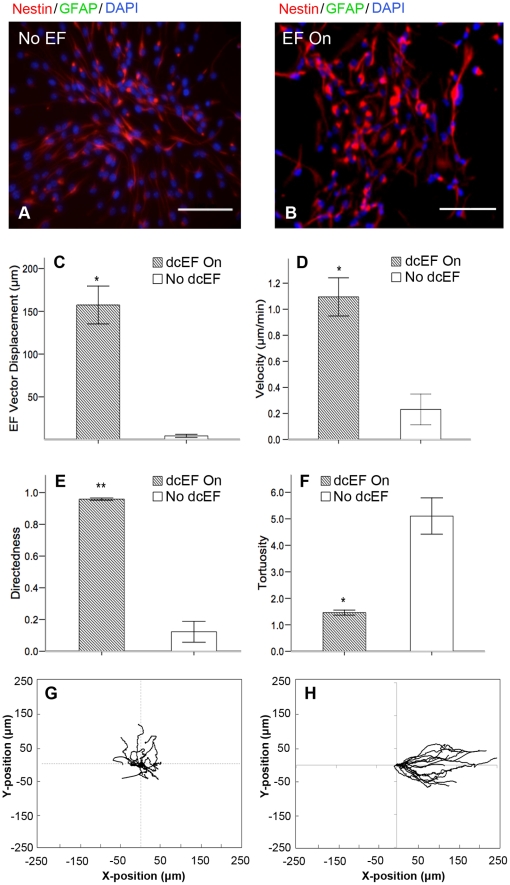
Figure 1. Undifferentiated NPCs undergo rapid and cathodally-directed migration in the presence of a dcEF.
(A–B) NPCs are positive for nestin after 17 h on matrigel in the presence of EGF, bFGF and heparin (A) as well as after 6 h of dcEF exposure in the presence of EGF, bFGF and heparin (B). (C–F) NPCs exposed to a dcEF (n = 4) exhibit a larger dcEF-vector displacement (C), larger velocity (D), larger directedness (E), and smaller tortuosity (F), compared to NPCs not exposed to a dcEF (n = 3). (G–H) Typical cell migration paths for NPCs either not exposed (G), or exposed (H), to a dcEF of strength 250 mV/mm. Scale bars = 100 um. Data are presented as means ± S.E.M., * = p<0.01, ** = p<0.001.
Figure 2
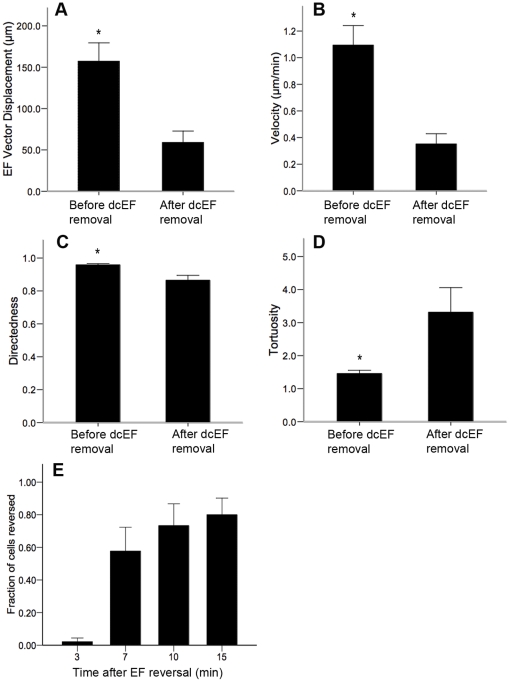
Figure 2. NPC galvanotaxis persists only for as long as the dcEF stimulus is present.
(A–D) Analysis of cell migration for 20 minutes before and 20 minutes after the removal of the dcEF reveals a significant decrease in dcEF vector displacement (A), velocity (B), and directedness (C) of migration, as well as a significant increase in tortuosity (D). Following the reversal of the dcEF's direction, 80.0%±10.1% of cells analyzed reverse their direction of migration to point toward the new cathode within 15 minutes (E). Data are presented as means ± S.E.M (n = 3),* = p<0.005, ** = p<0.05.
Figure 3
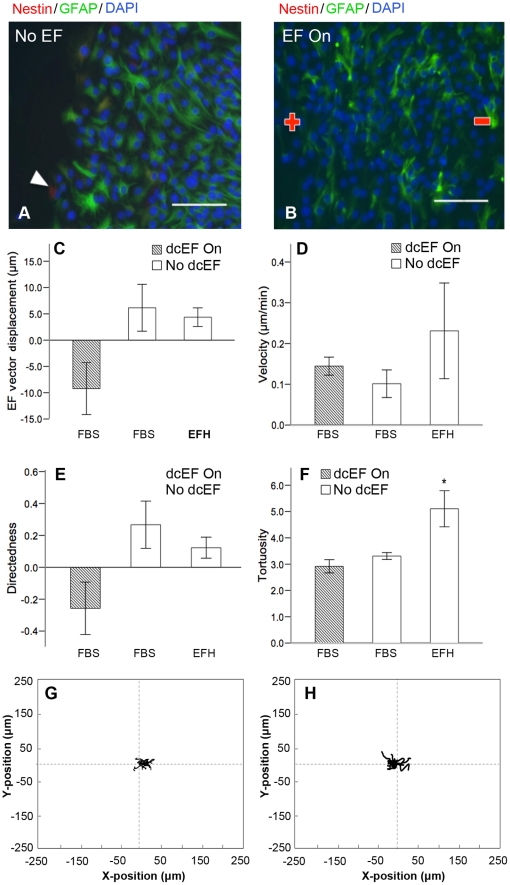
Figure 3. Differentiated NPCs do not exhibit directed migration in response to a dcEF.
(A–B) cells are positive for the astrocytic marker GFAP after 69 h on matrigel in the presence of 1% FBS (A), as well as after 6 h of dcEF exposure in the same conditions (B). (C–F) Differentiated cells (FBS, dark bars, n = 4) exhibit no significant differences in dcEF-axis displacement (C), velocity (D), or directedness (E) when compared to differentiated cells in the absence of a dcEF (FBS, white bars, n = 3) and undifferentiated NPCs (EFH, white bars, n = 3) not exposed to a dcEF. However, undifferentiated NPCs in the absence of a dcEF exhibit greater tortuosity of migration than differentiated neural cells (F). (G–H) Typical cell migration paths for differentiated cells either not exposed (G), or exposed (H), to a dcEF of strength 250 mV/mm. Scale bars = 100 µm. Data are presented as means ± S.E.M, * = p<0.05.
Figure 4
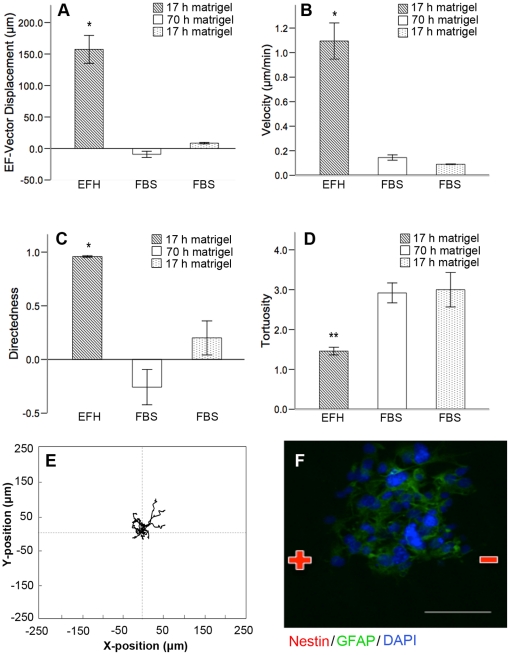
Figure 4. Prolonged adherence to Matrigel is not responsible for the loss of galvanotactic behaviour in differentiated cells.
(A–D) Differentiated cells plated on Matrigel for 70 h (white bar, n = 4) or 17 h (dotted bars, n = 3) exhibit similar dcEF-axis displacement (A), velocity (B), directedness (C), and tortuosity (D). Allowing the differentiated cells to adhere to Matrigel for an equal amount of time as the undifferentiated cells (hatched bar, n = 4) does not prevent the loss of galvanotactic behaviour (A–D). (E) Typical cell migration paths for cells cultured in the presence of FBS for 70 hours and plated on Matrigel for 17 hours. (F) Immunostaining post dcEF-application reveals that the majority of cells are GFAP+ indicating that the NPCs have differentiated after 72 hours in FBS and 20 hours on Matrigel. Scale bar = 50 µm. Data are presented as means ± S.E.M, * = p<0.001, ** = p<0.005.
Figure 5
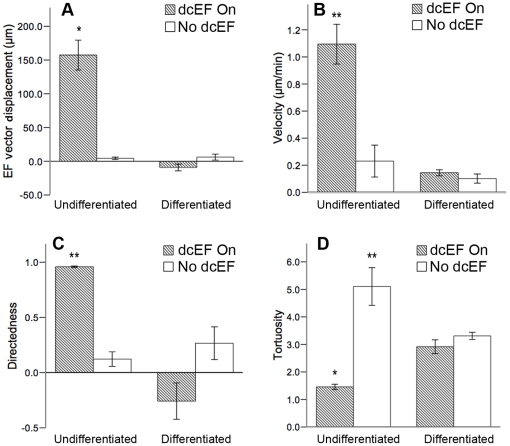
Figure 5. Summary of migratory properties of undifferentiated NPCs and differentiated cells in the absence and presence of a dcEF.
(A–D) Undifferentiated NPCs exposed to a dcEF (n = 4) exhibit larger dcEF-axis displacements (A), larger velocities (B), larger directedness (C) and smaller tortuosities (D), compared to NPCs in the absence of a dcEF (n = 3), as well as compared to their differentiated counterparts in both the absence (n = 3) and presence (n = 4) of a dcEF. Data are presented as means ± S.E.M, * = p<0.001, ** = p<0.05.
Figure 6
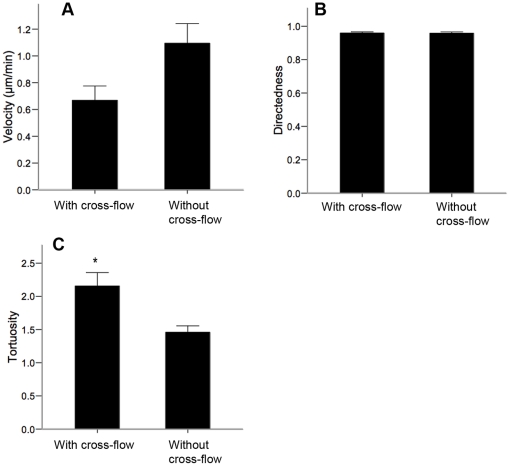
Figure 6. The galvanotactic behavior of undifferentiated NPCs is a direct effect of the applied dcEF.
(A–C) NPCs exhibit no significant differences in the velocity (A), and directedness (B), of galvanotaxis when in either the presence (n = 4) or absence (n = 3) of a continuous cross-flow of media although they exhibit a higher tortuosity (C). Data are presented as means ± S.E.M, * = p<0.05.
Figure 7
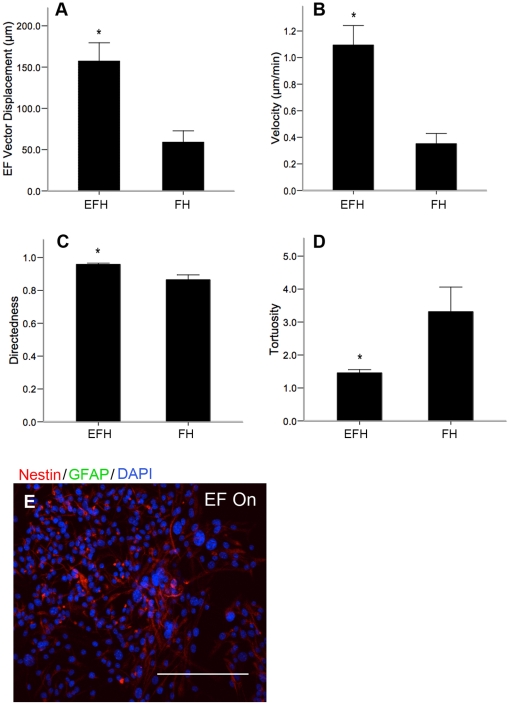
Figure 7. EGF is involved in regulating the rapid and directed NPC migration when exposed to a dcEF.
(A–D) NPCs that are only exposed to bFGF and heparin (FH, n = 3) during dcEF application undergo smaller dcEF-axis displacements (A), lower velocity (B), lower directedness (C), and higher tortuosity (D), of migration compared to NPCs maintained in the presence of EGF, bFGF and heparin (EFH) at all times (n = 4). (E) NPCs remain positive for nestin following dcEF exposure in the presence of FH only. Scale bar = 100 µm. Data are presented as means ± S.E.M, * = p<0.05.
Figure 8
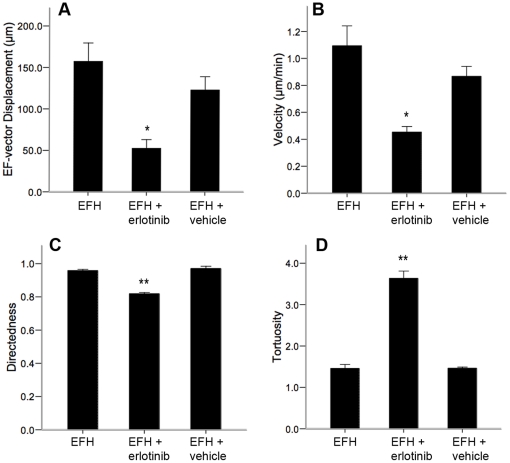
Figure 8. Epidermal growth factor signaling plays a role in the galvanotactic response of NPCs.
(A–D) NPCs exposed to a dcEF in the presence of the EGFR blocker erlotinib (n = 3) experience significantly reduced dcEF-axis displacement (A), velocity (B), and directedness (C), of migration, as well as significantly greater tortuosity (D), compared to NPCs in the absence of erlotinib (EFH, n = 4, and EFH+vehicle, n = 3). Data are presented as means ± S.E.M, * = p<0.05, ** = p<0.001.

References

    1. Erlandsson A, Morshead C. Exploiting the properties of adult stem cells for the treatment of disease. Curr Opin Mol Ther. 2006;8:331–337. - PubMed
    1. Arvidsson A, Collin T, Kirik D, Kokaia Z, Lindvall O. Neuronal replacement from endogenous precursors in the adult brain after stroke. Nat Med. 2002;8:963–970. - PubMed
    1. Kolb B, Morshead C, Gonzalez C, Kim M, Gregg C, et al. Growth factor-stimulated generation of new cortical tissue and functional recovery after stroke damage to the motor cortex of rats. J Cereb Blood Flow Metab. 2007;27:983–997. - PubMed
    1. Zhang RL, Zhang ZG, Wang L, Wang Y, Gousey A, et al. Activated neural stem cells contribute to stroke-induced neurogenesis and neuroblast migration toward the infarct boundary in adult rats. J Cereb Blood Flow Metab. 2004;24:441–448. - PubMed
    1. Imitola J, Raddassi K, Park KI, Mueller FJ, Nieto M, et al. Directed migration of neural stem cells to sites of CNS injury by the stromal cell-derived factor 1á/CXC chemokine receptor 4 pathway. Proc Natl Acad Sci USA. 2004;101:18117–18122. - PMC - PubMed

Publication types

MeSH terms