Metagenomic analysis of taxa associated with Lutzomyia longipalpis, vector of visceral leishmaniasis, using an unbiased high-throughput approach
- PMID: 21909446
- PMCID: PMC3167787
- DOI: 10.1371/journal.pntd.0001304
Metagenomic analysis of taxa associated with Lutzomyia longipalpis, vector of visceral leishmaniasis, using an unbiased high-throughput approach
Abstract
Background: Leishmaniasis is one of the most diverse and complex of all vector-borne diseases worldwide. It is caused by parasites of the genus Leishmania, obligate intramacrophage protists characterised by diversity and complexity. Its most severe form is visceral leishmaniasis (VL), a systemic disease that is fatal if left untreated. In Latin America VL is caused by Leishmania infantum chagasi and transmitted by Lutzomyia longipalpis. This phlebotomine sandfly is only found in the New World, from Mexico to Argentina. In South America, migration and urbanisation have largely contributed to the increase of VL as a public health problem. Moreover, the first VL outbreak was recently reported in Argentina, which has already caused 7 deaths and 83 reported cases.
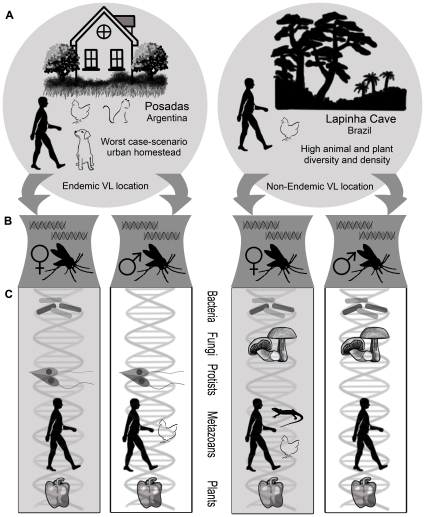
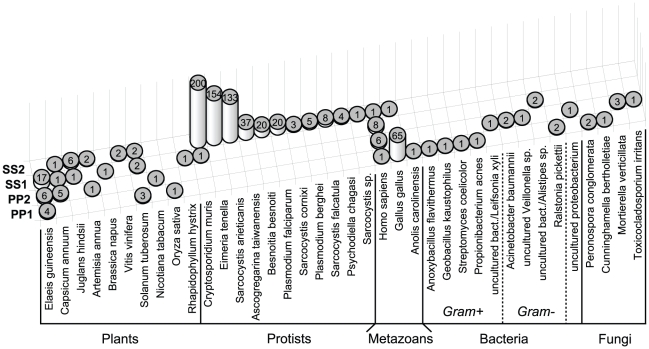
Methodology/principal findings: An inventory of the microbiota associated with insect vectors, especially of wild specimens, would aid in the development of novel strategies for controlling insect vectors. Given the recent VL outbreak in Argentina and the compelling need to develop appropriate control strategies, this study focused on wild male and female Lu. longipalpis from an Argentine endemic (Posadas, Misiones) and a Brazilian non-endemic (Lapinha Cave, Minas Gerais) VL location. Previous studies on wild and laboratory reared female Lu. longipalpis have described gut bacteria using standard bacteriological methods. In this study, total RNA was extracted from the insects and submitted to high-throughput pyrosequencing. The analysis revealed the presence of sequences from bacteria, fungi, protist parasites, plants and metazoans.
Conclusions/significance: This is the first time an unbiased and comprehensive metagenomic approach has been used to survey taxa associated with an infectious disease vector. The identification of gregarines suggested they are a possible efficient control method under natural conditions. Ongoing studies are determining the significance of the associated taxa found in this study in a greater number of adult male and female Lu. longipalpis samples from endemic and non-endemic locations. A particular emphasis is being given to those species involved in the biological control of this vector and to the etiologic agents of animal and plant diseases.
Conflict of interest statement
The authors have declared that no competing interests exist.
Figures
References
-
- Desjeux P. Leishmaniasis: current situation and new perspectives. Comp Immunol Microbiol Infect Dis. 2004;27:305–318. - PubMed
-
- WHO. The World Health Report [online] Geneva, Switzerland: WHO; 2002.
-
- Collin SM, Coleman PG, Ritmeijer K, Davidson RN. Unseen Kala-azar deaths in south Sudan (1999–2002). Trop Med Int Health. 2006;11:509–512. - PubMed
-
- Singh SP, Reddy DC, Rai M, Sundar S. Serious underreporting of visceral leishmaniasis through passive case reporting in Bihar, India. Trop Med Int Health. 2006;11:899–905. - PubMed
-
- Sharma U, Singh S. Insect vectors of Leishmania: distribution, physiology and their control. J Vector Borne Dis. 2008;45:255–272. - PubMed
Publication types
MeSH terms
Substances
LinkOut - more resources
Full Text Sources
Miscellaneous