


Seven-pass transmembrane cadherins: roles and emerging mechanisms in axonal and dendritic patterning
- PMID: 21909747
- PMCID: PMC3229701
- DOI: 10.1007/s12035-011-8201-5
Seven-pass transmembrane cadherins: roles and emerging mechanisms in axonal and dendritic patterning
Abstract
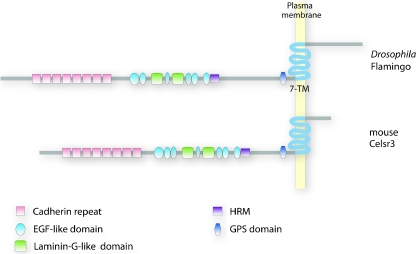
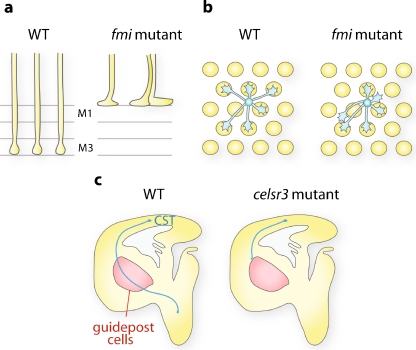
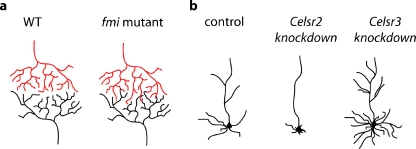
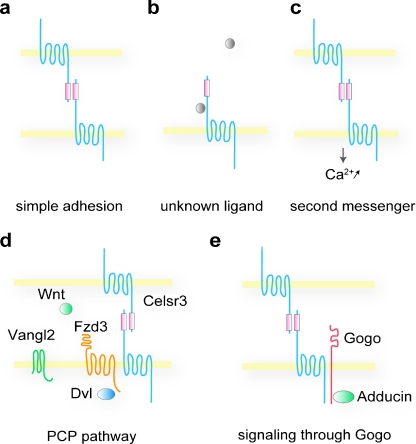
The Flamingo/Celsr seven-transmembrane cadherins represent a conserved subgroup of the cadherin superfamily involved in multiple aspects of development. In the developing nervous system, Fmi/Celsr control axonal blueprint and dendritic morphogenesis from invertebrates to mammals. As expected from their molecular structure, seven-transmembrane cadherins can induce cell-cell homophilic interactions but also intracellular signaling. Fmi/Celsr is known to regulate planar cell polarity (PCP) through interactions with PCP proteins. In the nervous system, Fmi/Celsr can function in collaboration with or independently of other PCP genes. Here, we focus on recent studies which show that seven-transmembrane cadherins use distinct molecular mechanisms to achieve diverse functions in the development of the nervous system.
Figures
References
-
- Chae J, Kim MJ, Goo JH, Collier S, Gubb D, Charlton J, Adler PN, Park WJ. The Drosophila tissue polarity gene starry night encodes a member of the protocadherin family. Development. 1999;126:5421–5429. - PubMed
MeSH terms
Substances
LinkOut - more resources
Full Text Sources
Research Materials
