


Effect of plant sterols on the lipid profile of patients with hypercholesterolaemia. Randomised, experimental study
- PMID: 21910898
- PMCID: PMC3180270
- DOI: 10.1186/1472-6882-11-73
Effect of plant sterols on the lipid profile of patients with hypercholesterolaemia. Randomised, experimental study
Abstract
Background: Studies have been conducted on supplementing the daily diet with plant sterol ester-enriched milk derivatives in order to reduce LDL-cholesterol levels and, consequently, cardiovascular risk. However, clinical practice guidelines on hypercholesterolaemia state that there is not sufficient evidence to recommend their use in subjects with hypercholesterolaemia. The main objective of this study is to determine the efficacy of the intake of 2 g of plant sterol esters a day in lowering LDL-cholesterol levels in patients diagnosed with hypercholesterolaemia. The specific objectives are: 1) to quantify the efficacy of the daily intake of plant sterol esters in lowering LDL-cholesterol, total cholesterol and cardiovascular risk in patients with hypercholesterolaemia; 2) to evaluate the occurrence of adverse effects of the daily intake of plant sterol esters; 3) to identify the factors that determine a greater reduction in lipid levels in subjects receiving plant sterol ester supplements.
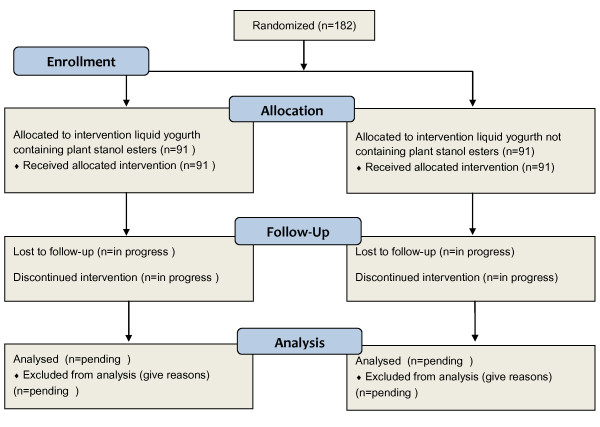
Methods/design: Randomised, double-blind, placebo controlled experimental trial carried out at family doctors' surgeries at three health centres in the Health Area of Albacete (Spain). The study subjects will be adults diagnosed with "limit" or "defined" hypercholesterolaemia and who have LDL cholesterol levels of 130 mg/dl or over. A dairy product in the form of liquid yoghurt containing 2 g of plant sterol ester per container will be administered daily after the main meal, for a period of 24 months. The control group will receive a daily unit of yogurt not supplemented with plant sterol esters that has a similar appearance to the enriched yoghurt. The primary variable is the change in lipid profile at 1, 3, 6, 12, 18 and 24 months. The secondary variables are: change in cardiovascular risk, adherence to the dairy product, adverse effects, adherence to dietary recommendations, frequency of food consumption, basic physical examination data, health problems, lipid-lowering medication, physical activity, smoking habits and socio-demographic variables.
Discussion: If plant sterol ester supplements were effective a sounder recommendation for the consumption of plant sterols in subjects with hypercholesterolaemia could be made.
Trial registration: ClinicalTrials.gov NCT01406106.
References
-
- Instituto Nacional de Estadística of Spain. Defunciones por causa de muerte. Boletín Mensual Estadística; 2006. p. 172. INE; c2006. Available from: 2009. http://www.ine.es/jaxi/menu.do?type=pcaxis&path=/t15/p417/&file=inebase.
-
- Gutiérrez Fuentes JA, Gómez Gerique JA, Gómez de la Cámara A, Rubio MA, García Hernández A, Arístegui I. Diet and Cardiovascular Risk in Spain Study (DRECE II). Description of the evolution of cardiovascular profile. Med Clin (Barc) 2000;115:726–729. - PubMed
-
- Villar Álvarez F, Banegas JR, Donado Campos JM, Rodríguez Artalejo F. Las enfermedades cardiovasculares y sus factores de riesgo en España: hechos y cifras. Informe SEA 2003. Madrid: Ergon; 2003.
Publication types
MeSH terms
Substances
Associated data
LinkOut - more resources
Full Text Sources
Medical
