Prevalence of metabolic syndrome in the Canadian adult population
- PMID: 21911558
- PMCID: PMC3193129
- DOI: 10.1503/cmaj.110070
Prevalence of metabolic syndrome in the Canadian adult population
Erratum in
-
Prevalence of metabolic syndrome in the Canadian adult population.CMAJ. 2019 Feb 4;191(5):E141. doi: 10.1503/cmaj.190063. CMAJ. 2019. PMID: 30718342 Free PMC article. No abstract available.
Abstract
Background: Metabolic syndrome refers to a constellation of conditions that increases a person's risk of diabetes and cardiovascular disease. We describe the prevalence of metabolic syndrome and its components in relation to sociodemographic factors in the Canadian adult population.
Methods: We used data from cycle 1 of the Canadian Health Measures Survey, a cross-sectional survey of a representative sample of the population. We included data for respondents aged 18 years and older for whom fasting blood samples were available; pregnant women were excluded. We calculated weighted estimates of the prevalence of metabolic syndrome and its components in relation to age, sex, education level and income.
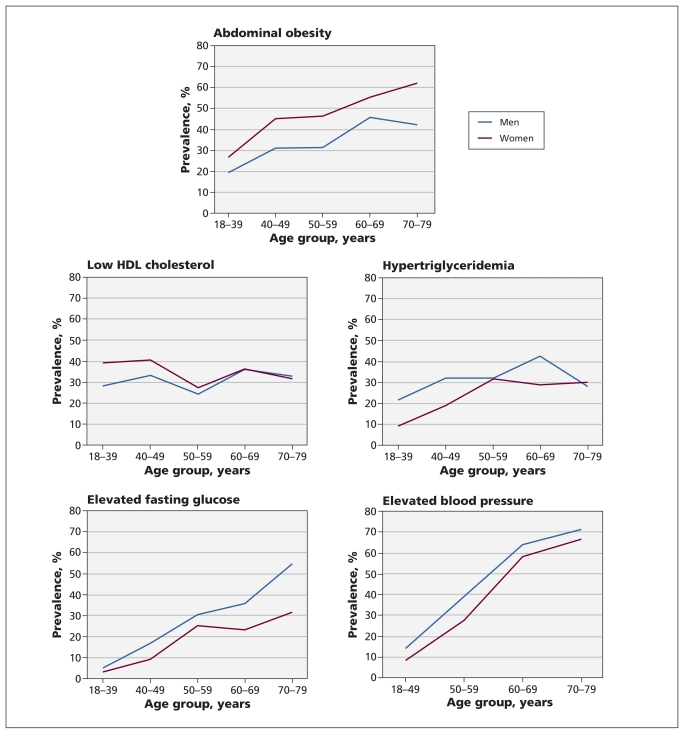
Results: The estimated prevalence of metabolic syndrome was 19.1%. Age was the strongest predictor of the syndrome: 17.0% of participants 18-39 years old had metabolic syndrome, as compared with 39.0% of those 70-79 years. Abdominal obesity was the most common component of the syndrome (35.0%) and was more prevalent among women than among men (40.0% v. 29.1%; p=0.013). Men were more likely than women to have an elevated fasting glucose level (18.9% v. 13.6%; p=0.025) and hypertriglyceridemia (29.0% v. 20.0%; p=0.012). The prevalence of metabolic syndrome was higher among people in households with lower education and income levels.
Interpretation: About one in five Canadian adults had metabolic syndrome. People at increased risk were those in households with lower education and income levels. The burden of abdominal obesity, low HDL (high-density lipoprotein) cholesterol and hypertriglyceridemia among young people was especially of concern, because the risk of cardiovascular disease increases with age.
Figures
References
-
- Denton FT, Spencer BG. Chronic health conditions: changing prevalence in an aging population and some implications for the delivery of health care services. Can J Aging 2010;29:11–21 - PubMed
-
- Haffner SM, Valdez RA, Hazuda HP, et al. Prospective analysis of the insulin-resistance syndrome (syndrome X). Diabetes 1992;41:715–22 - PubMed
-
- Isomaa B, Almgren P, Tuomi T, et al. Cardiovascular morbidity and mortality associated with the metabolic syndrome. Diabetes Care 2001;24:683–9 - PubMed
-
- McNeill AM, Rosamond WD, Girman CJ, et al. The metabolic syndrome and 11-year risk of incident cardiovascular disease in the atherosclerosis risk in communities study. Diabetes Care 2005;28:385–90 - PubMed
-
- Lakka HM, Laaksonen DE, Lakka TA, et al. The metabolic syndrome and total and cardiovascular disease mortality in middle-aged men. JAMA 2002;288:2709–16 - PubMed
Publication types
MeSH terms
Grants and funding
LinkOut - more resources
Full Text Sources
Medical