Gene expression patterns in larval Schistosoma mansoni associated with infection of the mammalian host
- PMID: 21912711
- PMCID: PMC3166049
- DOI: 10.1371/journal.pntd.0001274
Gene expression patterns in larval Schistosoma mansoni associated with infection of the mammalian host
Abstract
Background: The infective schistosome cercaria develops within the intramolluscan daughter sporocyst from an undifferentiated germ ball, during which synthesis of proteins essential for infection occurs. When the aquatic cercaria locates the mammalian host it rapidly penetrates into the epidermis using glandular secretions. It then undergoes metamorphosis into the schistosomulum, including replacement of its tegument surface membranes, a process taking several days before it exits the skin. Patterns of gene expression underlying this transition have been characterised.
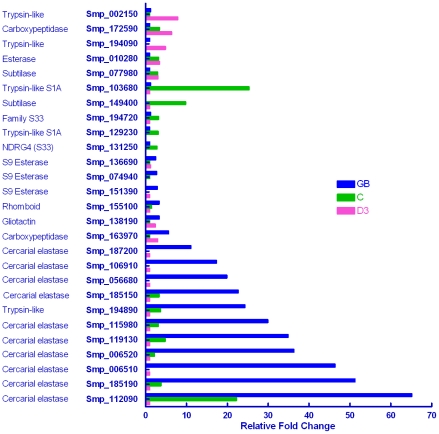
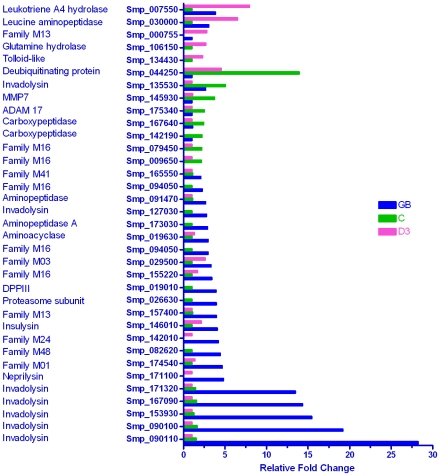
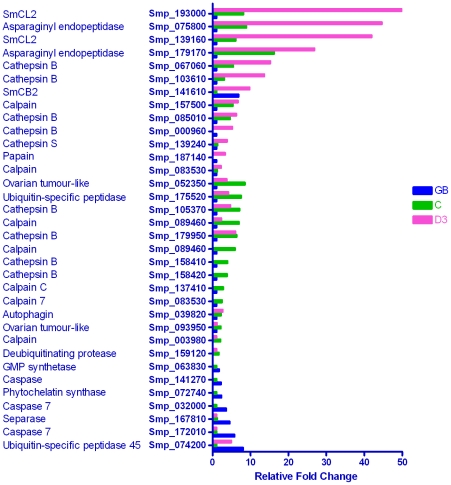
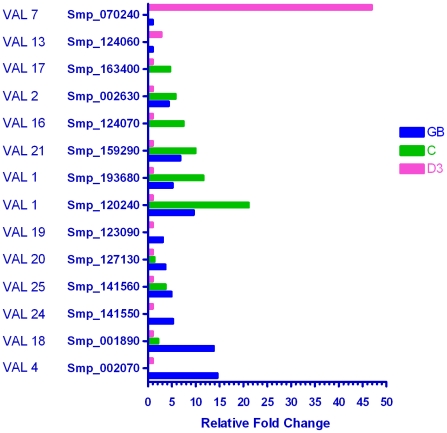
Methods and principal findings: All gene models from the S. mansoni genome (www.GeneDB.org) were incorporated into a high-density oligonucleotide array. Double-stranded cDNA from germ balls, cercariae, and day 3 schistosomula was hybridised to the array without amplification. Statistical analysis was performed using Bioconductor to reveal differentially transcribed loci. Genes were categorised on the basis of biological process, tissue association or molecular function to aid understanding of the complex processes occurring. Genes necessary for DNA replication were enriched only in the germ ball, while those involved in translation were up-regulated in the germ ball and/or day 3 schistosomulum. Different sets of developmental genes were up-regulated at each stage. A large number of genes encoding elastases and invadolysins, and some venom allergen-like proteins were up-regulated in the germ ball, those encoding cysteine and aspartic proteases in the cercaria and schistosomulum. Micro exon genes encoding variant secreted proteins were highly up-regulated in the schistosomulum along with tegument and gut-associated genes, coincident with remodelling of the parasite body. Genes encoding membrane proteins were prominently up-regulated in the cercaria and/or day 3 schistosomulum.
Conclusions/significance: Our study highlights an expanded number of transcripts encoding proteins potentially involved in skin invasion. It illuminates the process of metamorphosis into the schistosomulum and highlights the very early activation of gut-associated genes whilst revealing little change in the parasite's energy metabolism or stress responses.
Conflict of interest statement
The authors have declared that no competing interests exist.
Figures
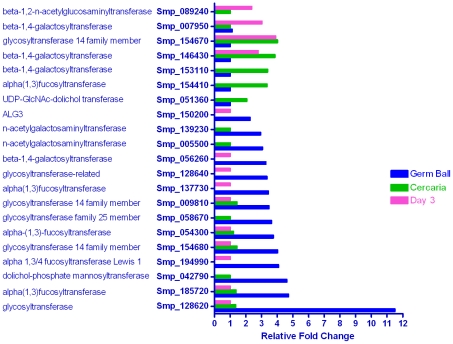
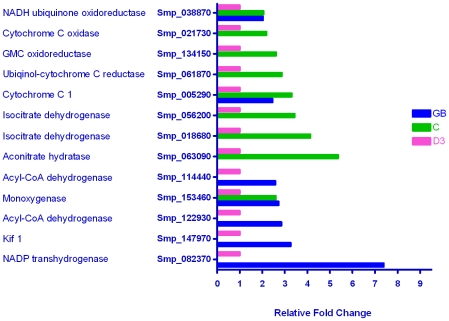
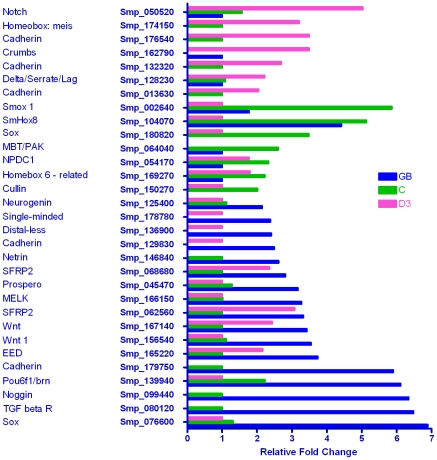
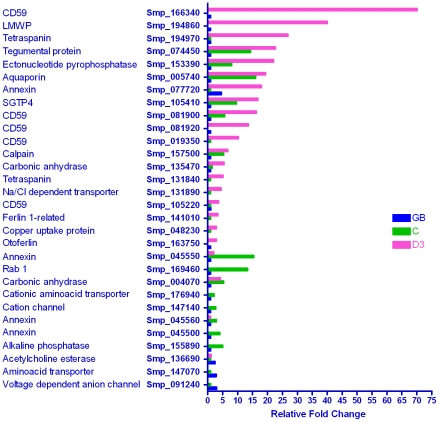
References
-
- Salter JP, Lim KC, Hansell E, Hsieh I, McKerrow JH. Schistosome invasion of human skin and degradation of dermal elastin are mediated by a single serine protease. J Biol Chem. 2000;275:38667–38673. - PubMed
-
- Curwen RS, Ashton PD, Sundaralingam S, Wilson RA. Identification of novel proteases and immunomodulators in the secretions of schistosome cercariae that facilitate host entry. Mol Cell Proteomics. 2006;5:835–844. - PubMed
-
- Knudsen GM, Medzihradszky KF, Lim KC, Hansell E, McKerrow JH. Proteomic analysis of Schistosoma mansoni cercarial secretions. Mol Cell Proteomics. 2005;4:1862–1875. - PubMed
-
- Hockley DJ, McLaren DJ. Schistosoma mansoni: changes in the outer membrane of the tegument during development from cercaria to adult worm. Int J Parasitol. 1973;3:13–25. - PubMed
-
- Skelly PJ, Shoemaker CB. Induction cues for tegument formation during the transformation of Schistosoma mansoni cercariae. Int J Parasitol. 2000;30:625–631. - PubMed
Publication types
MeSH terms
Grants and funding
LinkOut - more resources
Full Text Sources