


Peer volunteers improve long-term maintenance of physical activity with older adults: a randomized controlled trial
- PMID: 21918240
- PMCID: PMC3181088
Peer volunteers improve long-term maintenance of physical activity with older adults: a randomized controlled trial
Abstract
Background: Using peer volunteers as delivery agents may improve translation of evidence-based physical activity promotion programs for older adults. This study examined whether tailored support from older peer volunteers could improve initiation and long-term maintenance of physical activity behavior.
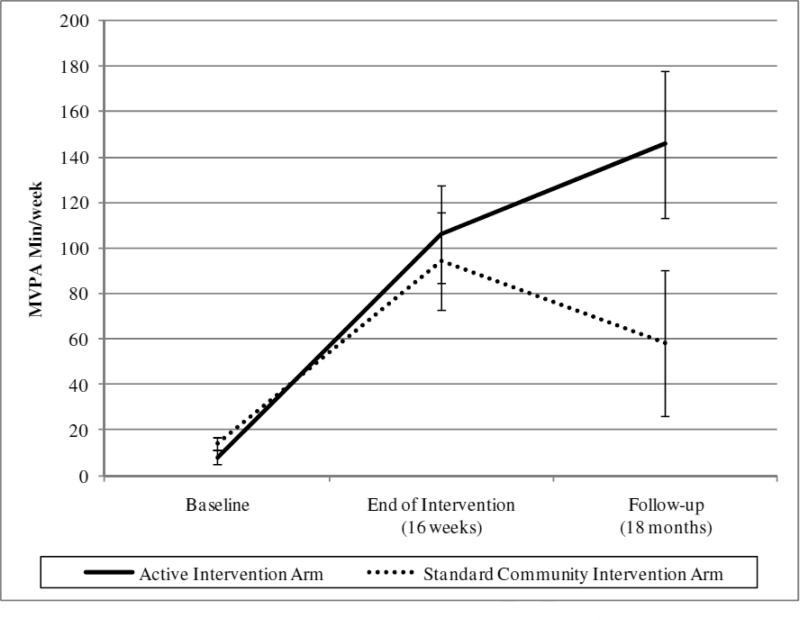
Methods: Participants were randomized to 2 16-week, group-based programs: (1) peer-delivered, theory-based support for physical activity behavior change; or (2) an intervention typically available in community settings (basic education, gym membership, and pedometer for self-monitoring), attention-matched with health education. Moderate-to-vigorous physical activity (MVPA) was assessed via daily self-report logs at baseline, at the end of the intervention (16 weeks), and at follow-up (18 months), with accelerometry validation (RT3) in a random subsample.
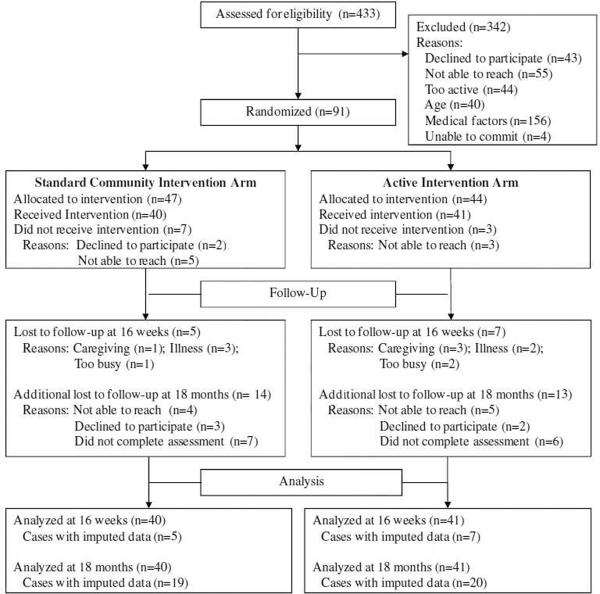
Results: Seven peer volunteers and 81 sedentary adults were recruited. Retention at the end of the trial was 85% and follow-up at 18 months was 61%. Using intent-to-treat analyses, at 16 weeks, both groups had similar significant improvements in MVPA. At 18 months, the group supplemented with peer support had significantly more MVPA.
Conclusions: Trained peer volunteers may enhance long-term maintenance of physical activity gains from a community-based intervention. This approach has great potential to be adapted and delivered inexpensively in community settings.
Figures
References
-
- Troiano RP, Berrigan D, Dodd KW, Masse LC, Tilert T, McDowell M. Physical activity in the United States measured by accelerometer. Med Sci Sports Exerc. 2008;40:181–188. - PubMed
-
- Kahn EB, Ramsey LT, Brownson RC, et al. The effectiveness of interventions to increase physical activity - A systematic review. Am J Prev Med. 2002;22:73–108. - PubMed
-
- Wilcox S, Dowda M, Leviton LC, et al. Active for Life - Final results from the translation of two physical activity programs. Am J Prev Med. 2008;35:340–351. - PubMed
-
- Estabrooks PA, Glasgow RE. Translating effective clinic-based physical activity interventions into practice. Am J Prev Med. 2006;31:545–556. - PubMed
Publication types
MeSH terms
Grants and funding
LinkOut - more resources
Full Text Sources
Medical