


Pathophysiological distortions in time perception and timed performance
- PMID: 21921020
- PMCID: PMC3491636
- DOI: 10.1093/brain/awr210
Pathophysiological distortions in time perception and timed performance
Abstract
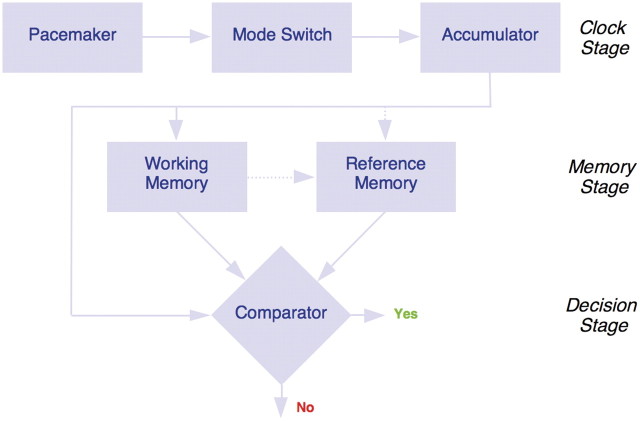
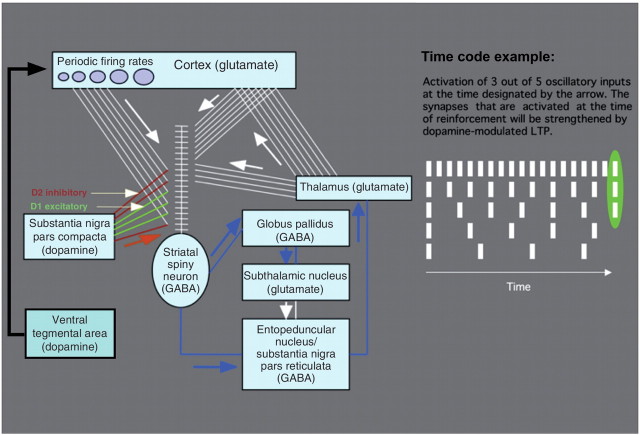
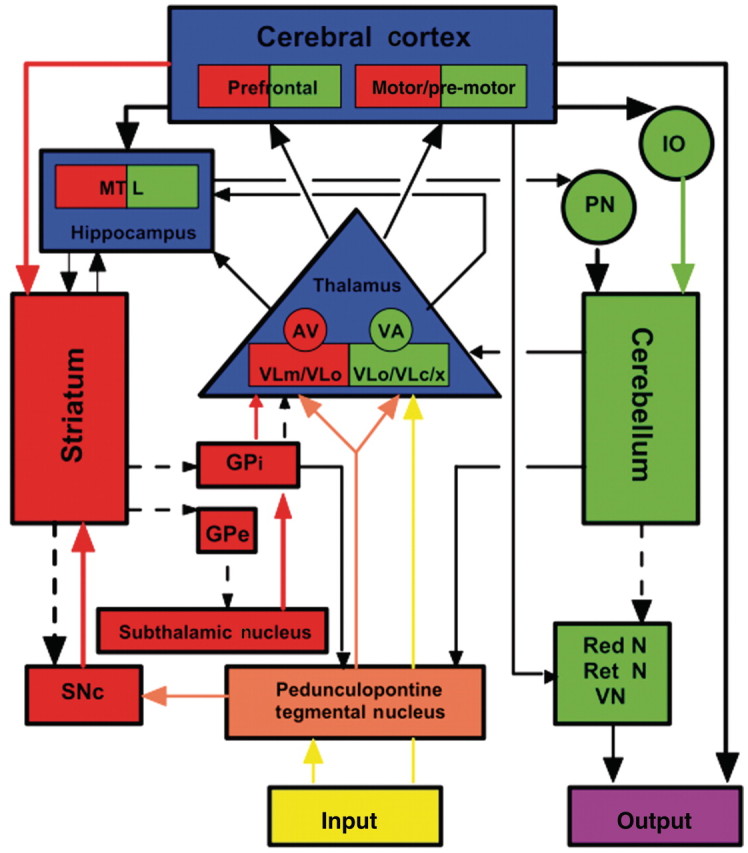
Distortions in time perception and timed performance are presented by a number of different neurological and psychiatric conditions (e.g. Parkinson's disease, schizophrenia, attention deficit hyperactivity disorder and autism). As a consequence, the primary focus of this review is on factors that define or produce systematic changes in the attention, clock, memory and decision stages of temporal processing as originally defined by Scalar Expectancy Theory. These findings are used to evaluate the Striatal Beat Frequency Theory, which is a neurobiological model of interval timing based upon the coincidence detection of oscillatory processes in corticostriatal circuits that can be mapped onto the stages of information processing proposed by Scalar Timing Theory.
Figures
References
-
- Allan L. The perception of time. Percept Psychophys. 1979;26:340–54.
-
- Allan L. The influence of scalar timing model on human timing research. Behav Process. 1998;44:101–17. - PubMed
-
- Allan L, Gibbon J. Human bisection at the geometric mean. Learn Motiv. 1991;22:39–58.
-
- Allan LG, Gerhardt K. Temporal bisection with trial referents. Percept Psychophys. 2001;63:524–40. - PubMed
-
- Allen G, Muller R, Courchesne E. Cerebellar function in autism: functional magnetic resonance imaging activation during a simple motor task. Biol Psychol. 2004;56:269–78. - PubMed
Publication types
MeSH terms
Grants and funding
LinkOut - more resources
Full Text Sources
Other Literature Sources
Research Materials
