


Confined to ignorance: the absence of prisoner information from nationally representative health data sets
- PMID: 21922160
- PMCID: PMC3270223
- DOI: 10.1007/s11606-011-1858-7
Confined to ignorance: the absence of prisoner information from nationally representative health data sets
Abstract
Background: Incarceration is associated with poor health and high costs. Given the dramatic growth in the criminal justice system's population and associated expenses, inclusion of questions related to incarceration in national health data sets could provide essential data to researchers, clinicians and policy-makers.
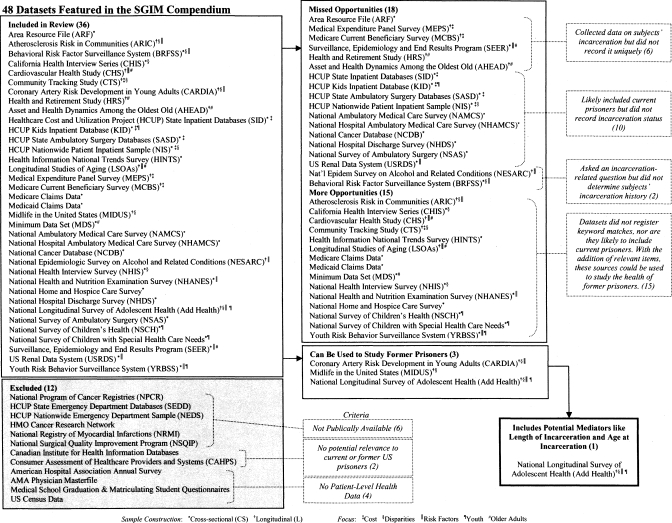
Objective: To evaluate a representative sample of publically available national health data sets for their ability to be used to study the health of currently or formerly incarcerated persons and to identify opportunities to improve criminal justice questions in health data sets. DESIGN & APPROACH: We reviewed the 36 data sets from the Society of General Internal Medicine Dataset Compendium related to individual health. Through content analysis using incarceration-related keywords, we identified data sets that could be used to study currently or formerly incarcerated persons, and we identified opportunities to improve the availability of relevant data.
Key results: While 12 (33%) data sets returned keyword matches, none could be used to study incarcerated persons. Three (8%) could be used to study the health of formerly incarcerated individuals, but only one data set included multiple questions such as length of incarceration and age at incarceration. Missed opportunities included: (1) data sets that included current prisoners but did not record their status (10, 28%); (2) data sets that asked questions related to incarceration but did not specifically record a subject's status as formerly incarcerated (8, 22%); and (3) longitudinal studies that dropped and/or failed to record persons who became incarcerated during the study (8, 22%).
Conclusions: Few health data sets can be used to evaluate the association between incarceration and health. Three types of changes to existing national health data sets could substantially expand the available data, including: recording incarceration status for study participants who are incarcerated; recording subjects' history of incarceration when this data is already being collected; and expanding incarceration-related questions in studies that already record incarceration history.
Figures
References
-
- Bonczar TP. Prevalence of Imprisonment in the US Population, 1974–2001. US Department of Justice. Bureau of Justice Statistics, Editor: Washington DC. 2003.
-
- Glaze LE. Correctional Populations in the United States, 2009. US Department of Justice. Bureau of Justice Statistics, Editor: Washington DC. 2010.
-
- Bureau of Justice Statistics. Profile of Jail Inmates, 2002. Department of Justice: Washington DC. 2004.
-
- Solomon A, Osborne J, LoBuglio S, Mellow J, and Mukamal D. Life After Lockup: Improving reentry from jail to the community. Washington, DC: The Urban Institute, Justice Policy Center. 2008.
Publication types
MeSH terms
Grants and funding
LinkOut - more resources
Full Text Sources
Medical
