Intron-specific neuropeptide probes
- PMID: 21922402
- PMCID: PMC5079187
- DOI: 10.1007/978-1-61779-310-3_5
Intron-specific neuropeptide probes
Abstract
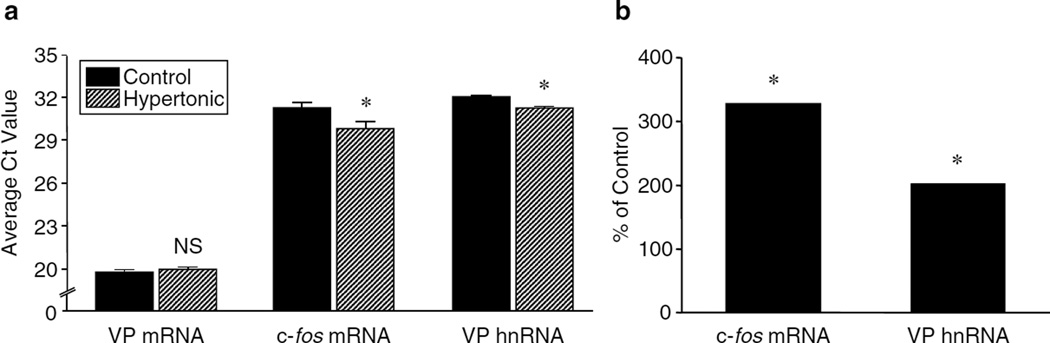
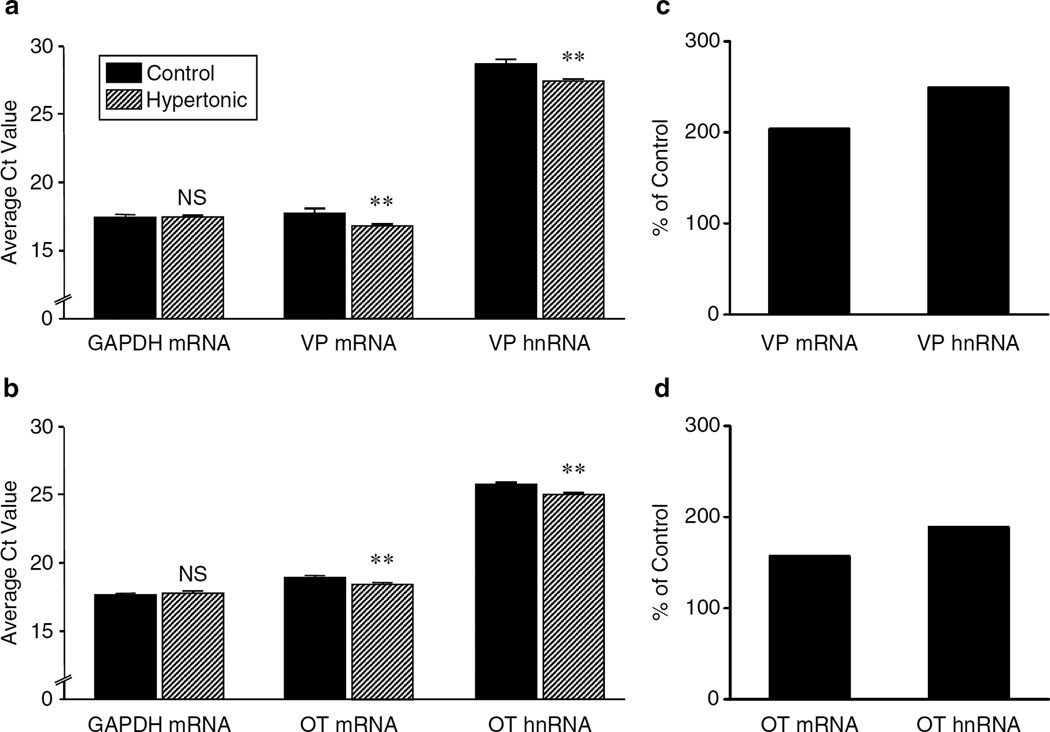
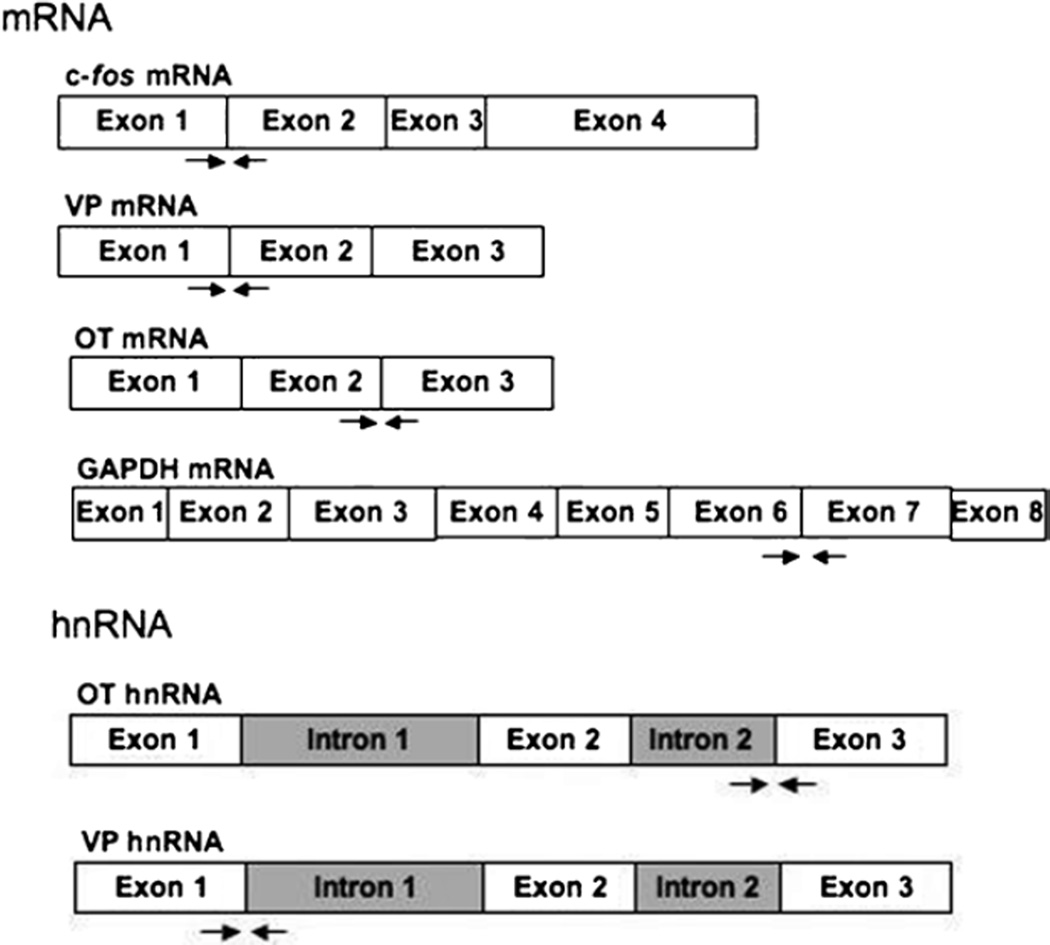
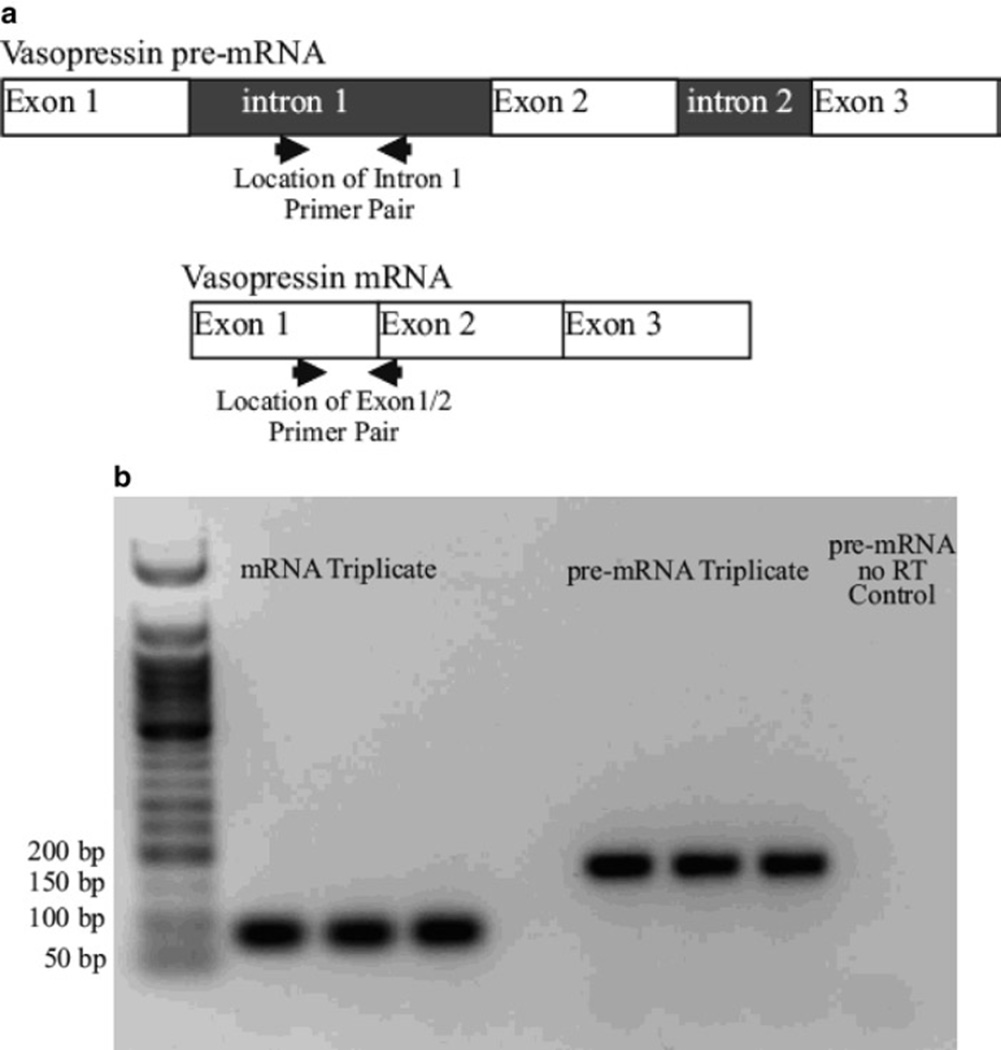
Measurements of changes in pre-mRNA levels by intron-specific probes are generally accepted as more closely reflecting changes in gene transcription rates than are measurements of mRNA levels by exonic probes. This is, in part, because the pre-mRNAs, which include the primary transcript and various splicing intermediates located in the nucleus (also referred to as heteronuclear RNAs, or hnRNAs), are processed rapidly (with half-lives <60 min) as compared to neuropeptide mRNAs, which are then transferred to the cytoplasm and which have much longer half-lives (often over days). In this chapter, we describe the use of exon-and intron-specific probes to evaluate oxytocin (OT) and vasopressin (VP) neuropeptide gene expression by analyses of their mRNAs and hnRNAs by quantitative in situ hybridization (qISH) and also by using specific PCR primers in quantitative, real-time PCR (qPCR) procedures.
Figures


References
-
- Hargrove JL. Microcomputer-assisted kinetic modeling of mammalian gene expression. FASEB J. 1993;7:1163–1170. - PubMed
-
- Perry RP, Bard E, Hames BD, Kelly DE, Schibler U. The relationship between hnRNA and mRNA. Prog. Nucleic Acid Res. Mol. Biol. 1976;19:275–292. - PubMed
-
- Fremeau RT, Jr, Lundblad JR, Pritchett DB, Wilcox JN, Roberts JL. Regulation of pro-opiomelanocortin gene transcription in individual cell nuclei. Science. 1986;234:1265–1269. - PubMed
Publication types
MeSH terms
Substances
Grants and funding
LinkOut - more resources
Full Text Sources