


Platelet mitochondrial dysfunction is evident in type 2 diabetes in association with modifications of mitochondrial anti-oxidant stress proteins
- PMID: 21922457
- PMCID: PMC6122851
- DOI: 10.1055/s-0031-1285833
Platelet mitochondrial dysfunction is evident in type 2 diabetes in association with modifications of mitochondrial anti-oxidant stress proteins
Abstract
Objective: Mitochondrial dysfunction and oxidative stress in insulin responsive tissues is implicated in the pathogenesis of type 2 diabetes. Whether these perturbations extend to other tissues and contribute to their pathophysiology is less well established. The objective of this study was to investigate platelet mitochondria to evaluate whether type 2 diabetes associated mitochondrial dysfunction is evident in circulating cells.
Method: A pilot study of mitochondrial respiratory function and proteomic changes comparing platelets extracted from insulin sensitive (n=8) and type 2 diabetic subjects (n=7).
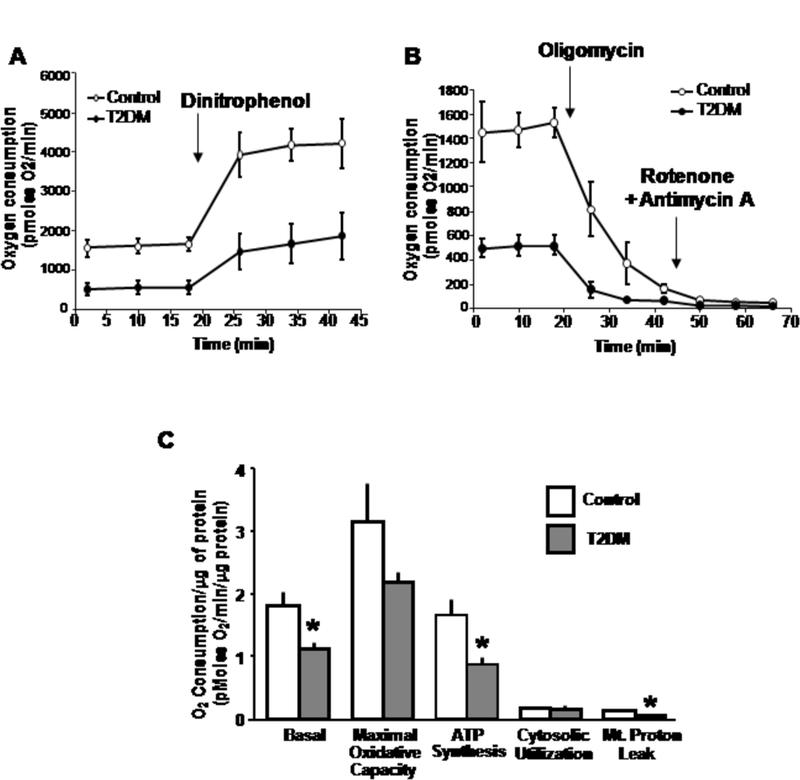
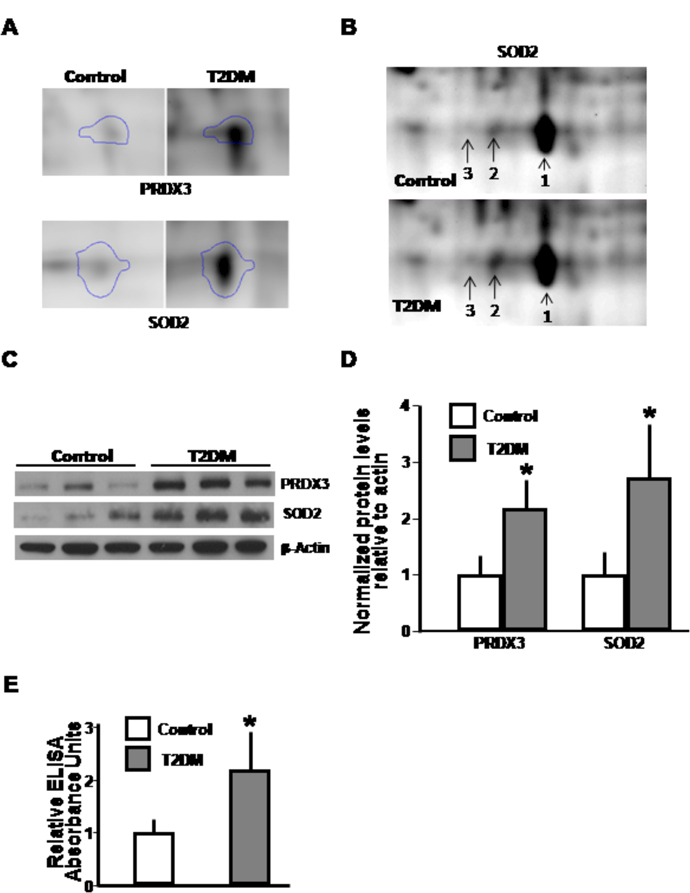
Results: In-situ platelet mitochondria show diminished oxygen consumption and lower oxygen-dependent ATP synthesis in diabetic vs. control subjects. Mass spectrometric identification and confirmatory immunoblot analysis identifies induction of the mitochondrial anti-oxidant enzymes superoxide dismutase 2 and thioredoxin-dependent peroxide reductase 3 in platelets of diabetic subjects. As oxidative stress upregulates anti-oxidant enzymes we assessed mitochondrial protein carbonylation as an index of oxidative-stress. Platelets of diabetic subjects exhibit significantly increased protein carbonylation compared to controls.
Conclusions: As platelets are anuclear fragments of megakaryocytes, our data suggest that the bone marrow compartment in type 2 diabetic subjects is exposed to increased mitochondrial oxidative stress with upregulation of nuclear-encoded antioxidant mitochondrial enzymes. This 'stress-signature' in platelets of diabetic subjects is associated with a diminution of their mitochondrial contribution to energy production and support that mitochondrial perturbations in type 2 diabetes extends beyond the classical insulin responsive tissues. Platelets, as "accessible human tissue", may be useful to measure the mitochondrial modulatory effects of emerging anti-diabetic therapeutics.
© J. A. Barth Verlag in Georg Thieme Verlag KG Stuttgart · New York.
Conflict of interest statement
Figures
References
-
- Lowell BB, Shulman GI. Mitochondrial dysfunction and type 2 diabetes. Science 2005;307:384–387 - PubMed
-
- Baalbaki HA, Bell DS. Insulin resistance and thrombogenesis: recent insights and therapeutic implications. EndocrPract 2007;13:679–686 - PubMed
-
- Kelly DP, Scarpulla RC. Transcriptional regulatory circuits controlling mitochondrial biogenesis and function. Genes Dev 2004;18:357–368 - PubMed
Publication types
MeSH terms
Substances
Grants and funding
LinkOut - more resources
Full Text Sources
Medical
