


Differential regulation of the SMN2 gene by individual HDAC proteins
- PMID: 21925145
- PMCID: PMC6538936
- DOI: 10.1016/j.bbrc.2011.09.011
Differential regulation of the SMN2 gene by individual HDAC proteins
Abstract
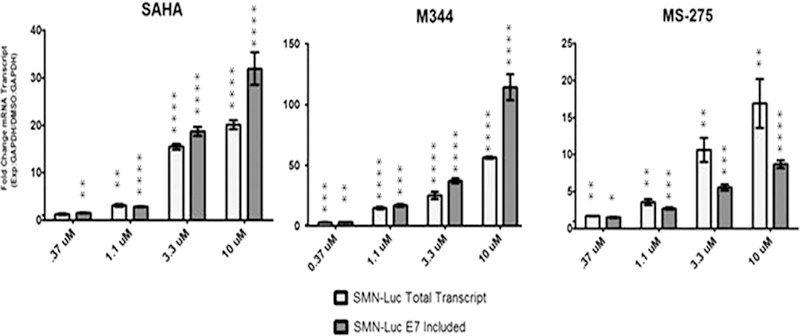
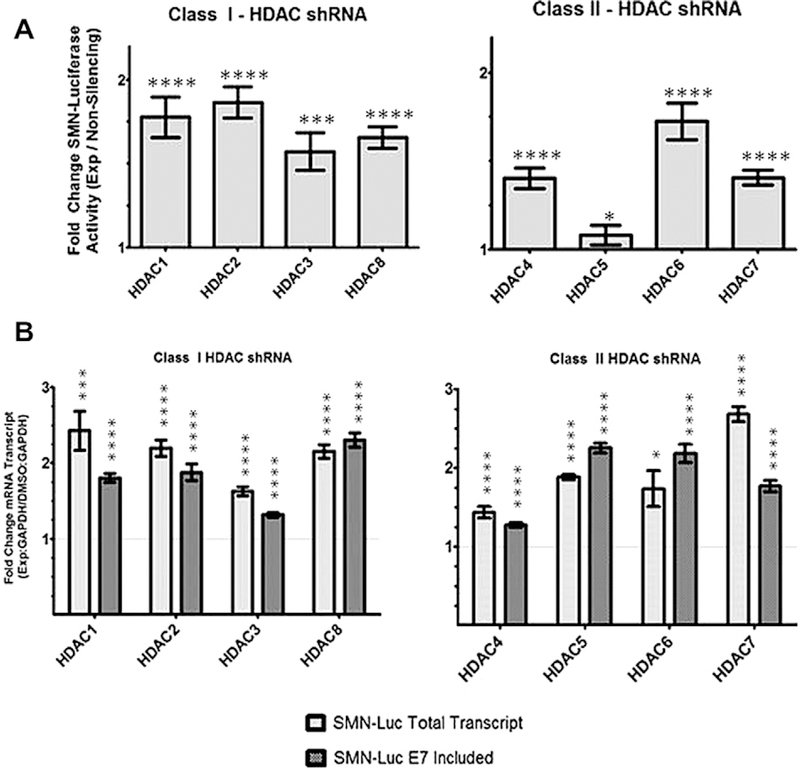
Spinal muscular atrophy (SMA) is an autosomal recessive neurodegenerative disorder that is the leading genetic cause of infantile death. SMA is caused by homozygous deletion or mutation of the survival of motor neuron 1 gene (SMN1). The SMN2 gene is nearly identical to SMN1, however is alternatively spliced. The close relationship to SMN1 results in SMN2 being a very power genetic modifier of SMA disease severity and a target for therapies. We sought to identify the regulatory role individual HDAC proteins use to control expression of full length protein from the SMN2 genes. We used quantitative PCR to determine the effects shRNA silencing of individual HDACs on the steady state levels of a SMN2-luciferase reporter transcripts. We determined that reduction of individual HDAC proteins was sufficient to increase SMN protein levels in a transgenic reporter system. Knockdown of class I HDAC proteins preferentially activated the reporter by increased promoter transcription. Silencing of class II HDAC proteins maintained transcriptional activity; however silencing of HDAC 5 and 6 also appeared to enhance inclusion of an alternatively spliced exon. This work highlights HDAC proteins 2 and 6 as excellent investigative targets. These data are important to the basic understanding of SMN expression regulation and the refinements of current therapeutic compounds as well as the development of novel SMA therapeutics.
Copyright © 2011 Elsevier Inc. All rights reserved.
Figures
References
-
- Lefebvre S, Burglen L, Reboullet S, Clermont O, Burlet P, Viollet L, Benichou B, Cruaud C, Millasseau P, Zeviani M, et al. , Identification and characterization of a spinal muscular atrophy-determining gene, Cell 80 (1995) 155–165. - PubMed
-
- Lorson CL, Androphy EJ, An exonic enhancer is required for inclusion of an essential exon in the SMA-determining gene SMN, Hum. Mol. Genet 9 (2000) 259–265. - PubMed
-
- Monani UR, Lorson CL, Parsons DW, Prior TW, Androphy EJ, Burghes AH, McPherson JD, A single nucleotide difference that alters splicing patterns distinguishes the SMA gene SMN1 from the copy gene SMN2, Hum. Mol. Genet 8 (1999) 1177–1183. - PubMed
-
- Kashima T, Manley JL, A negative element in SMN2 exon 7 inhibits splicing in spinal muscular atrophy, Nat. Genet 34 (2003) 460–463. - PubMed
MeSH terms
Substances
Grants and funding
LinkOut - more resources
Full Text Sources
Medical
