


Updated molecular genetics and pathogenesis of ichthiyoses
- PMID: 21928690
- PMCID: PMC4831217
Updated molecular genetics and pathogenesis of ichthiyoses
Abstract
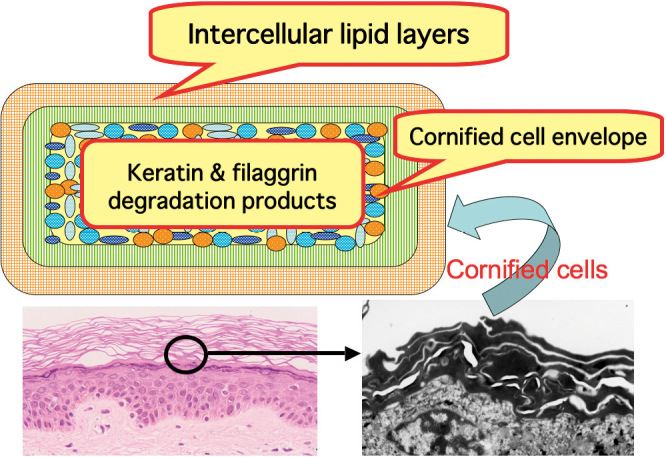
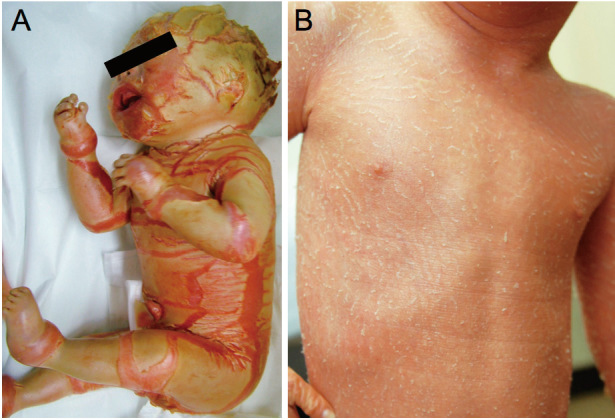
Research into the molecular genetics and pathomechanisms of ichthyoses have advanced considerably, resulting in the identification of several causative genes and molecules underlying the disease. In 2009, the First Ichthyosis Consensus Conference was held to establish a consensus for the nomenclature and classification of inherited ichthyoses, by which an international consensus for the classification of inherited ichthyosis was achieved. In this review, the pathogeneses of various ichthyoses are summarized based on their revised classification and terminology. Skin barrier defects are involved in the pathogenesis of various types of ichthyosis. The known causative molecules underlying ichthyosis include ABCA12, lipoxygenase-3, 12R-lipoxygenase, CYP4F22, ichthyin and steroid sulfatase, all of which are thought to be related to the intercellular lipid layers. ABCA12 is a known keratinocyte lipid transporter associated with lipid transport in lamellar granules and a loss of ABCA12 function leads to defective lipid transport in the keratinocytes, resulting in the most severe, harlequin ichthyosis phenotype. Other causative molecules for ichthyoses are transglutaminase 1, keratins and filaggrin. Transglutaminase 1 plays a role in cornified cell envelope formation. Keratins 1, 10 and 2 are involved in the keratin network of suprabasal keratinocytes and filaggrin is essential for the formation of keratohyalin granules. It is important to obtain information concerning genetic defects and to elucidate ichthyotic disease pathomechanisms for the establishment of an effective therapy and beneficial genetic counseling, including a prenatal diagnosis for families affected by ichthyotic disease.
Figures
References
-
- Akiyama M, Shimizu H. An update on molecular aspects of the non-syndromic ichthyoses. Exp Dermatol, 2008; 17: 373–382. - PubMed
-
- Oji V, Tadini G, Akiyama M, Blanchet-Bardon C, Bodemer C, Bourrat E, Coudiere P, DiGiovanna JJ, Elias P, Fischer J, Fleckman P, Gina M, Harper J, Hashimoto T, Hausser I, Hennies HC, Hohl D, Hovnanian A, Ishida-Yamamoto A, Jacyk WK, Leachman S, Leigh I, Mazereeuw-Hautier J, Milstone L, Morice-Picard F, Paller AS, Richard G, Schmuth M, Shimizu H, Sprecher E, Van Steensel M, Taïeb A, Toro JR, Vabres P, Vahlquist A, Williams M, Traupe H. Revised nomenclature and classification of inherited ichthyoses: results of the First Ichthyosis Consensus Conference in Sorèze 2009. J Am Acad Dermatol, 2010; 63: 607–641. - PubMed
-
- Shapiro LJ, Weiss R, Webster D, France JT. X-linked ichthyosis due to steroid-sulfatase deficiency. Lancet, 1978; I: 70–72. - PubMed
-
- Chipev CC, Korge BP, Markova N, Bale SJ, DiGiovanna JJ, Compton JG, Steinert PM. A leucine > proline mutation in the H1 subdomain of keratin 1 causes epidermolytic hyperkeratosis. Cell, 1992; 70: 821–828. - PubMed
Publication types
MeSH terms
Substances
LinkOut - more resources
Full Text Sources
Other Literature Sources