. 2011 Nov 1;187(9):4542-52.
doi: 10.4049/jimmunol.1101567. Epub 2011 Sep 19.

Prenatal secondhand cigarette smoke promotes Th2 polarization and impairs goblet cell differentiation and airway mucus formation

Affiliations

Prenatal secondhand cigarette smoke promotes Th2 polarization and impairs goblet cell differentiation and airway mucus formation

Shashi P Singh et al. J Immunol. .

Abstract

Parental, particularly maternal, smoking increases the risk for childhood allergic asthma and infection. Similarly, in a murine allergic asthma model, prenatal plus early postnatal exposure to secondhand cigarette smoke (SS) exacerbates airways hyperreactivity and Th2 responses in the lung. However, the mechanism and contribution of prenatal versus early postnatal SS exposure on allergic asthma remain unresolved. To identify the effects of prenatal and/or early postnatal SS on allergic asthma, BALB/c dams and their offspring were exposed gestationally and/or 8-10 wk postbirth to filtered air or SS. Prenatal, but not postnatal, SS strongly increased methacholine and allergen (Aspergillus)-induced airway resistance, Th2 cytokine levels, and atopy and activated the Th2-polarizing pathway GATA3/Lck/ERK1/2/STAT6. Either prenatal and/or early postnatal SS downregulated the Th1-specific transcription factor T-bet and, surprisingly, despite high levels of IL-4/IL-13, dramatically blocked the allergen-induced mucous cell metaplasia, airway mucus formation, and the expression of mucus-related genes/proteins: Muc5ac, γ-aminobutyric acid A receptors, and SAM pointed domain-containing Ets-like factor. Given that SS/nicotine exposure of normal adult mice promotes mucus formation, the results suggested that fetal and neonatal lung are highly sensitive to cigarette smoke. Thus, although the gestational SS promotes Th2 polarization/allergic asthma, it may also impair and/or delay the development of fetal and neonatal lung, affecting mucociliary clearance and Th1 responses. Together, this may explain the increased susceptibility of children from smoking parents to allergic asthma and childhood respiratory infections.


Conflict of interest statement

Disclosures

The authors have no financial conflict of interest in the subject of this manuscript.

Figures
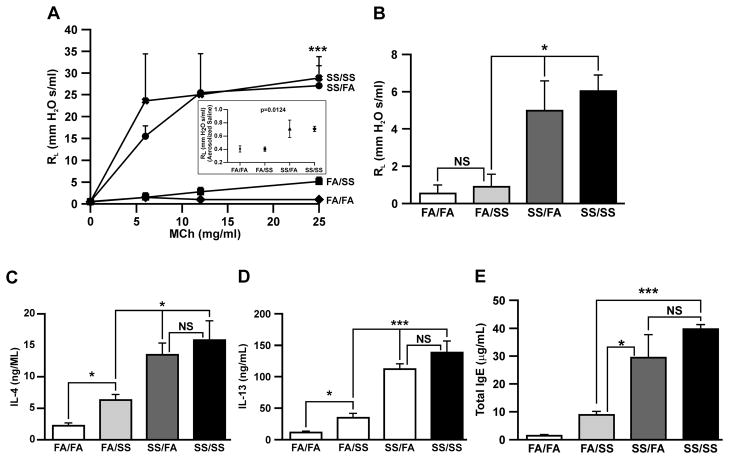
FIGURE 1
FIGURE 1. Prenatal but not postnatal exposure to SS exacerbates airway reactivity, strongly upregulates allergen-induced Th2 cytokine expression, and increases total serum IgE levels
Lung resistance (RL: cmH2O s/ml) was measured using FlexiVent system in response to: (A), increasing doses of computer-controlled nebulized methacholine (MCh), inset (Fig.1A): shows baseline differences between the groups in response to nebulized saline, and (B), a single nebulized dose (200 μg/ml) of Af. Peak responses at each MCh concentration and response to Af were used for data analysis. (C), IL-4, and (D), IL-13 levels were determined in bronchoalveolar lavage fluid from the Af-sensitized mice by the Mutiplex ELISA kit. (E), Total IgE levels in the serum of Af-sensitized mice were quantitated by using a mouse-specific IgE ELISA kit. All animals were sensitized with Af as described in Methods prior to RL determination. The results are representative of animal responses from two different sets of inhalation exposures. Data are expressed as mean ± SD (n = 5–7/group; * p ≤ 0.05, ** p ≤ 0.01; and *** p ≤ 0.001). FA = filtered air, SS = secondhand cigarette smoke; experimental animal groups of prenatal/postnatal exposure combinations are: FA/FA (pre- FA/postnatal FA); SS/FA (preSS/postnatal FA); FA/SS (pre- FA/postnatal SS); SS/SS (pre- SS/postnatal SS).
FIGURE 2
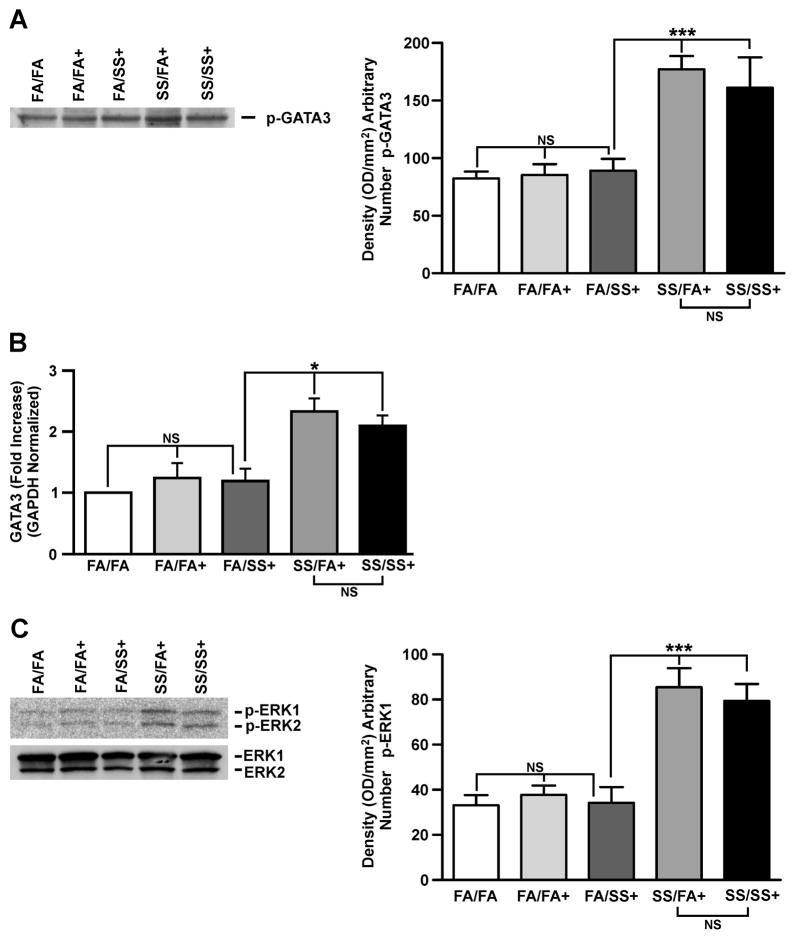
FIGURE 2. Prenatal SS exposure induces GATA3 and ERK activation
Representative result of Western blot (WB) analysis of lung homogenate (70 μg protein) probed with (A), anti-phospho (p)-GATA3 antibody, right panel: densitometry analysis of blots from three separate experiments, (B), lung GATA3 mRNA expression by quantitative PCR as described in Methods (n = 5/group, NS = not significant), and (C), representative of three WB analysis of lung homogenates probed with phosphorylated (p)-ERK1/2 antibody, and total ERK1/2 (lower panel). Right panel: densitometry analysis of blots from three separate experiments (+ indicates Af sensitized; bars represent the mean ± SD; * p ≤ 0.05; *** p ≤ 0.001; NS = not significant).
FIGURE 3
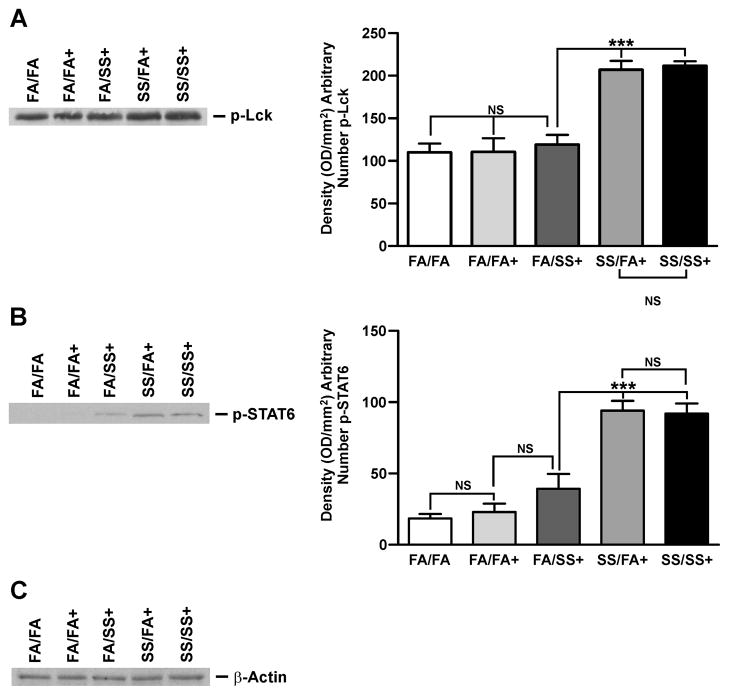
FIGURE 3. Prenatal SS activates Lck and STAT6
Lung homogenates (70 μg) were analyzed by Western blot. The blots were probed (A), with anti phospho (p)-Lck antibody, right panel: densitometry analysis of blots from three separate experiments, (B), with anti p-STAT6 antibody, right panel: densitometry analysis of blots from three separate experiments, and (C), with anti-β-actin antibody. The figures are representative of three separate analysis. (+ indicates Af-sensitized, bars represent the mean ± SD; *** p ≤ 0.001, and NS = not significant)
FIGURE 4
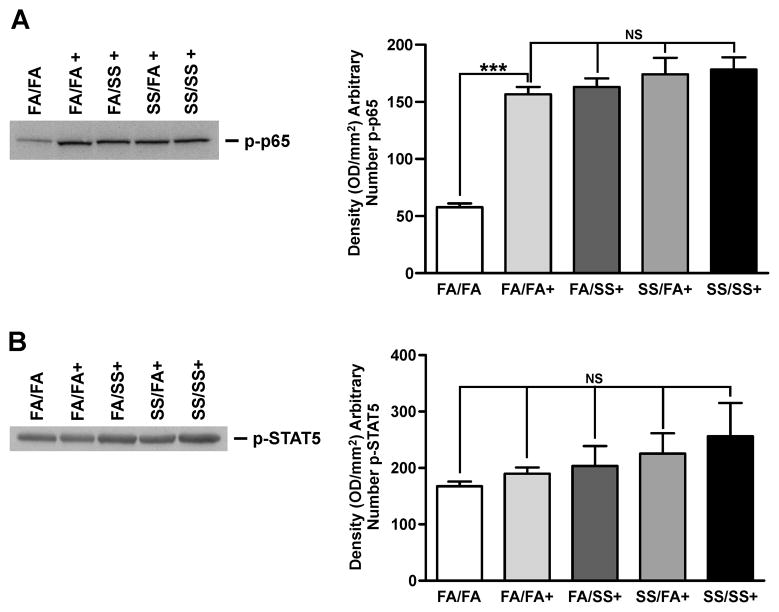
FIGURE 4. SS does not affect NF-κB or STAT5 activation
Lung homogenates (75 μg protein) were analyzed by Western blot, and the blots were probed with anti-p-p65 antibody, (A), or anti p-STAT5 antibody (B), Data are representative of three separate sets of analyses. Right panel: densitometry analysis of blots from three separate experiments. (+ indicates Af sensitized; bars represent the mean ± SD; *** p ≤ 0.001; NS = not significant)
FIGURE 5
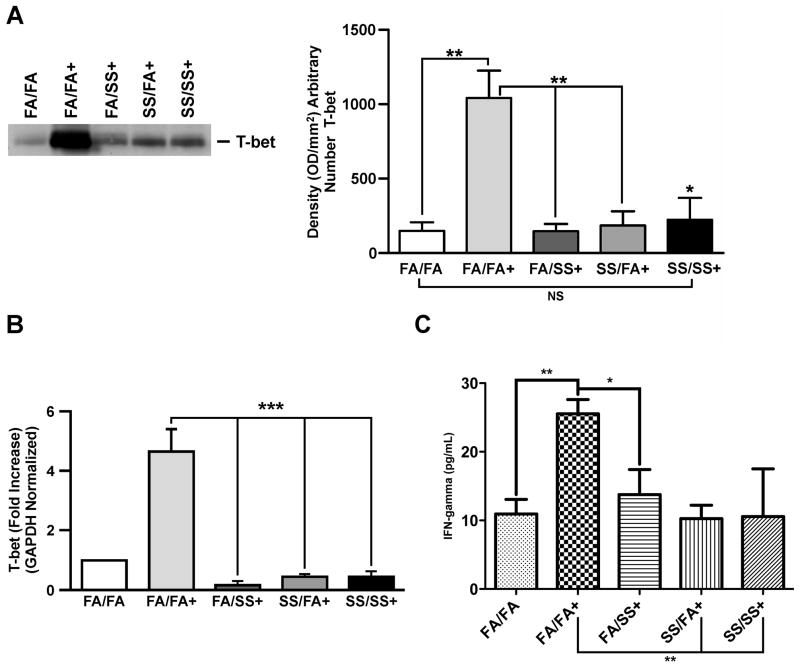
FIGURE 5. Prenatal and/or postnatal SS suppresses T-bet, and IFN-γ
Representative results of lung homogenates (75 μg protein) analysis by Western blot, and probed with (A), anti-T-bet antibody, Right panel: densitometry analysis of blots from three independent experiments. (B), T-bet mRNA expression in the lung tissue analyzed by quantitative PCR as described in the Methods. (C), IFN-γ level in the BALF as described in the Methods. (n = 5/group; + indicates Af-sensitized mice; bars represent the mean ± SD; * p ≤ 0.05; ** p ≤ 0.01, *** p ≤ 0.001, and NS = not significant).
FIGURE 6
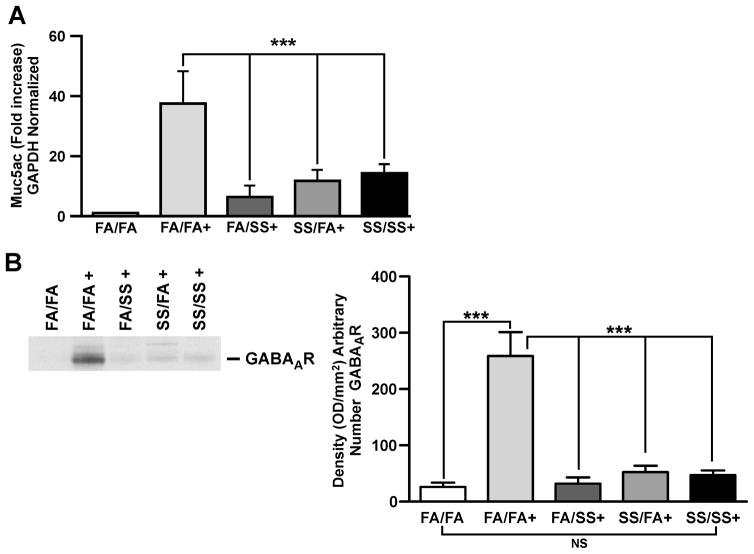
FIGURE 6. SS exposure suppresses Muc5ac and GABAAR expression
(A), MUC5AC mRNA expression in the lung tissue analyzed by quantitative PCR (n = 5/group), and (B), Representative of three independent Western blot analysis of lung homogenate (75 μg protein) probed with anti-GABAAR antibody, right panel: densitometry analysis of blots from three separate experiments (+ indicates Af sensitized mice; bars represent the mean ± SD; *** p ≤ 0.001; NS = not significant).
FIGURE 7
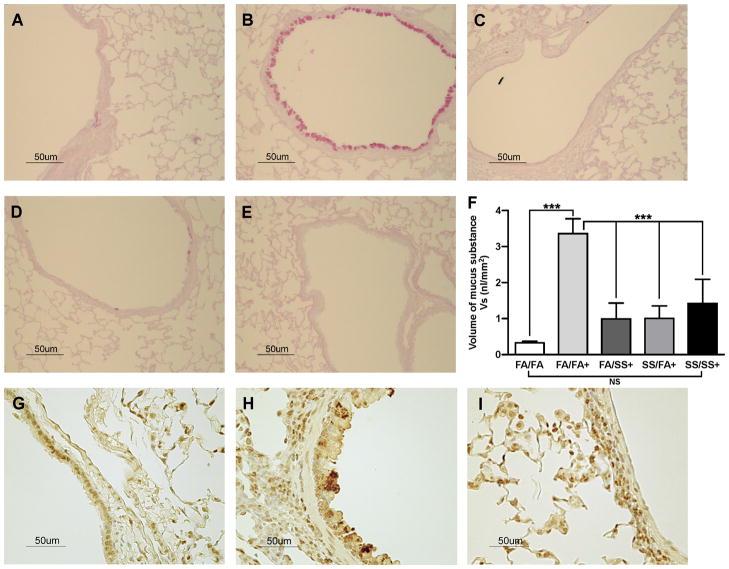
FIGURE 7. SS exposure suppresses the allergen-induced airway mucus, and SPDEF formation
Lung sections (5 μm) were stained with AB-PAS for mucus, and SPDEF as described in the Methods. Representative histologic photomicrographs (40x) of the lung sections show the mucus-producing cells in pink, and SPDEF in brown. Mucus staining: (A), FA/FA; (B), FA/FA+; (C), FA/SS+; (D), SS/FA+; (E), SS/SS+; (F), Volume density(Vs) of AB-PAS-stained mucosubstances in the mucosal surfacein the lungepithelium (n = 5/group; bars represent the mean ± SD; *** p ≤ 0.001; and NS = not significant). SPDEF staining: (G), FA/FA; (H), FA/FA+; (I), SS/FA+ (n =3/group); + indicates Af-sensitized.

References

    1. Humbert M, Menz G, Ying S, Corrigan CJ, Robinson DS, Durham SR, Kay AB. The immunopathology of extrinsic (atopic) and intrinsic (non-atopic) asthma: more similarities than differences. Immunol Today. 1999;20:528–533. - PubMed
    1. Lemanske RF, Jr, Busse WW. 6. Asthma. Review. J Allergy Clin Immunol. 2003;111:S502–S519. - PMC - PubMed
    1. Holt PG, Rowe J, Kusel M, Parsons F, Hollams EM, Bosco A, McKenna K, Subrata L, de Klerk N, Serralha M, Holt BJ, Zhang G, Loh R, Ahlstedt S, Sly PD. Toward improved prediction of risk for atopy and asthma among preschoolers: a prospective cohort study. J Allergy Clin Immunol. 2010;125:653–659. - PubMed
    1. Cates EC, Fattouh R, Johnson JR, Llop-Guevara A, Jordana M. Modeling responses to respiratory house dust mite exposure. Contrib Microbiol. 2007;14:42–67. - PubMed
    1. Singh SP, Mishra NC, Rir-Sima-Ah J, Campen M, Kurup V, Razani-Boroujerdi S, Sopori ML. Maternal exposure to secondhand cigarette smoke primes the lung for induction of phosphodiesterase-4D5 isozyme and exacerbated Th2 responses: rolipram attenuates the airway hyperreactivity and muscarinic receptor expression but not lung inflammation and atopy. J Immunol. 2009;183:2115–2121. - PMC - PubMed

Publication types

MeSH terms

Substances