


Safety of early discharge for low-risk patients with febrile neutropenia: a multicenter randomized controlled trial
- PMID: 21931024
- PMCID: PMC3675706
- DOI: 10.1200/JCO.2011.35.0884
Safety of early discharge for low-risk patients with febrile neutropenia: a multicenter randomized controlled trial
Abstract
Purpose: Febrile neutropenia commonly complicates cancer chemotherapy. Outpatient treatment may reduce costs and improve patient comfort but risk progression of undetected medical problems.
Patients and methods: By using our validated algorithm, we identified medically stable inpatients admitted for febrile neutropenia (neutrophils < 500/μL) after chemotherapy and randomly assigned them to continued inpatient antibiotic therapy or early discharge to receive identical antibiotic treatment at home. Our primary outcome was the occurrence of any serious medical complication, defined as evidence of medical instability requiring urgent medical attention.
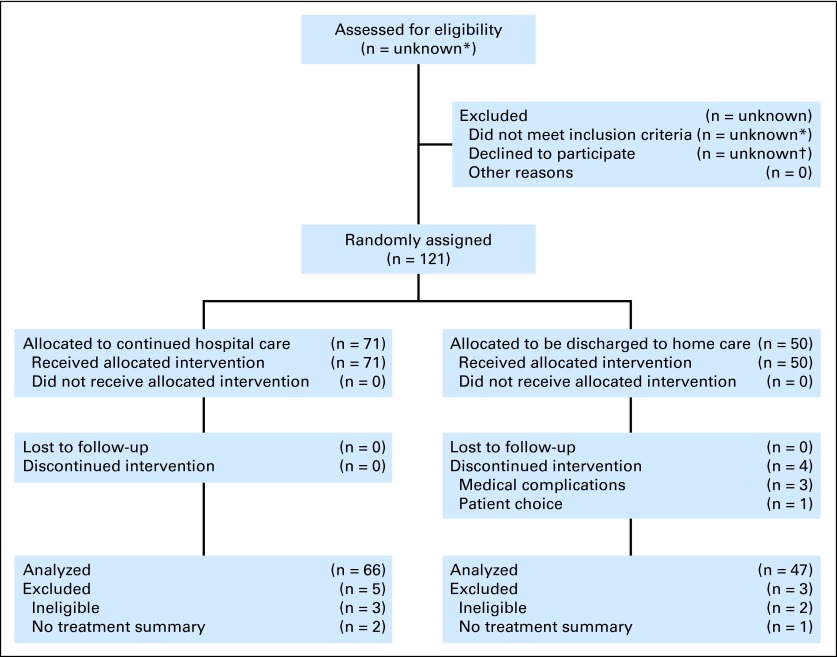
Results: We enrolled 117 patients with 121 febrile neutropenia episodes before study termination for poor accrual. We excluded five episodes as ineligible and three because of inadequate documentation of the study outcome. Treatment groups were clinically similar, but sociodemographic imbalances occurred because of block randomization. The median presenting absolute neutrophil count was 100/μL. Hematopoietic growth factors were used in 38% of episodes. The median neutropenia duration was 4 days (range, 1 to 15 days). Five outpatients were readmitted to the hospital. Major medical complications occurred in five episodes (8%) in the hospital arm and four (9%) in the home arm (95% CI for the difference, -10% to 13%; P = .56). No study patient died. Patient-reported quality of life was similar on both arms.
Conclusion: We found no evidence of adverse medical consequences from home care, despite a protocol designed to detect evidence of clinical deterioration. These results should reassure clinicians who elect to treat rigorously characterized low-risk patients with febrile neutropenia in suitable outpatient settings with appropriate surveillance for unexpected clinical deterioration.
Conflict of interest statement
Authors' disclosures of potential conflicts of interest and author contributions are found at the end of this article.
Figures
Comment in
-
No place like home? Outpatient management of patients with febrile neutropenia and low risk.J Clin Oncol. 2011 Oct 20;29(30):3952-4. doi: 10.1200/JCO.2011.37.5758. Epub 2011 Sep 19. J Clin Oncol. 2011. PMID: 21931028 No abstract available.
References
-
- Schimpff S, Satterlee W, Young VM, et al. Empiric therapy with carbenicillin and gentamicin for febrile patients with cancer and granulocytopenia. N Engl J Med. 1971;284:1061–1065. - PubMed
-
- Pizzo PA. Management of fever in patients with cancer and treatment-induced neutropenia. N Engl J Med. 1993;328:1323–1332. - PubMed
-
- Talcott JA, Finberg R, Mayer RJ, et al. The medical course of cancer patients with fever and neutropenia. Clinical identification of a low-risk subgroup at presentation. Arch Intern Med. 1988;148:2561–2568. - PubMed
-
- Talcott JA, Siegel RD, Finberg R, et al. Risk assessment in cancer patients with fever and neutropenia: A prospective, two-center validation of a prediction rule. J Clin Oncol. 1992;10:316–322. - PubMed
Publication types
MeSH terms
Substances
Grants and funding
LinkOut - more resources
Full Text Sources
Medical
