. 2011 Sep;7(9):e1002271.
doi: 10.1371/journal.pgen.1002271. Epub 2011 Sep 8.

Release of Ku and MRN from DNA ends by Mre11 nuclease activity and Ctp1 is required for homologous recombination repair of double-strand breaks

Affiliations

Release of Ku and MRN from DNA ends by Mre11 nuclease activity and Ctp1 is required for homologous recombination repair of double-strand breaks

Petra Langerak et al. PLoS Genet. 2011 Sep.

Abstract

The multifunctional Mre11-Rad50-Nbs1 (MRN) protein complex recruits ATM/Tel1 checkpoint kinase and CtIP/Ctp1 homologous recombination (HR) repair factor to double-strand breaks (DSBs). HR repair commences with the 5'-to-3' resection of DNA ends, generating 3' single-strand DNA (ssDNA) overhangs that bind Replication Protein A (RPA) complex, followed by Rad51 recombinase. In Saccharomyces cerevisiae, the Mre11-Rad50-Xrs2 (MRX) complex is critical for DSB resection, although the enigmatic ssDNA endonuclease activity of Mre11 and the DNA-end processing factor Sae2 (CtIP/Ctp1 ortholog) are largely unnecessary unless the resection activities of Exo1 and Sgs1-Dna2 are also eliminated. Mre11 nuclease activity and Ctp1/CtIP are essential for DSB repair in Schizosaccharomyces pombe and mammals. To investigate DNA end resection in Schizo. pombe, we adapted an assay that directly measures ssDNA formation at a defined DSB. We found that Mre11 and Ctp1 are essential for the efficient initiation of resection, consistent with their equally crucial roles in DSB repair. Exo1 is largely responsible for extended resection up to 3.1 kb from a DSB, with an activity dependent on Rqh1 (Sgs1) DNA helicase having a minor role. Despite its critical function in DSB repair, Mre11 nuclease activity is not required for resection in fission yeast. However, Mre11 nuclease and Ctp1 are required to disassociate the MRN complex and the Ku70-Ku80 nonhomologous end-joining (NHEJ) complex from DSBs, which is required for efficient RPA localization. Eliminating Ku makes Mre11 nuclease activity dispensable for MRN disassociation and RPA localization, while improving repair of a one-ended DSB formed by replication fork collapse. From these data we propose that release of the MRN complex and Ku from DNA ends by Mre11 nuclease activity and Ctp1 is a critical step required to expose ssDNA for RPA localization and ensuing HR repair.


Conflict of interest statement

The authors have declared that no competing interests exist.

Figures
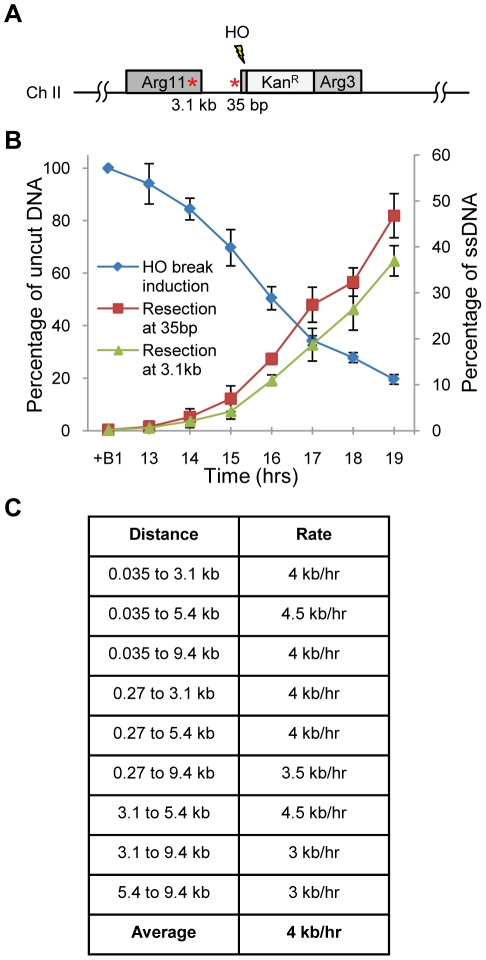
Figure 1
Figure 1. Set-up of resection assay in Schizo. pombe.
A. Schematic representation of the HO recognition site (⚡) and ApoI restriction sites (*) on chromosome two in Schizo. pombe. ApoI digestion of the DNA cuts dsDNA, but leaves ssDNA intact. B. Typical HO endonuclease induction in wild type is shown. Left vertical axis shows appearance of the break, while the right vertical axis depicts the percentage of ssDNA as a measure for resection. “+B1” represents the repressed condition (HO endonuclease off). Derepression of the HO gene and the appearance of the HO break starts ∼13 hours after induction and continues for several hours. Average and standard deviation (error bar) of three independent experiments are shown. C. Resection rates for wild type are estimated by measuring resection at different distances from the break.
Figure 2
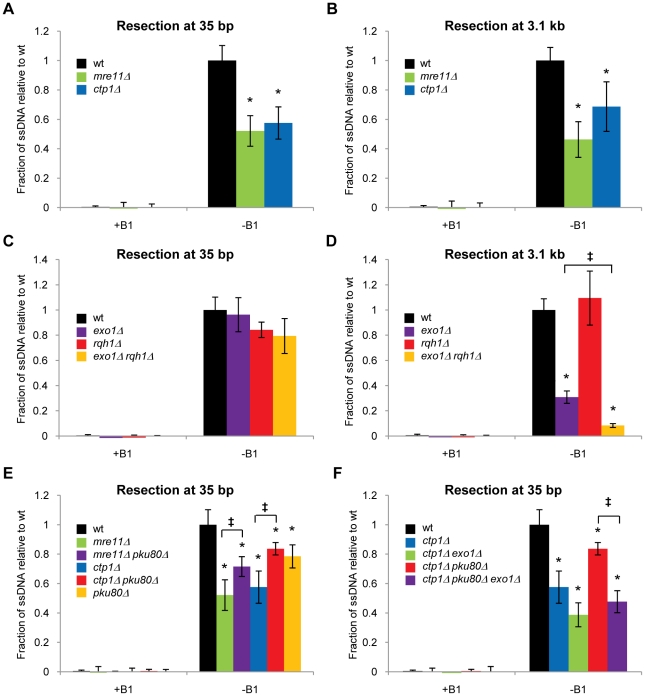
Figure 2. Resection requires Ctp1, Mre11, and Exo1, but not Rqh1, and can be inhibited by Ku.
+B1: HO endonuclease expression repressed. −B1: expression of HO endonuclease induced. The percentage of ssDNA in the absence of B1 is shown for the time point at which the amount of cut DNA is maximal, seven hours after the first cells show the appearance of the break. A. Resection at 35 bp from the break is decreased in the absence of either Mre11 or Ctp1. B. Resection at 3.1 kb from the break is decreased in the absence of either Mre11 or Ctp1. C. Resection at 35 bp is minimally affected by deletion of Exo1 and/or Rqh1. D. Resection at 3.1 kb is severely affected in the absence of Exo1, but not Rqh1. An exo1Δ rqh1Δ mutant shows a more severe phenotype than exo1Δ mutant. E. Resection at 35 bp in the mre11Δ and ctp1Δ mutants is statistically increased by deletion of Ku (two-tailed Student T-test p-values 0.03 and 0.01, respectively). Resection initiation in the pku80Δ strain is significantly reduced relative to wild type. F. Resection initiation in a ctp1Δ pku80Δ mutant is significantly decreased by deleting Exo1. Average and standard deviation (error bar) from at least three independent experiments are shown. All values for mutant strains are depicted relative to the average value of induced wild type (−B1). The wild type average was set to 1, with its standard deviation and values for the mutants adjusted by the same factor. Raw data and kinetics are shown in Figure S6. Asterisk depicts statistically significant differences with wild type as determined by a two-tailed Student T-test, p-value≤0.05. ‡ depicts statistically significant differences amongst the bracketed strains as determined by a two-tailed Student T-test, p-value≤0.05.
Figure 3
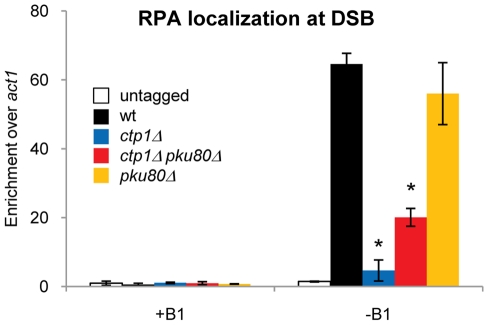
Figure 3. Localization of RPA in ctp1Δ mutants is increased in absence of Ku.
+B1: HO endonuclease expression repressed. −B1: expression of HO endonuclease induced. Chromatin immunoprecipitation (ChIP) analysis of RPA (rad11-TAP) at 0.2 kb from an HO endonuclease induced DSB. The defective localization of RPA in ctp1Δ mutants can be partially restored by deletion of Ku. Average and standard deviation (error bar) of three independent experiments are shown. Asterisk depicts statistically significant differences with wild type as determined by a two-tailed Student T-test, p-value≤0.05.
Figure 4
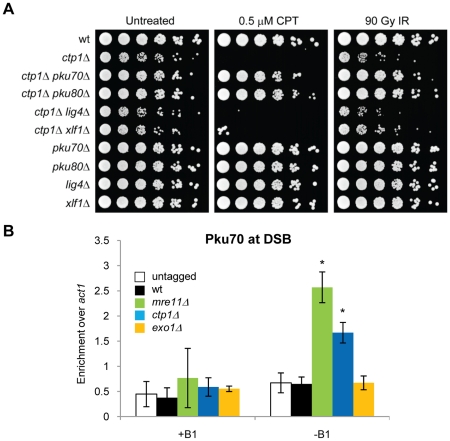
Figure 4. Mre11 and Ctp1 are required to release Ku from DNA ends.
A. Dilution assay depicting the rescue effect of the slow growth and DSB sensitivity (induced by IR and CPT) phenotypes of ctp1Δ mutant by deletion of Pku70 or Pku80. Deletion of two other NHEJ proteins, Xlf1 and Lig4, does not show the same effect. B. +B1: HO endonuclease expression repressed. −B1: expression of HO endonuclease induced. ChIP analysis of Ku (Pku70-HA) at 0.2 kb from HO-induced DSB. In the absence of Mre11 or Ctp1, the high affinity DNA binding Ku heterodimer is enriched at the HO break compared to wild type. No increase in Ku is observed in wild type compared to an untagged control. Average and standard deviation (error bar) of three independent experiments are shown. Asterisk depicts statistically significant differences with wild type as determined by a two-tailed Student T-test, p-value≤0.05. ‡ depicts statistically significant differences amongst the bracketed strains as determined by a two-tailed Student T-test, p-value≤0.05.
Figure 5
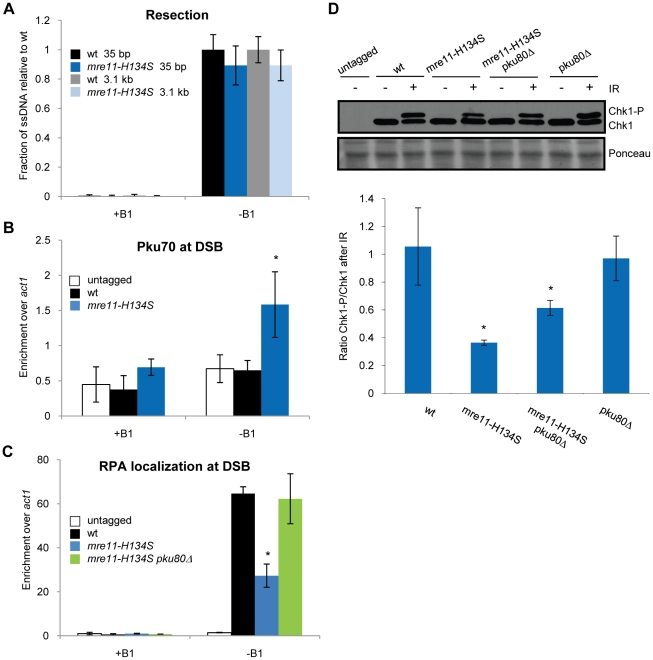
Figure 5. Functions of Mre11 nuclease activity in HR repair.
Untagged and wild type values taken from previous figures, with the exception of D. +B1: HO endonuclease expression repressed. −B1: expression of HO endonuclease induced. A. Mre11 nuclease activity is not required for resection as ssDNA formation in mre11-H134S nuclease dead cells is not significantly decreased compared to wild type. B. Pku70-HA ChIP analysis shows increased Pku70 enrichment 0.2 kb from the HO endonuclease induced DSB in mre11-H134S cells compared to wild type. C. ChIP analysis of RPA (rad11-TAP) shows that RPA enrichment 0.2 kb from the HO endonuclease induced DSB in mre11-H134S cells is decreased compared to wild type. Deletion of Ku restores RPA localization to wild type levels. D. Chk1 undergoes strongly reduced activating phosphorylation (Chk1-P) 30 minutes after 90 Gy IR in mre11-H134S cells compared to wild type. Deletion of Ku increases Chk1 phosphorylation. Top: Western blot. Bottom: quantitation. Average and standard deviation (error bar) of three independent experiments are shown. Asterisk depicts statistically significant differences with wild type as determined by a two-tailed Student T-test, p-value≤0.05. In panel A: All values for the mutant strain are depicted relative to the average value of wild type. The wild type average was set to 1, with its standard deviation and values for the mutant adjusted by the same factor.
Figure 6
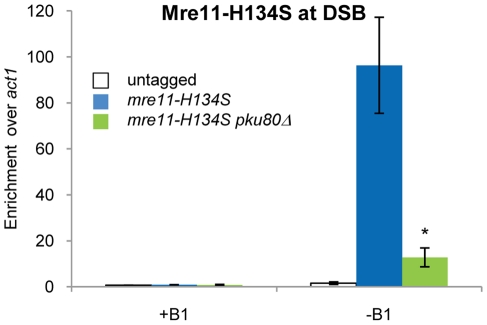
Figure 6. Ku stabilizes MRN binding on DNA ends in mre11-H134S cells.
+B1: HO endonuclease expression repressed. −B1: expression of HO endonuclease induced. Enrichment of Mre11-H134S 0.2 kb from the HO endonuclease induced DSB in mre11-H134S cells can be reduced by deletion of Pku80. Average and standard deviation (error bar) of three independent experiments are shown. Asterisk depicts statistically significant differences with the mre11-H134S mutant as determined by a two-tailed Student T-test, p-value≤0.05.
Figure 7
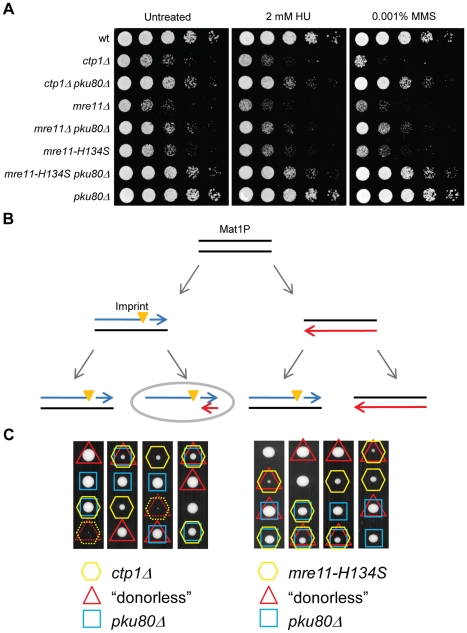
Figure 7. Mre11 nuclease, Ctp1, and Ku interplay in repair of a site–specific broken replication fork.
A. In addition to desensitizing ctp1Δ and mre11Δ mutants to DSB inducing agents , , this dilution assay shows that deletion of Pku80 also protects these cells from damage induced by HU and MMS. B. Mating type pedigree is shown. The first round of cell division creates one daughter with a single strand break, called the imprint (orange triangle). Further cell division of this daughter will result in a single one-ended DSB. Newly synthesized DNA: blue and red arrows. Cell with DSB: grey oval. C. Tetrad dissection of a mating between ctp1Δ pku80Δ (left panel) or mre11-H134S pku80Δ (right panel) and mat1-P(2,3Δ) or “donorless” strains. Replication forks collapse near the mating type locus in donorless strains. The collapsed replication fork is restored by a homologous recombination-dependent mechanism requiring Ctp1, and to a lesser extent, the nuclease activity of Mre11. This requirement is overcome by deletion of Ku.
Figure 8
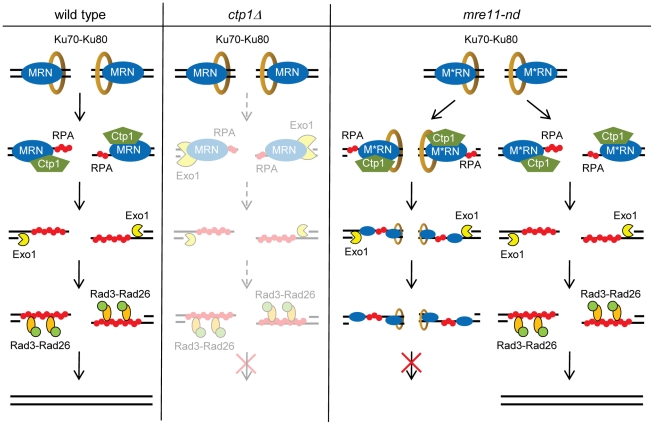
Figure 8. Model for resection in Schizo. pombe.
Wild type: Ku and MRN recognize the DSB, and MRN recruits Ctp1. Ctp1 initiates resection. The action of the Mre11 nuclease and Ctp1 releases Ku from the DNA end, after which MRN is released from the DNA. Resection can be extended by Exo1. Localization of RPA to ssDNA recruits Rad3-Rad26 and activates the checkpoint pathway by phosphorylating Chk1. The break is repaired. Ctp1Δ: MRN recognizes the DSB, but absence of Ctp1 inhibits release of Ku and resection initiation. Inefficient Ku release by Mre11 nuclease allows Exo1 to substitute for Ctp1 in the initiation of resection at some DNA ends. Exo1 also extends resection. This step is inefficient and results in strongly decreased RPA binding to the ssDNA and prevents HR repair. Mre11-ND: M*RN recognizes the DSB, and recruits Ctp1. The lack of the nuclease function of Mre11 inhibits Ku release. Ctp1 can initiate resection for several hundred base pairs, allowing Exo1 to extent resection despite the presence of Ku on the DNA end. The inability to release Ku and M*RN from the DNA end interferes with RPA localization at the ssDNA and prevents repair. Ctp1 is however able to release Ku from some DNA ends. Resection and efficient RPA binding to the ssDNA overhangs allows repair of the DSB.

Similar articles

Cited by

References

    1. Aguilera A, Gomez-Gonzalez B. Genome instability: a mechanistic view of its causes and consequences. Nat Rev Genet. 2008;9:204–217. - PubMed
    1. Pitcher RS, Wilson TE, Doherty AJ. New insights into NHEJ repair processes in prokaryotes. Cell Cycle. 2005;4:675–678. - PubMed
    1. Lees-Miller SP, Meek K. Repair of DNA double strand breaks by non-homologous end joining. Biochimie. 2003;85:1161–1173. - PubMed
    1. Baumann P, Cech TR. Protection of telomeres by the Ku protein in fission yeast. Mol Biol Cell. 2000;11:3265–3275. - PMC - PubMed
    1. Cavero S, Chahwan C, Russell P. Xlf1 is required for DNA repair by nonhomologous end joining in Schizosaccharomyces pombe. Genetics. 2007;175:963–967. - PMC - PubMed

Publication types

MeSH terms