


Mycobacterium tuberculosis lineage influences innate immune response and virulence and is associated with distinct cell envelope lipid profiles
- PMID: 21931620
- PMCID: PMC3169546
- DOI: 10.1371/journal.pone.0023870
Mycobacterium tuberculosis lineage influences innate immune response and virulence and is associated with distinct cell envelope lipid profiles
Abstract
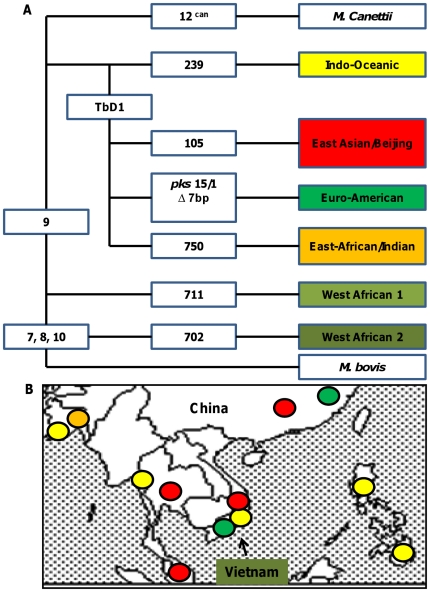
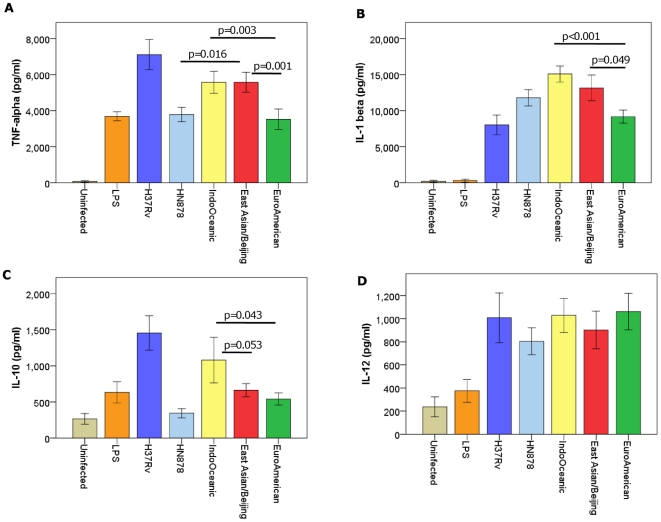
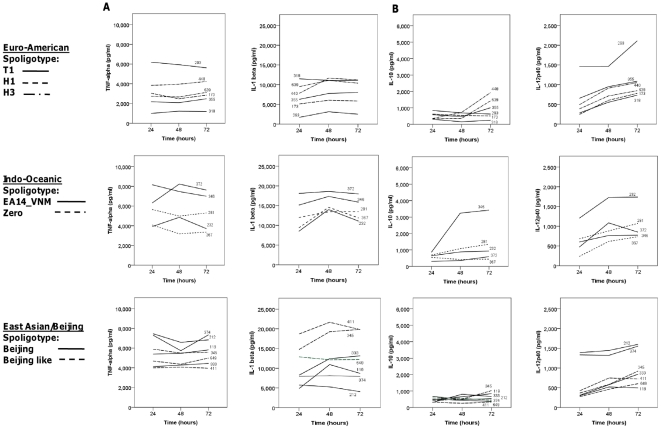
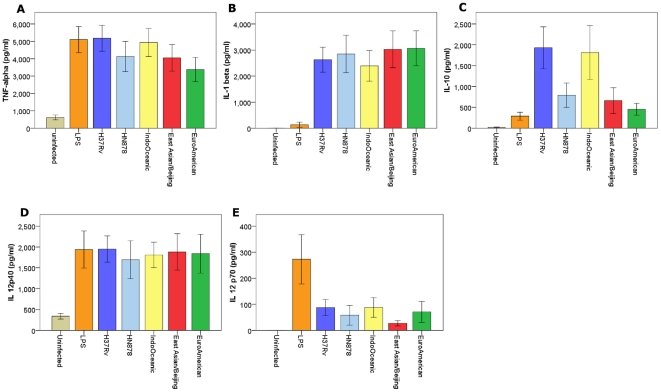
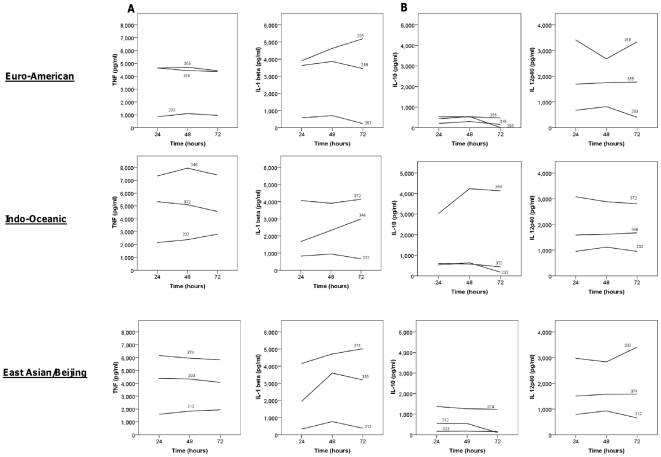
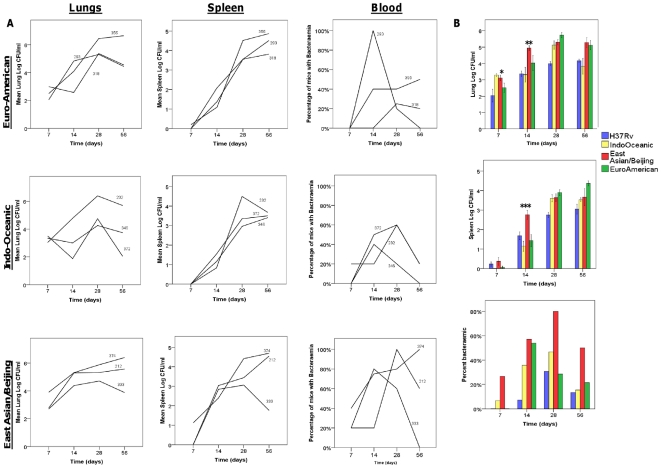
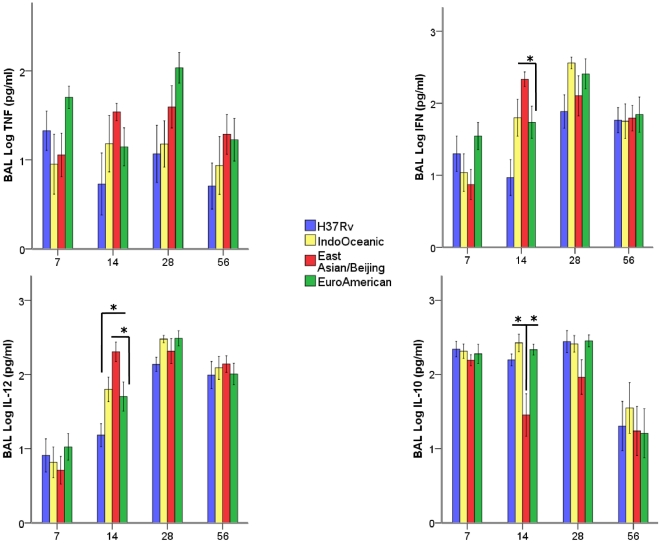
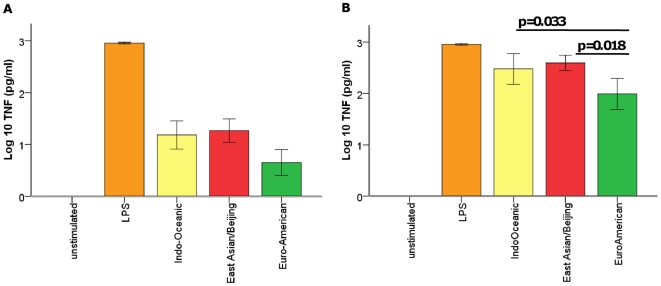
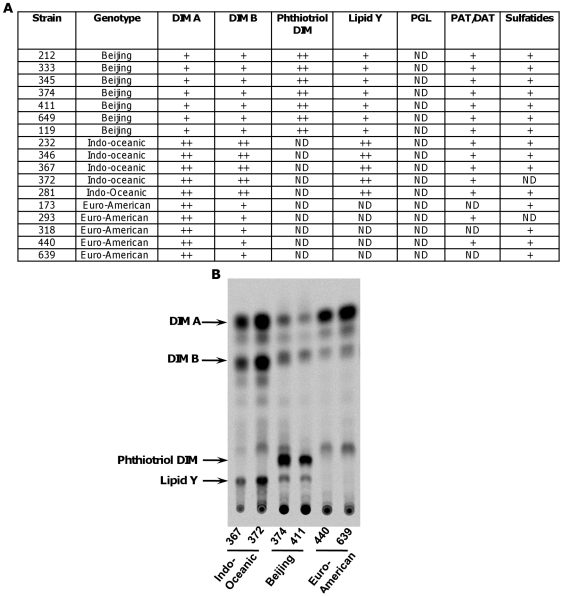
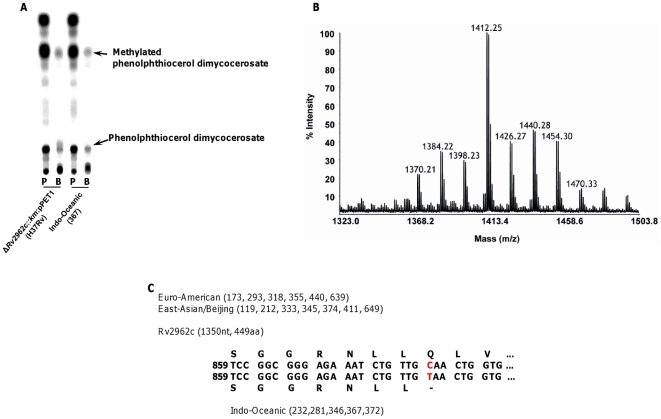
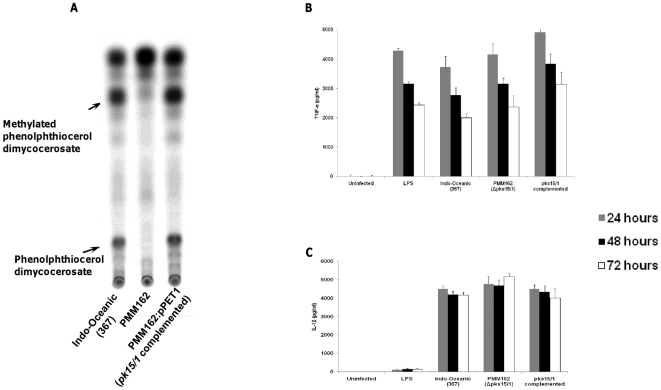
The six major genetic lineages of Mycobacterium tuberculosis are strongly associated with specific geographical regions, but their relevance to bacterial virulence and the clinical consequences of infection are unclear. Previously, we found that in Vietnam, East Asian/Beijing and Indo-Oceanic strains were significantly more likely to cause disseminated tuberculosis with meningitis than those from the Euro-American lineage. To investigate this observation we characterised 7 East Asian/Beijing, 5 Indo-Oceanic and 6 Euro-American Vietnamese strains in bone-marrow-derived macrophages, dendritic cells and mice. East Asian/Beijing and Indo-Oceanic strains induced significantly more TNF-α and IL-1β from macrophages than the Euro-American strains, and East Asian/Beijing strains were detectable earlier in the blood of infected mice and grew faster in the lungs. We hypothesised that these differences were induced by lineage-specific variation in cell envelope lipids. Whole lipid extracts from East Asian/Beijing and Indo-Oceanic strains induced higher concentrations of TNF-α from macrophages than Euro-American lipids. The lipid extracts were fractionated and compared by thin layer chromatography to reveal a distinct pattern of lineage-associated profiles. A phthiotriol dimycocerosate was exclusively produced by East Asian/Beijing strains, but not the phenolic glycolipid previously associated with the hyper-virulent phenotype of some isolates of this lineage. All Indo-Oceanic strains produced a unique unidentified lipid, shown to be a phenolphthiocerol dimycocerosate dependent upon an intact pks15/1 for its production. This was described by Goren as the 'attenuation indictor lipid' more than 40 years ago, due to its association with less virulent strains from southern India. Mutation of pks15/1 in a representative Indo-Oceanic strain prevented phenolphthiocerol dimycocerosate synthesis, but did not alter macrophage cytokine induction. Our findings suggest that the early interactions between M. tuberculosis and host are determined by the lineage of the infecting strain; but we were unable to show these differences are driven by lineage-specific cell-surface expressed lipids.
Conflict of interest statement
Figures
References
-
- Gagneux S, Small PM. Global phylogeography of Mycobacterium tuberculosis and implications for tuberculosis product development. Lancet Infect Dis. 2007;7:328–337. - PubMed
-
- Nicol MP, Wilkinson RJ. The clinical consequences of strain diversity in Mycobacterium tuberculosis. Trans R Soc Trop Med Hyg. 2008;102:955–965. - PubMed
-
- Mitchison DA, Wallace JG, Bhatia AL, Selkon JB, Subbaiah TV, et al. A comparison of the virulence in guinea-pigs of South Indian and British tubercle bacilli. Tubercle. 1960;41:1–22. - PubMed
Publication types
MeSH terms
Substances
Grants and funding
LinkOut - more resources
Full Text Sources
Research Materials
