


Combinatorial effect of non-steroidal anti-inflammatory drugs and NF-κB inhibitors in ovarian cancer therapy
- PMID: 21931671
- PMCID: PMC3171406
- DOI: 10.1371/journal.pone.0024285
Combinatorial effect of non-steroidal anti-inflammatory drugs and NF-κB inhibitors in ovarian cancer therapy
Abstract
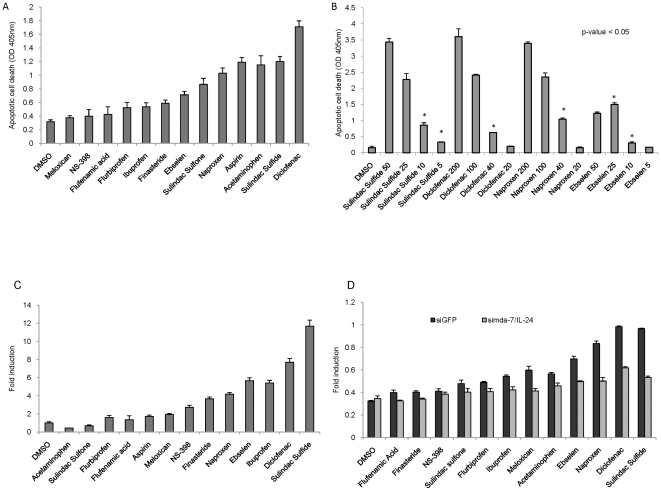
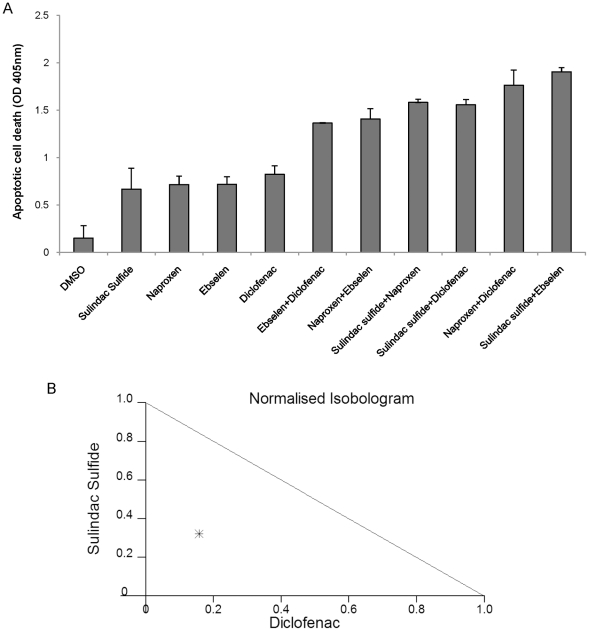
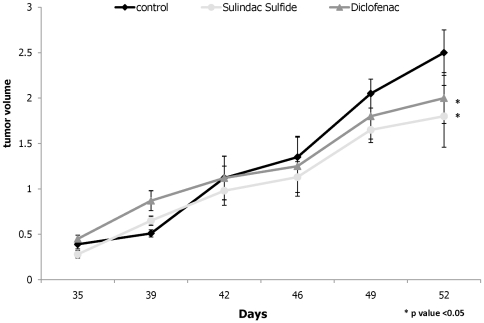
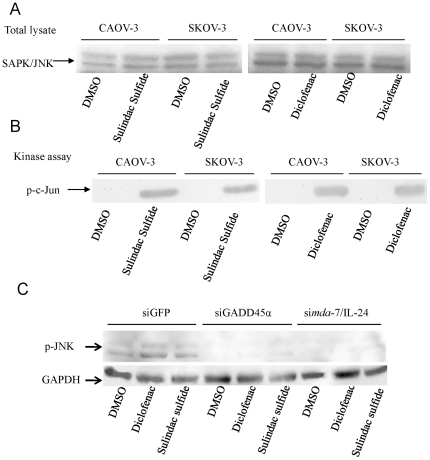
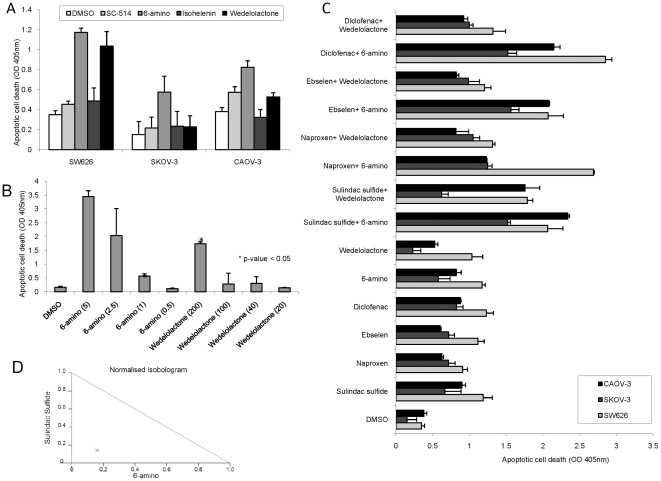
Several epidemiological studies have correlated the use of non-steroidal anti-inflammatory drugs (NSAID) with reduced risk of ovarian cancer, the most lethal gynecological cancer, diagnosed usually in late stages of the disease. We have previously established that the pro-apoptotic cytokine melanoma differentiation associated gene-7/Interleukin-24 (mda-7/IL-24) is a crucial mediator of NSAID-induced apoptosis in prostate, breast, renal and stomach cancer cells. In this report we evaluated various structurally different NSAIDs for their efficacies to induce apoptosis and mda-7/IL-24 expression in ovarian cancer cells. While several NSAIDs induced apoptosis, Sulindac Sulfide and Diclofenac most potently induced apoptosis and reduced tumor growth. A combination of these agents results in a synergistic effect. Furthermore, mda-7/IL-24 induction by NSAIDs is essential for programmed cell death, since inhibition of mda-7/IL-24 by small interfering RNA abrogates apoptosis. mda-7/IL-24 activation leads to upregulation of growth arrest and DNA damage inducible (GADD) 45 α and γ and JNK activation. The NF-κB family of transcription factors has been implicated in ovarian cancer development. We previously established NF-κB/IκB signaling as an essential step for cell survival in cancer cells and hypothesized that targeting NF-κB could potentiate NSAID-mediated apoptosis induction in ovarian cancer cells. Indeed, combining NSAID treatment with NF-κB inhibitors led to enhanced apoptosis induction. Our results indicate that inhibition of NF-κB in combination with activation of mda-7/IL-24 expression may lead to a new combinatorial therapy for ovarian cancer.
Conflict of interest statement
Figures
References
-
- Jemal A, Siegel R, Ward E, Hao Y, Xu J, et al. Cancer statistics, 2008. CA Cancer J Clin. 2008;58:71–96. - PubMed
-
- Tingulstad S, Skjeldestad FE, Halvorsen TB, Hagen B. Survival and prognostic factors in patients with ovarian cancer. Obstet Gynecol. 2003;101:885–891. - PubMed
-
- Berkel H, Holcombe RF, Middlebrooks M, Kannan K. Nonsteroidal antiinflammatory drugs and colorectal cancer. Epidemiol Rev. 1996;18:205–217. - PubMed
-
- Coogan PF, Rao SR, Rosenberg L, Palmer JR, Strom BL, et al. The relationship of nonsteroidal anti-inflammatory drug use to the risk of breast cancer. Prev Med. 1999;29:72–76. - PubMed
-
- Cramer DW, Harlow BL, Titus-Ernstoff L, Bohlke K, Welch WR, et al. Over-the-counter analgesics and risk of ovarian cancer. Lancet. 1998;351:104–107. - PubMed
Publication types
MeSH terms
Substances
Grants and funding
LinkOut - more resources
Full Text Sources
Medical
Research Materials
