


Modulating pharmacokinetics, tumor uptake and biodistribution by engineered nanoparticles
- PMID: 21931696
- PMCID: PMC3172229
- DOI: 10.1371/journal.pone.0024374
Modulating pharmacokinetics, tumor uptake and biodistribution by engineered nanoparticles
Abstract
Background: Inorganic nanoparticles provide promising tools for biomedical applications including detection, diagnosis and therapy. While surface properties such as charge are expected to play an important role in their in vivo behavior, very little is known how the surface chemistry of nanoparticles influences their pharmacokinetics, tumor uptake, and biodistribution.
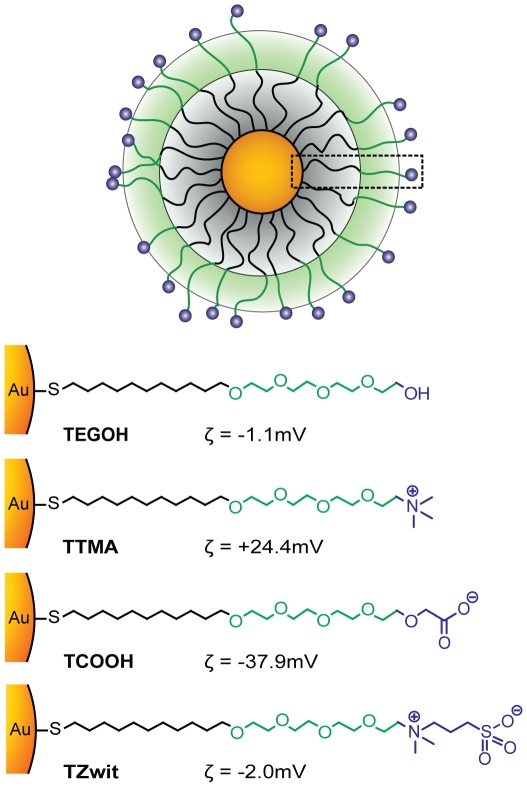
Method/principal findings: Using a family of structurally homologous nanoparticles we have investigated how pharmacological properties including tumor uptake and biodistribution are influenced by surface charge using neutral (TEGOH), zwitterionic (Tzwit), negative (TCOOH) and positive (TTMA) nanoparticles. Nanoparticles were injected into mice (normal and athymic) either in the tail vein or into the peritoneum.
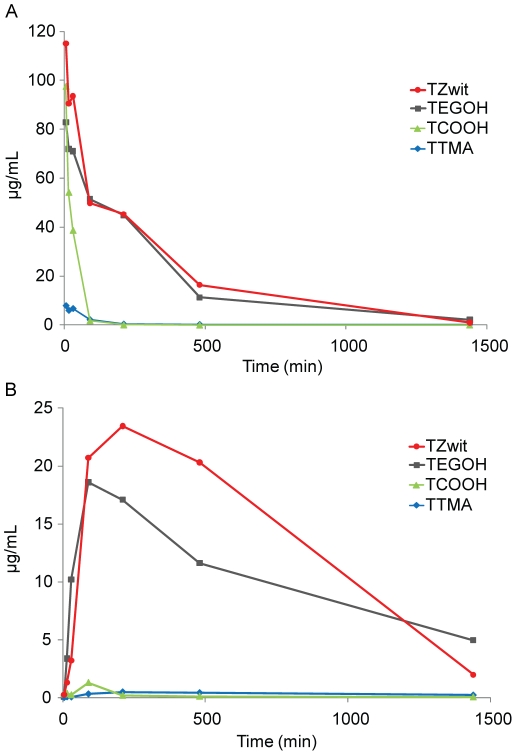
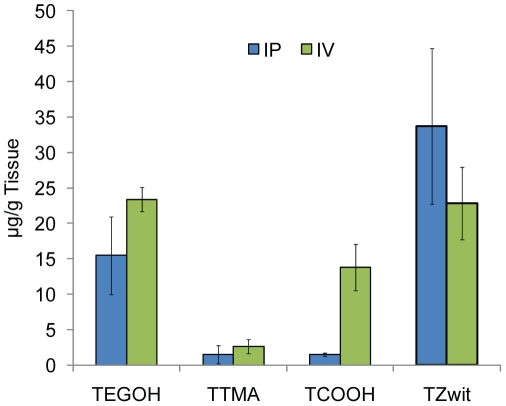
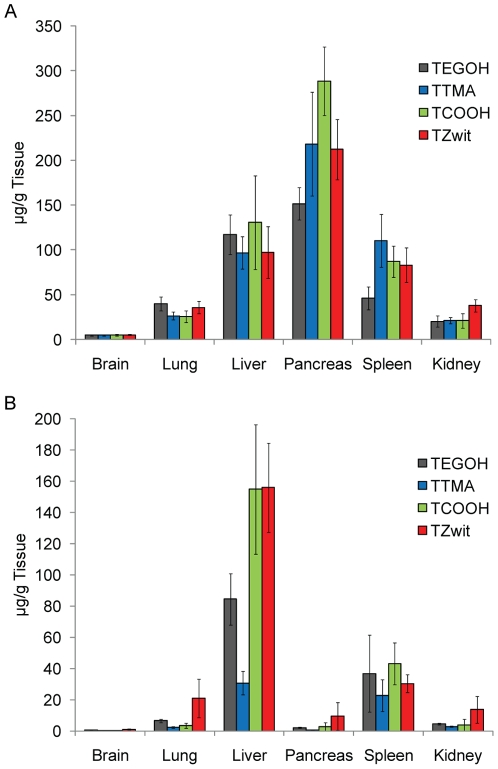
Conclusion: Neutral and zwitterionic nanoparticles demonstrated longer circulation time via both i.p. and i.v. administration, whereas negatively and positively charged nanoparticles possessed relatively short half-lives. These pharmacological characteristics were reflected on the tumor uptake and biodistribution of the respective nanoparticles, with enhanced tumor uptake by neutral and zwitterionic nanoparticles via passive targeting.
Conflict of interest statement
Figures
References
-
- Petros RA, DeSimone JM. Strategies in the design of nanoparticles for therapeutic applications. Nature Review Drug Discovery. 2010;9(8):615–627. - PubMed
-
- Davis AJ, Tannock IF. Tumor physiology and resistance to chemotherapy: repopulation and drug penetration. Cancer Treat Res. 2002;112:1–26. - PubMed
-
- Gindy ME, Prud'homme RK. Multifunctional nanoparticles for imaging, delivery and targeting in cancer therapy. Expert Opinion on Drug Delivery. 2009;6(8):865–878. - PubMed
-
- Gao J, Liang G, Zhang B, Kuang Y, Zhang X, et al. FePt@CoS(2) yolk-shell nanocrystals as a potent agent to kill HeLa cells. J Am Chem Soc. 2007;129(5):1428–1433. - PubMed
-
- Langer R, Tirrell DA. Designing materials for biology and medicine. Nature. 2004;428(6982):487–492. - PubMed
Publication types
MeSH terms
Substances
Grants and funding
LinkOut - more resources
Full Text Sources
Other Literature Sources
