


T cell epitope regions of the P. falciparum MSP1-33 critically influence immune responses and in vitro efficacy of MSP1-42 vaccines
- PMID: 21931852
- PMCID: PMC3172285
- DOI: 10.1371/journal.pone.0024782
T cell epitope regions of the P. falciparum MSP1-33 critically influence immune responses and in vitro efficacy of MSP1-42 vaccines
Abstract
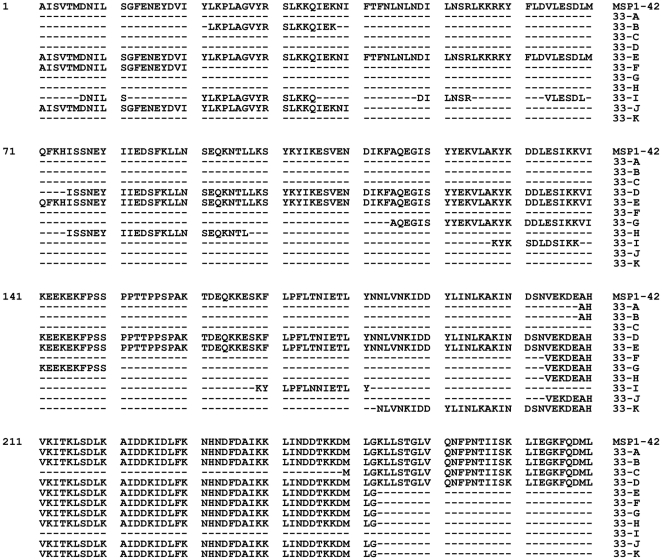
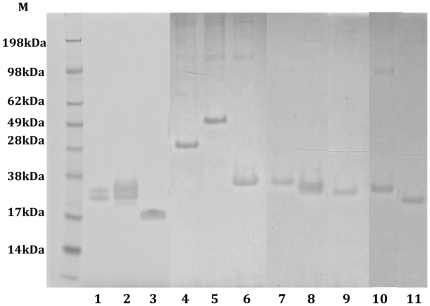
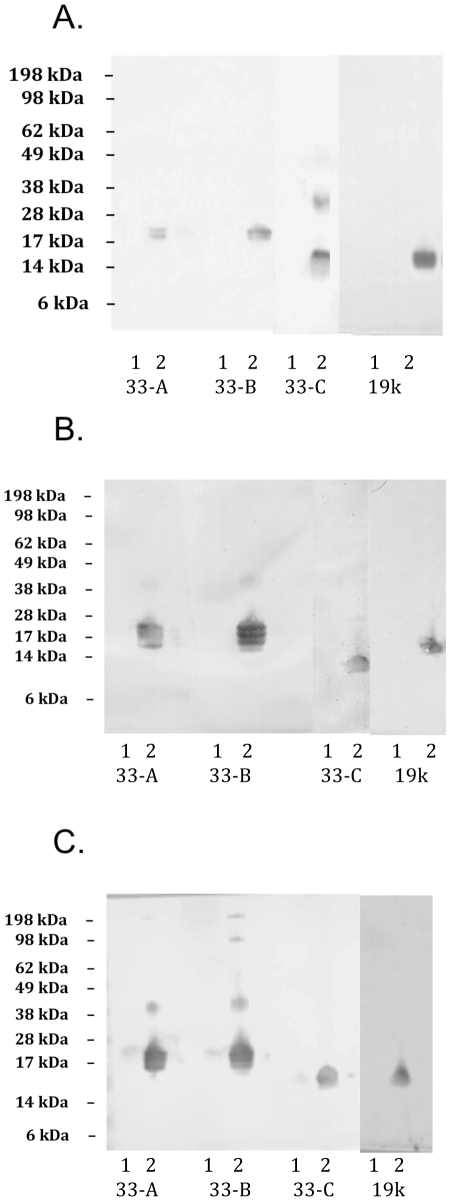
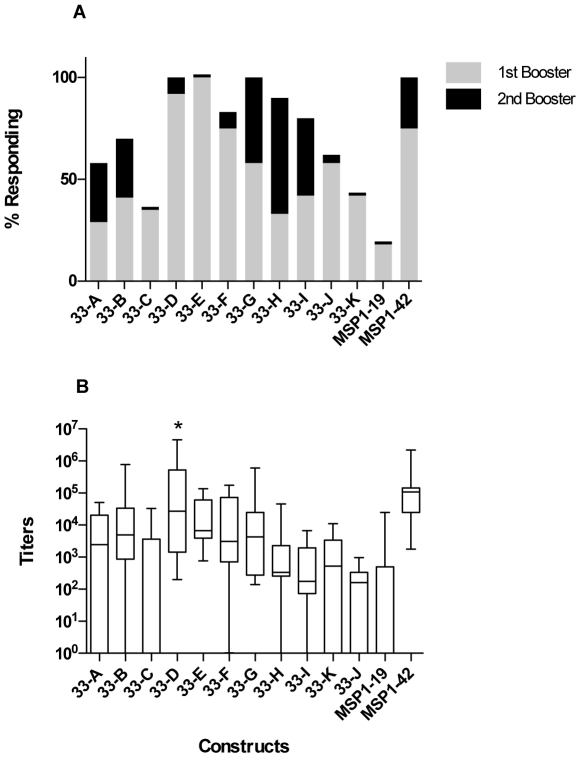
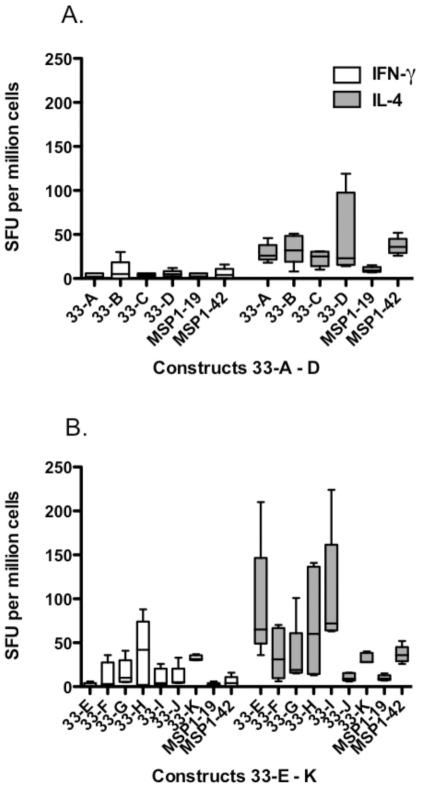
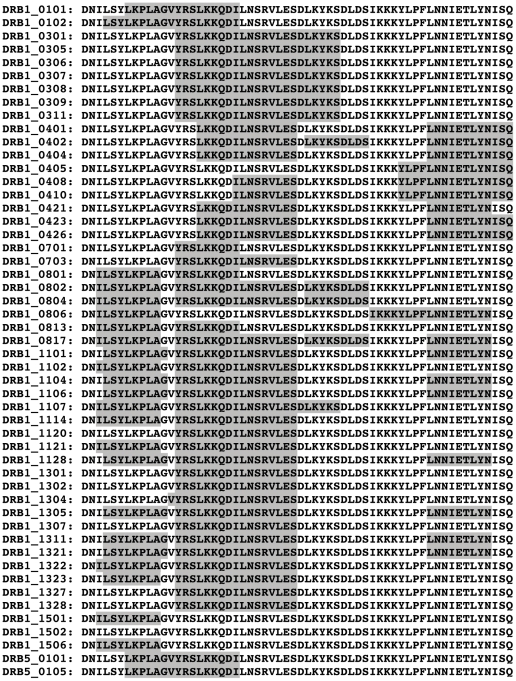
The C-terminal 42 kDa fragments of the P. falciparum Merozoite Surface Protein 1, MSP1-42 is a leading malaria vaccine candidate. MSP1-33, the N-terminal processed fragment of MSP1-42, is rich in T cell epitopes and it is hypothesized that they enhance antibody response toward MSP1-19. Here, we gave in vivo evidence that T cell epitope regions of MSP1-33 provide functional help in inducing anti-MSP1-19 antibodies. Eleven truncated MSP1-33 segments were expressed in tandem with MSP1-19, and immunogenicity was evaluated in Swiss Webster mice and New Zealand White rabbits. Analyses of anti-MSP1-19 antibody responses revealed striking differences in these segments' helper function despite that they all possess T cell epitopes. Only a few fragments induced a generalized response (100%) in outbred mice. These were comparable to or surpassed the responses observed with the full length MSP1-42. In rabbits, only a subset of truncated antigens induced potent parasite growth inhibitory antibodies. Notably, two constructs were more efficacious than MSP1-42, with one containing only conserved T cell epitopes. Moreover, another T cell epitope region induced high titers of non-inhibitory antibodies and they interfered with the inhibitory activities of anti-MSP1-42 antibodies. In mice, this region also induced a skewed TH2 cellular response. This is the first demonstration that T cell epitope regions of MSP1-33 positively or negatively influenced antibody responses. Differential recognition of these regions by humans may play critical roles in vaccine induced and/or natural immunity to MSP1-42. This study provides the rational basis to re-engineer more efficacious MSP1-42 vaccines by selective inclusion and exclusion of MSP1-33 specific T cell epitopes.
Conflict of interest statement
Figures
References
-
- Holder AA, Guevara Patino JA, Uthaipibull C, Syed SE, Ling IT, et al. Merozoite surface protein 1, immune evasion, and vaccines against asexual blood stage malaria. Parassitologia. 1999;41:409–414. - PubMed
-
- Holder AA, Lockyer MJ, Odink KG, Sandhu JS, Riveros-Moreno V, et al. Primary structure of the precursor to the three major surface antigens of Plasmodium falciparum merozoites. Nature. 1985;317:270–273. - PubMed
-
- Blackman MJ, Ling IT, Nicholls SC, Holder AA. Proteolytic processing of the Plasmodium falciparum merozoite surface protein-1 produces a membrane-bound fragment containing two epidermal growth factor-like domains. Mol Biochem Parasitol. 1991;49:29–33. - PubMed
-
- al-Yaman F, Genton B, Kramer KJ, Chang SP, Hui GS, et al. Assessment of the role of naturally acquired antibody levels to Plasmodium falciparum merozoite surface protein-1 in protecting Papua New Guinean children from malaria morbidity. Am J Trop Med Hyg. 1996;54:443–448. - PubMed
Publication types
MeSH terms
Substances
Grants and funding
LinkOut - more resources
Full Text Sources
Other Literature Sources
Research Materials
