


Engineering microbes for tolerance to next-generation biofuels
- PMID: 21936941
- PMCID: PMC3189103
- DOI: 10.1186/1754-6834-4-32
Engineering microbes for tolerance to next-generation biofuels
Abstract
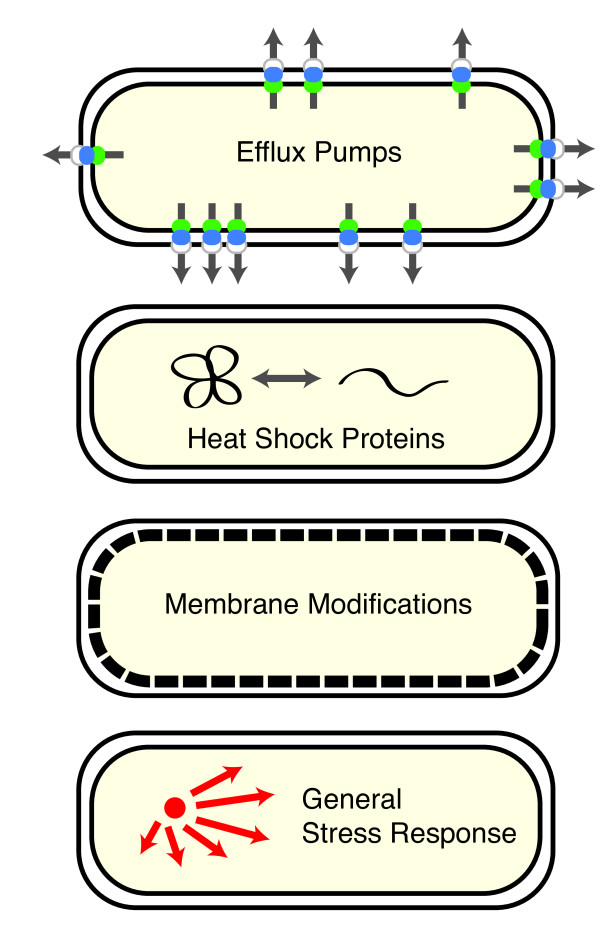
A major challenge when using microorganisms to produce bulk chemicals such as biofuels is that the production targets are often toxic to cells. Many biofuels are known to reduce cell viability through damage to the cell membrane and interference with essential physiological processes. Therefore, cells must trade off biofuel production and survival, reducing potential yields. Recently, there have been several efforts towards engineering strains for biofuel tolerance. Promising methods include engineering biofuel export systems, heat shock proteins, membrane modifications, more general stress responses, and approaches that integrate multiple tolerance strategies. In addition, in situ recovery methods and media supplements can help to ease the burden of end-product toxicity and may be used in combination with genetic approaches. Recent advances in systems and synthetic biology provide a framework for tolerance engineering. This review highlights recent targeted approaches towards improving microbial tolerance to next-generation biofuels with a particular emphasis on strategies that will improve production.
References
LinkOut - more resources
Full Text Sources
Other Literature Sources
