


Resveratrol-mediated gamma interferon reduction prevents airway inflammation and airway hyperresponsiveness in respiratory syncytial virus-infected immunocompromised mice
- PMID: 21937650
- PMCID: PMC3233156
- DOI: 10.1128/JVI.05869-11
Resveratrol-mediated gamma interferon reduction prevents airway inflammation and airway hyperresponsiveness in respiratory syncytial virus-infected immunocompromised mice
Abstract
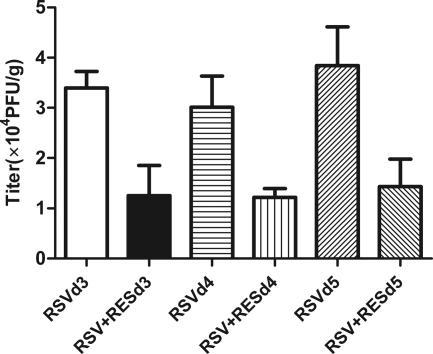
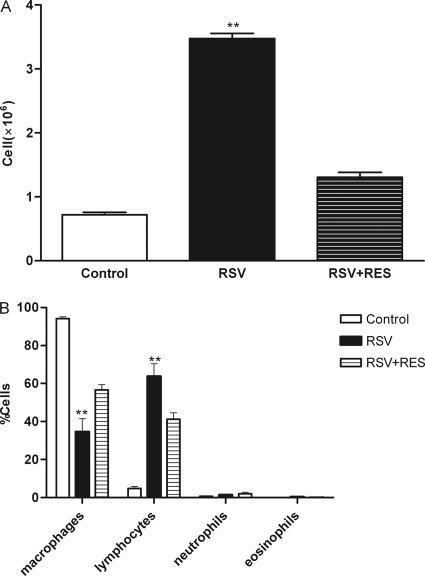
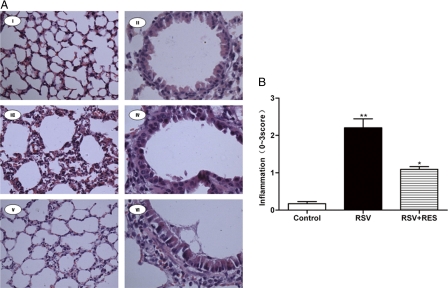
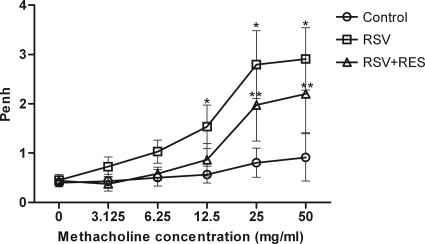
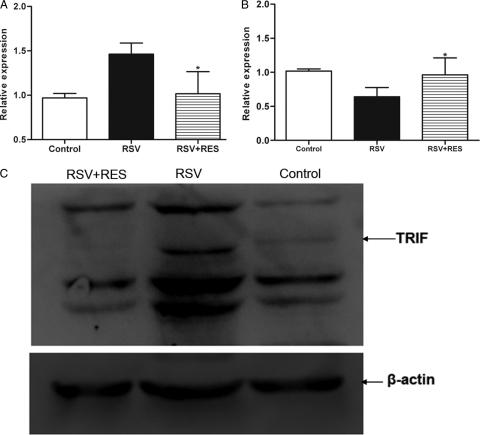
Respiratory syncytial virus (RSV) is the most important cause of severe, lower respiratory tract infections in infants, and RSV infections have been associated with chronic wheezing and asthma during childhood. However, the mechanism of RSV-induced airway inflammation and airway hyperresponsiveness (AHR) is poorly understood. Furthermore, there are presently neither effective vaccines nor drugs available for the prevention or treatment of RSV infections. In this study, we investigated the effect of the plant extract resveratrol as a means of preventing airway inflammation and attenuating RSV-induced AHR. Our data showed that resveratrol reduced RSV lung titers and the number of infiltrating lymphocytes present in bronchoalveolar lavage fluid (BALF) and reduced inflammation. Furthermore, resveratrol attenuated airway responses to methacholine following RSV infection and significantly decreased gamma interferon (IFN-γ) levels in BALF of RSV-infected mice. Data presented in this report demonstrated that resveratrol controlled Toll-like receptor 3 (TLR3) expression, inhibited the TRIF signaling pathway, and induced M2 receptor expression following RSV infection. These data support a role for the use of resveratrol as a means of reducing IFN-γ levels associated with RSV-mediated airway inflammation and AHR, which may be mediated via TLR3 signaling.
Figures


References
-
- American Academy of Pediatrics Committee on Infectious Diseases and Committee of Fetus and Newborn. 1998. Prevention of respiratory syncytial virus infections: indications for the use of palivizumab and update on the use of RSV-IGIV. Pediatrics 102:1211–1216 - PubMed
-
- Anonymous. 2004. Respiratory syncytial virus activity—United States, 2003-2004. MMWR Morb. Mortal. Wkly. Rep. 53:1159–1160 - PubMed
-
- Baatjes A. J., et al. 2002. Anti-allergic therapies: effects on eosinophil progenitors. Pharmacol. Ther. 95:63–72 - PubMed
-
- Barczyk A., Pierzchala W., Sozanska E. 2003. Interleukin-17 in sputum correlates with airway hyperresponsiveness to methacholine. Respir. Med. 97:726–733 - PubMed
-
- Bennett B. L., et al. 2007. Immunopathogenesis of respiratory syncytial virus bronchiolitis.J. Infect. Dis. 195:1532–1540 - PubMed
MeSH terms
Substances
LinkOut - more resources
Full Text Sources
Medical
