Regenerated luminal epithelial cells are derived from preexisting luminal epithelial cells in adult mouse prostate
- PMID: 21940754
- PMCID: PMC3198961
- DOI: 10.1210/me.2011-1081
Regenerated luminal epithelial cells are derived from preexisting luminal epithelial cells in adult mouse prostate
Abstract
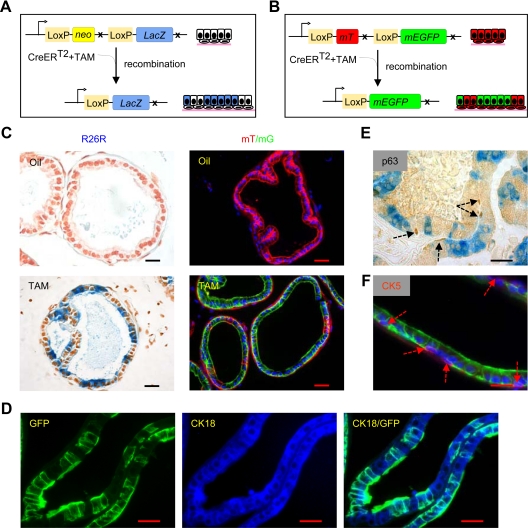
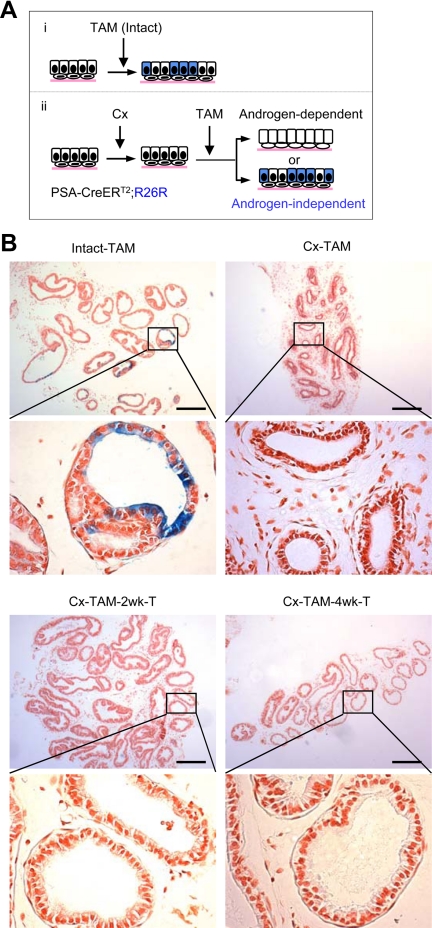
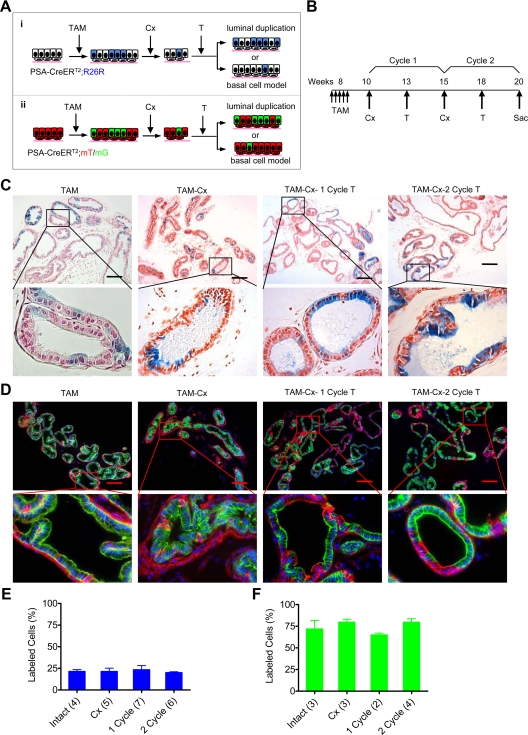
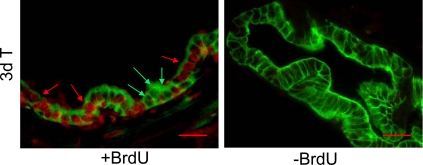
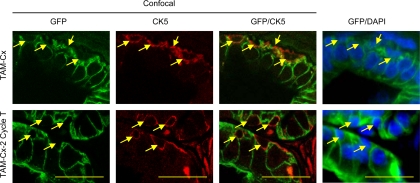
Determining the source of regenerated luminal epithelial cells in the adult prostate during androgen deprivation and replacement will provide insights into the origin of prostate cancer cells and their fate during androgen deprivation therapy. Prostate stem cells in the epithelial layer have been suggested to give rise to luminal epithelium. However, the extent of stem cell participation to prostate regrowth is not clear. In this report, using prostate-specific antigen-CreER(T2)-based genetic lineage marking/tracing in mice, preexisting luminal epithelial cells were shown to be a source of regenerated luminal epithelial cells in the adult prostate. Prostatic luminal epithelial cells could survive androgen deprivation and were capable of proliferating upon androgen replacement. Prostate cancer cells, typically exhibiting a luminal epithelial phenotype, may retain this intrinsic capability to survive and regenerate in response to changes in androgen signaling, providing part of the mechanism for the ultimate failure of androgen deprivation therapy in prostate cancer.
Figures
References
-
- Isaacs JT. 1985. Control of cell proliferation and cell death in the normal and neoplastic prostate: a stem cell model. In: Rodgers CH, Coffey DS, Cunha G, Grayhack JT, Henman JR, Horton R. eds. Benign prostatic hyperplasia. Washington DC: Department of Health and Human Services, National Institutes of Health; 85–94
-
- Bonkhoff H, Remberger K. 1996. Differentiation pathways and histogenetic aspects of normal and abnormal prostatic growth: a stem cell model. Prostate 28:98–106 - PubMed
-
- Uzgare AR, Xu Y, Isaacs JT. 2004. In vitro culturing and characteristics of transit amplifying epithelial cells from human prostate tissue. J Cell Biochem 91:196–205 - PubMed
Publication types
MeSH terms
Substances
Grants and funding
LinkOut - more resources
Full Text Sources
Other Literature Sources