Physical education, obesity, and academic achievement: a 2-year longitudinal investigation of Australian elementary school children
- PMID: 21940922
- PMCID: PMC3483976
- DOI: 10.2105/AJPH.2011.300220
Physical education, obesity, and academic achievement: a 2-year longitudinal investigation of Australian elementary school children
Abstract
Objectives: We determined whether physical education (PE) taught by specialists contributed to academic development and prevention of obesity in elementary school children.
Methods: Our 2-year longitudinal study involved 620 boys and girls initially in grade 3 in Australia, all receiving 150 minutes per week of PE. One group (specialist-taught PE; n = 312) included 90 minutes per week of PE from visiting specialists; the other (common-practice PE; n = 308) received all PE from generalist classroom teachers. Measurements included percentage of body fat (measured by dual-emission x-ray absorptiometry) and writing, numeracy, and reading proficiency (by government tests).
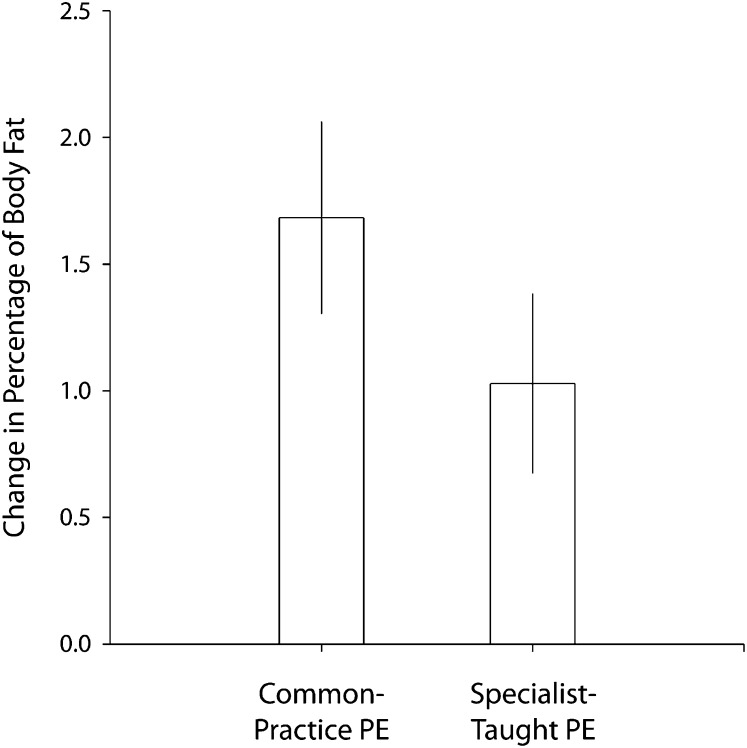
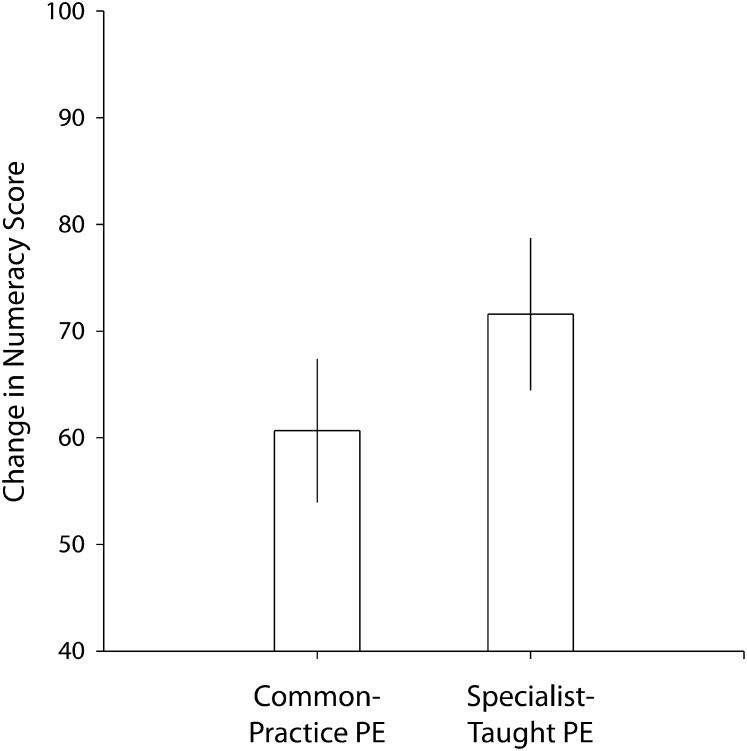
Results: Compared with common-practice PE, specialist-taught PE was associated with a smaller increase in age-related percentage of body fat (P = .02). Specialist-taught PE was also associated with greater improvements in numeracy (P < .03) and writing (P = .13) scores. There was no evidence of a reading effect.
Conclusions: The attenuated age-related increases in percentage of body fat and enhanced numeracy development among elementary school children receiving PE from specialists provides support for the role of PE in both preventive medicine and academic development.
Figures
References
-
- Hillman CH, Erickson KI, Kramer AF. Be smart, exercise your heart: exercise effects on brain and cognition. Nat Rev Neurosci. 2008;9(1):58–65 - PubMed
-
- Strong WB, Malina RM, Blimkie CJet al. Evidence based physical activity for school-age youth. J Pediatr. 2005;146(6):732–737 - PubMed
-
- Coe DP, Pivarnik JM, Womack CJ, Reeves MJ, Malina RM. Effect of physical education and activity levels on academic achievement in children. Med Sci Sports Exerc. 2006;38(8):1515–1519 - PubMed
-
- Rentner DS, Scott C, Kober N. From the Capital to the Classroom: Year 4 of No Child Left Behind. Washington, DC: Center on Education Policy; 2006
-
- Thomas KT. Riding to the rescue while holding on by a thread: physical activity in the schools. Quest. 2004;56:150–170
Publication types
MeSH terms
LinkOut - more resources
Full Text Sources
Medical