


Cardiovascular risk in systemic autoimmune diseases: epigenetic mechanisms of immune regulatory functions
- PMID: 21941583
- PMCID: PMC3173726
- DOI: 10.1155/2012/974648
Cardiovascular risk in systemic autoimmune diseases: epigenetic mechanisms of immune regulatory functions
Abstract
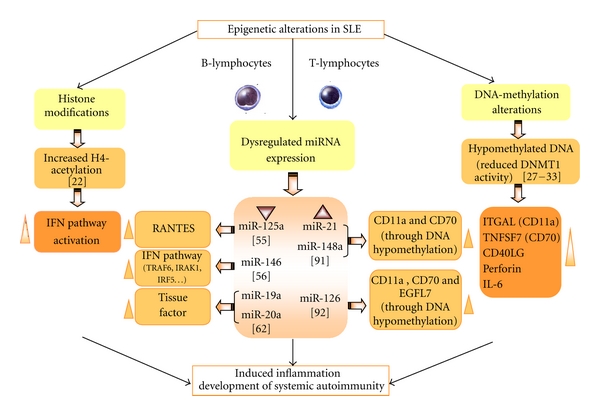
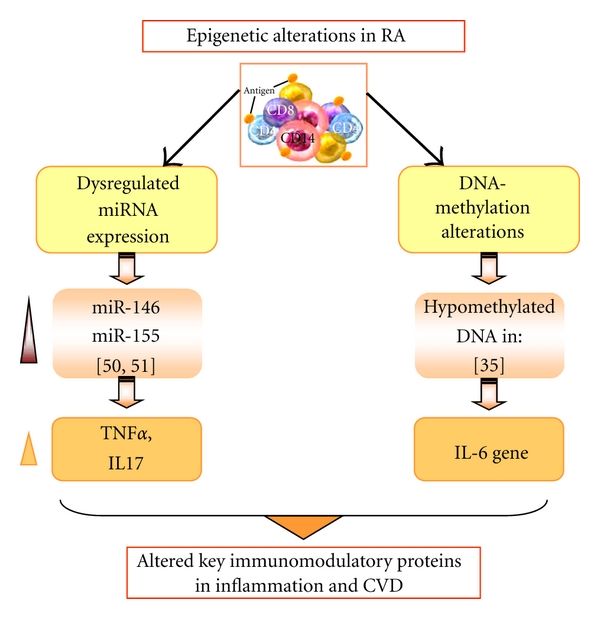
Autoimmune diseases (AIDs) have been associated with accelerated atherosclerosis (AT) leading to increased cardio- and cerebrovascular disease risk. Traditional risk factors, as well as systemic inflammation mediators, including cytokines, chemokines, proteases, autoantibodies, adhesion receptors, and others, have been implicated in the development of these vascular pathologies. Yet, the characteristics of vasculopathies may significantly differ depending on the underlying disease. In recent years, many new genes and signalling pathways involved in autoimmunity with often overlapping patterns between different disease entities have been further detected. Epigenetics, the control of gene packaging and expression independent of alterations in the DNA sequence, is providing new directions linking genetics and environmental factors. Epigenetic regulatory mechanisms comprise DNA methylation, histone modifications, and microRNA activity, all of which act upon gene and protein expression levels. Recent findings have contributed to our understanding of how epigenetic modifications could influence AID development, not only showing differences between AID patients and healthy controls, but also showing how one disease differs from another and even how the expression of key proteins involved in the development of each disease is regulated.
Figures
References
-
- Villalta D, Tozzoli R, Tonutti E, Bizzaro N. The laboratory approach to the diagnosis of autoimmune diseases: is it time to change? Autoimmunity Reviews. 2007;6(6):359–365. - PubMed
-
- Vaudo G, Bocci EB, Shoenfeld Y, et al. Precocious intima-media thickening in patients with primary Sjögren's syndrome. Arthritis and Rheumatism. 2005;52(12):3890–3897. - PubMed
-
- Sherer Y, Shoenfeld Y. Mechanisms of disease: atherosclerosis in autoimmune diseases. Nature Clinical Practice Rheumatology. 2006;2(2):99–106. - PubMed
-
- Rhew EY, Ramsey-Goldman R. Premature atherosclerotic disease in systemic lupus erythematosus—role of inflammatory mechanisms. Autoimmunity Reviews. 2006;5(2):101–105. - PubMed
-
- Lee PY, Li Y, Richards HB, et al. Type I interferon as a novel risk factor for endothelial progenitor cell depletion and endothelial dysfunction in systemic lupus erythematosus. Arthritis and Rheumatism. 2007;56(11):3759–3769. - PubMed
Publication types
MeSH terms
Substances
LinkOut - more resources
Full Text Sources
Medical
