


doi: 10.4061/2011/152850.
Epub 2011 Sep 19.
Why can insulin resistance be a natural consequence of thyroid dysfunction?
Affiliations
- PMID: 21941681
- PMCID: PMC3175696
- DOI: 10.4061/2011/152850
Item in Clipboard
Why can insulin resistance be a natural consequence of thyroid dysfunction?
J Thyroid Res.
2011.
Abstract
Evidence for a relationship between T4 and T3 and glucose metabolism appeared over 100 years ago when the influence of thyroid hormone excess in the deterioration of glucose metabolism was first noticed. Since then, it has been known that hyperthyroidism is associated with insulin resistance. More recently, hypothyroidism has also been linked to decreased insulin sensitivity. The explanation to this apparent paradox may lie in the differential effects of thyroid hormones at the liver and peripheral tissues level. The purpose of this paper is to explore the effects of thyroid hormones in glucose metabolism and analyze the mechanisms whereby alterations of thyroid hormones lead to insulin resistance.
Figures
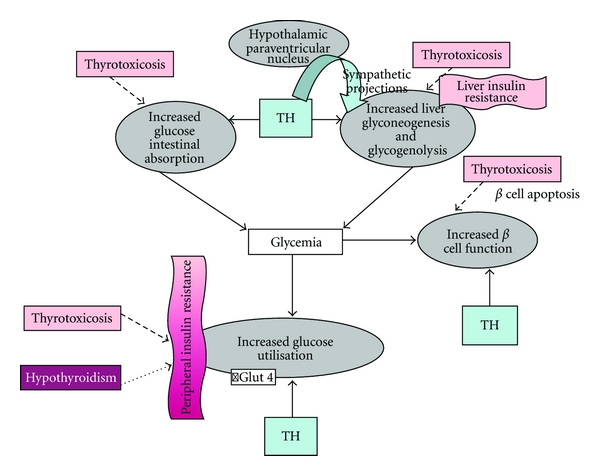
Effects of thyroid hormones on glucose metabolism in euthyroid (solid lines), hyperthyroid (rough-dashed lines), and hypothyroid conditions (fine-dashed lines). TH: thyroid hormones.
References
-
- Rohdenburg GL. Thyroid diabetes. Endocrinology. 1920;4:p. 63.
-
- Crunkhorn S, Patti ME. Links between thyroid hormone action, oxidative metabolism, and diabetes risk? Thyroid. 2008;18(2):227–237. - PubMed
-
- Yehuda-Shnaidman E, Kalderon B, Azazmeh N, Bar-Tana J. Gating of the mitochondrial permeability transition pore by thyroid hormone. Federation of American Societies for Experimental Biology Journal. 2010;24(1):93–104. - PubMed
-
- Feng X, Jiang Y, Meltzer P, Yen PM. Thyroid hormone regulation of hepatic genes in vivo detected by complementary DNA microarray. Molecular Endocrinology. 2000;14(7):947–955. - PubMed
LinkOut - more resources
Full Text Sources
