


A Manipulation of Visual Feedback during Gait Training in Parkinson's Disease
- PMID: 21941685
- PMCID: PMC3177092
- DOI: 10.1155/2012/508720
A Manipulation of Visual Feedback during Gait Training in Parkinson's Disease
Abstract
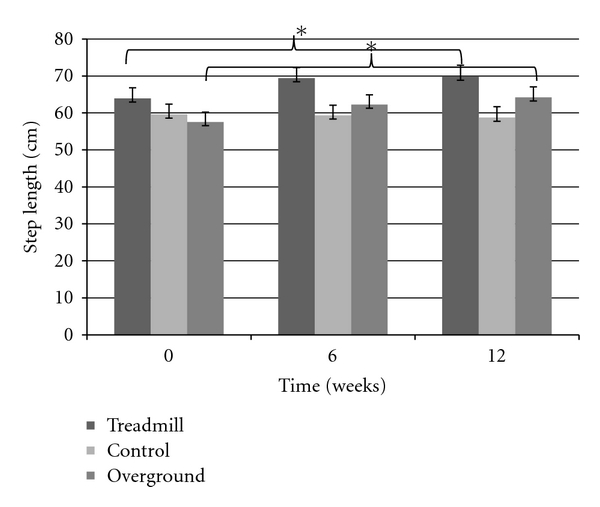
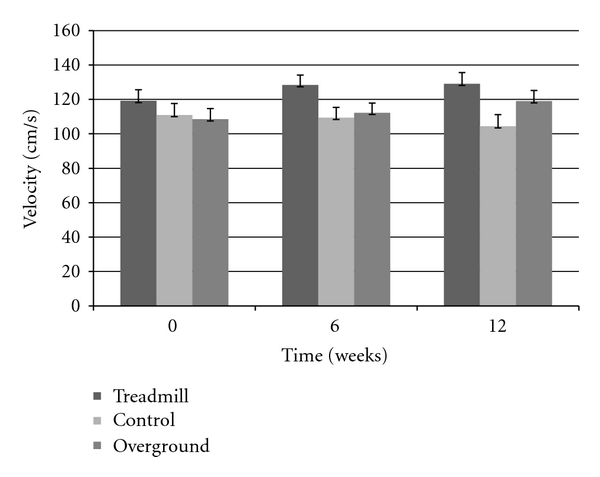
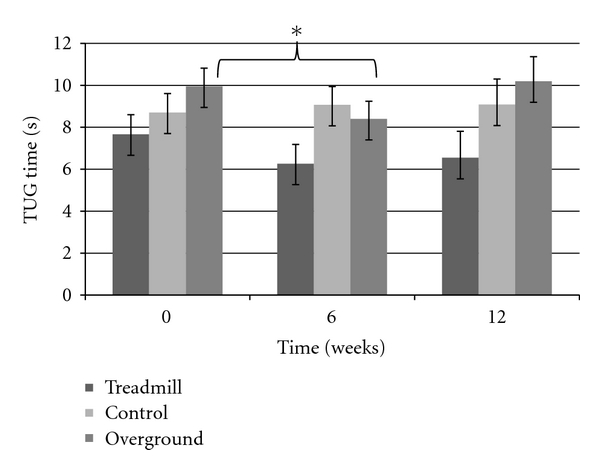
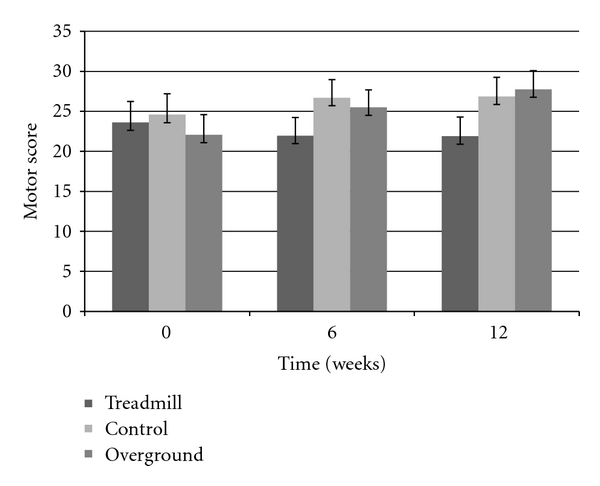
Visual cues are known to improve gait in Parkinson's disease (PD); however, the contribution of optic flow continues to be disputed. This study manipulated transverse line cues during two gait training interventions (6 weeks). PD subjects (N = 42) were assigned to one of three groups: treadmill (TG), overground (OG), or control group (CG). Participants walked across lines placed on either treadmills or 16-meter carpets, respectively. The treadmill (TG) offered a reduced dynamic flow from the environment, while lines presented on the ground (OG) emphasized optic flow related to the participant's own displacement. Both interventions significantly improved (and maintained through retention period) step length, thus improving walking velocity. Only the OG improved in the TUG test, while only the TG showed hints of improving (and maintaining) motor symptoms. Since gait improvements were found in both training groups, we conclude that by reducing optic flow, gait benefits associated with visual cueing training can still be achieved.
Figures
References
-
- Glickstein M, Stein J. Paradoxical movement in Parkinson’s disease. Trends in Neurosciences. 1991;14(11):480–482. - PubMed
-
- Assaiante C, Marchand AR, Amblard B. Discrete visual samples may control locomotor equilibrium and foot positioning in man. Journal of Motor Behavior. 1989;21(1):72–91. - PubMed
-
- Gibson JJ. The visual perception of objective motion and subjective movement. Psychological Review. 1954;61(5):304–314. - PubMed
-
- Azulay JP, Mesure S, Amblard B, Blin O, Sangla I, Pouget J. Visual control of locomotion in Parkinson’s disease. Brain. 1999;122, part 1:111–120. - PubMed
LinkOut - more resources
Full Text Sources
Miscellaneous
