Pre-adolescent alcohol expectancies: critical shifts and associated maturational processes
- PMID: 21942260
- PMCID: PMC3777425
- DOI: 10.1037/a0025373
Pre-adolescent alcohol expectancies: critical shifts and associated maturational processes
Abstract
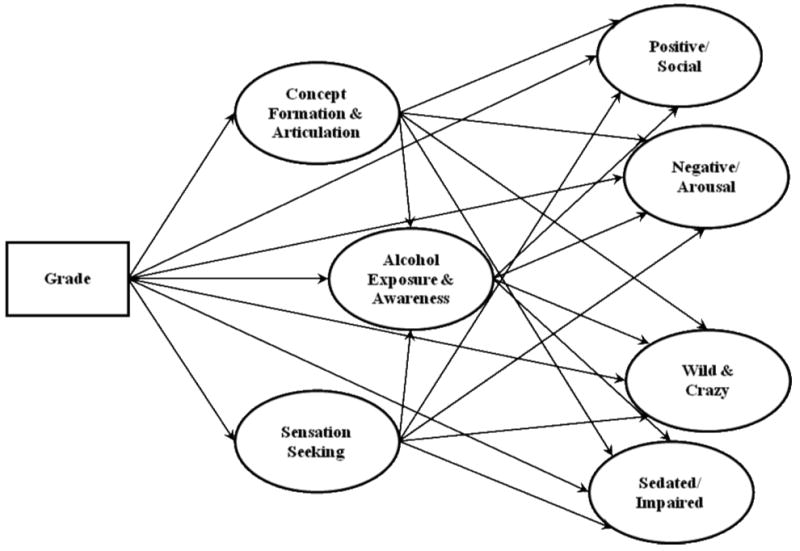
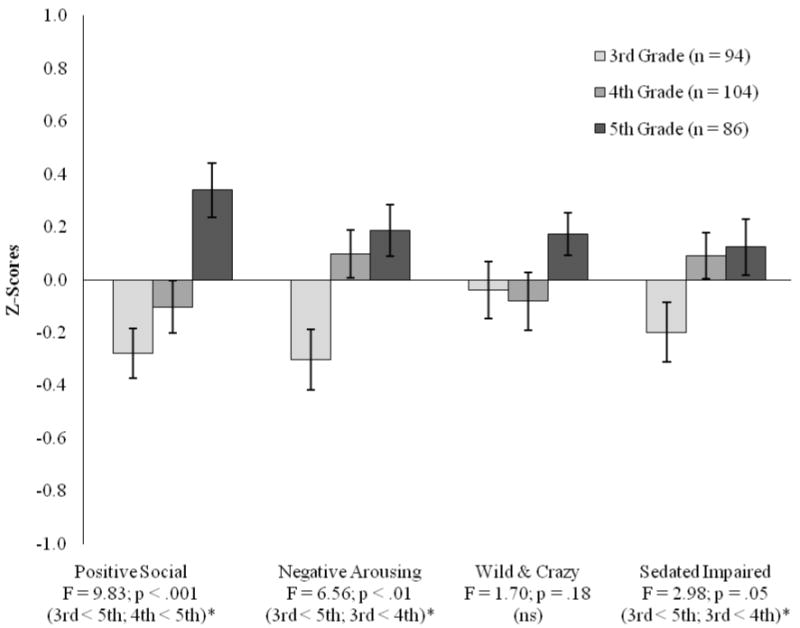
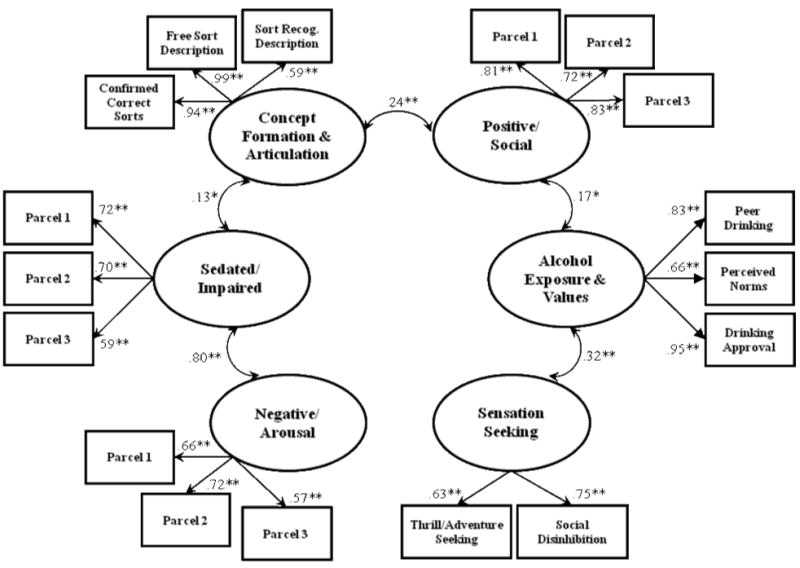
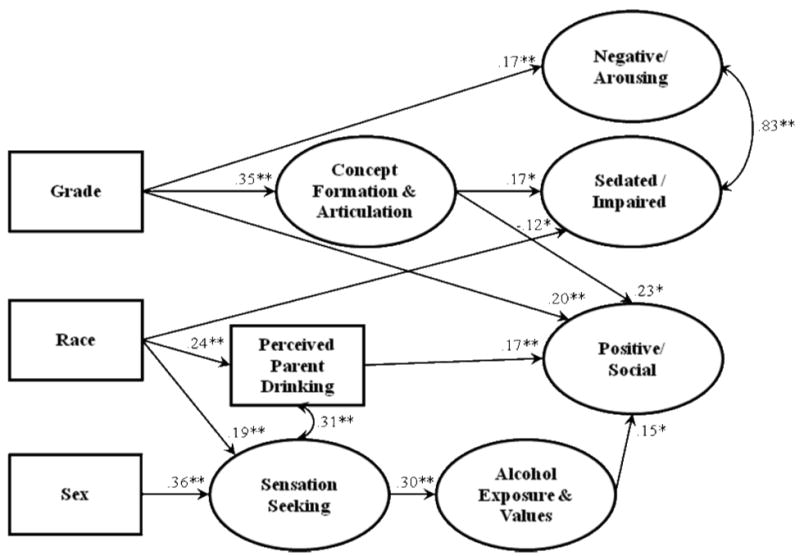
Children's alcohol expectancies shift in late childhood/early adolescence in ways thought to lead to increased risk for adolescent alcohol use. The precise nature of this shift and the maturational processes that may influence it remain to be clarified. To these ends, we compared expectancy endorsement by grade across four expectancy domains: positive, negative, arousal, and sedation, in a cross-sectional sample of 3rd-6th grade children attending afterschool programs (n = 299). Structural equation modeling (SEM) was then used to describe the relationships between expectancies and differences in (a) cognitive ability and concept formation, (b) risk-taking personality traits, and (c) social exposure or values regarding alcohol-related information. Results showed those children in higher grades endorsed significantly more positive, negative, and sedating expectancies for alcohol than their younger peers. Concept formation partially and fully mediated the relationships between grade and both positive and sedating expectancies, respectively, but not the relationship between grade and negative expectancies. Sensation seeking did not increase across grades in this sample, and the relationship between sensation seeking and positive expectancies was fully mediated by reported alcohol exposure and values. This study provides a basis for future exploration of developmental influences on alcohol expectancies, an understanding of which may be helpful in the design of prevention efforts targeting high-risk youth before adolescence.
Figures
References
-
- Afterschool Alliance. American After 3PM: The most in-depth study of how America's children spend their afternoons. Washington D.C: Afterschool Alliance; 2009.
-
- Austin EW, Meili HK. Effects of interpretations of televised alcohol portrayals on children's alcohol beliefs. Journal of Broadcasting and Electronic Media. 1994;38(4):417–35.
-
- Bollen KA. Structural equations with latent variables. New York: Wiley; 1989.