. 2011 Sep 30;147(1):147-57.
doi: 10.1016/j.cell.2011.07.047. Epub 2011 Sep 22.

Selective translation of leaderless mRNAs by specialized ribosomes generated by MazF in Escherichia coli

Affiliations

Selective translation of leaderless mRNAs by specialized ribosomes generated by MazF in Escherichia coli

Oliver Vesper et al. Cell. .

Abstract

Escherichia coli (E. coli) mazEF is a stress-induced toxin-antitoxin (TA) module. The toxin MazF is an endoribonuclease that cleaves single-stranded mRNAs at ACA sequences. Here, we show that MazF cleaves at ACA sites at or closely upstream of the AUG start codon of some specific mRNAs and thereby generates leaderless mRNAs. Moreover, we provide evidence that MazF also targets 16S rRNA within 30S ribosomal subunits at the decoding center, thereby removing 43 nucleotides from the 3' terminus. As this region comprises the anti-Shine-Dalgarno (aSD) sequence that is required for translation initiation on canonical mRNAs, a subpopulation of ribosomes is formed that selectively translates the described leaderless mRNAs both in vivo and in vitro. Thus, we have discovered a modified translation machinery that is generated in response to MazF induction and that probably serves for stress adaptation in Escherichia coli.


Figures

Figure 1
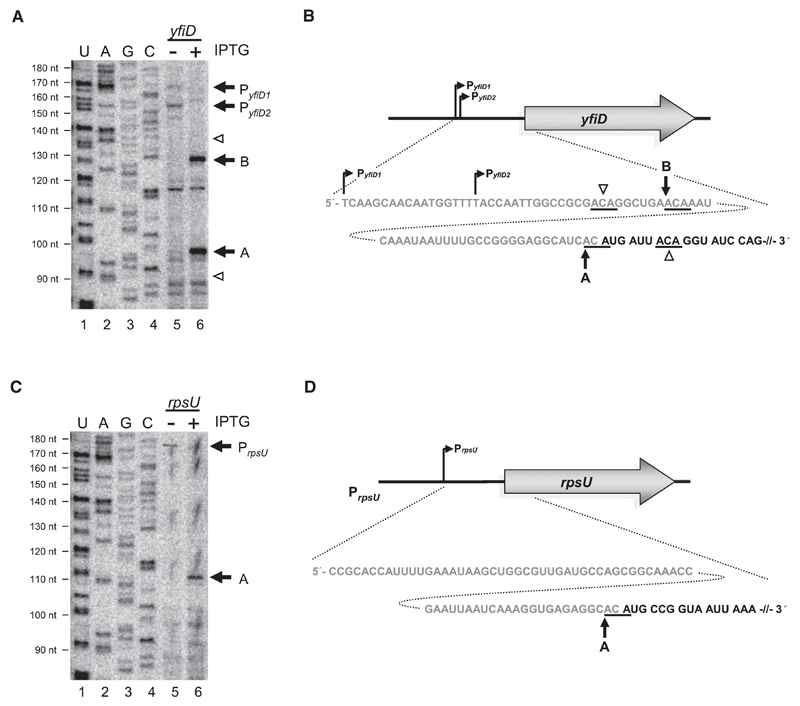
Figure 1. Determination of MazF Cleavage Sites on yfiD and rpsU mRNAs In Vivo and Schematic Depiction of Genomic Organization, 5′UTRs, and Proximal Coding Regions of the Respective mRNAs
(A and C) Primer extensions employing primers (Table S1) specific for yfiD mRNA (A) and rpsU mRNA (C) performed on total RNA purified from E. coli strain MC4100relA+ comprising plasmid pSA1 without (lane 5) or with (lane 6) mazF overexpression. Extension signals corresponding to transcriptional start points of yfiD mRNA (PyfiD1 and PyfiD2) and rpsU mRNA (PrpsU) are indicated by black arrows (lane 5). Signals corresponding to MazF cleavage are indicated by black arrows and labeled analogous to Figures 1B and 1D, where “A” designates cleavage directly upstream of the AUG start codon, resulting in formation of a lmRNA, and “B” indicates cleavage further upstream (lane 6). White arrowheads indicate ACA triplets not cleaved by MazF (lane 6). (Lanes 1–4) Sequencing reactions of 16S rRNA employing primer V43 (Table S1) to determine length of primer extension (indicated to the left). (B and D) Schematic depictions of promoter positions and sequence of 5′UTRs (in gray) and proximal coding regions (in black) of yfiD mRNA (B) and rpsU mRNA (D). MazF cleavage sites are underlined and indicted by arrows. The cleavage site directly upstream of the AUG start codon is marked with “A.” The cleavage site further upstream is indicated by “B.” Potential ACA triplets where MazF cleavage does not occur are indicated by white arrowheads. See also Figure S1.
Figure 2
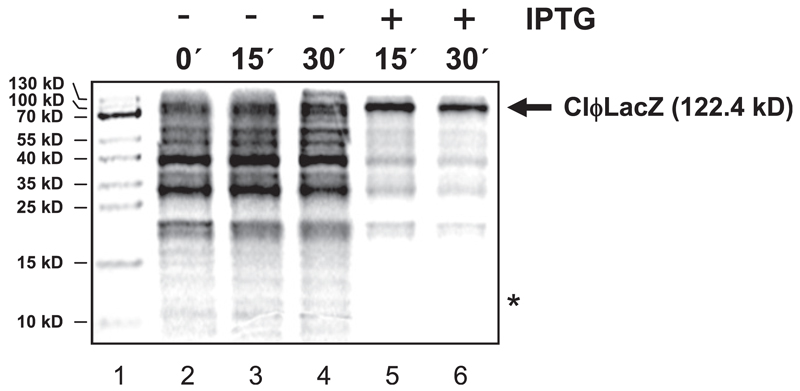
Figure 2. Overexpression of mazF Results in Stimulated and Selective Translation of the Leaderless cI-lacZ mRNA In Vivo
Pulse labeling performed with E. coli strain MC4100relA+ harboring plasmids pKTplaccI, encoding the leaderless cI-lacZ fusion gene (Grill et al., 2000), and pSA1, encoding the mazF gene under control of the lac-operator. At time point 0 (lane 2), the culture was divided and one half remained untreated (lanes 3 and 4), whereas in the other half, mazF expression was induced with IPTG (lanes 5 and 6). At time points indicated, pulse labeling was performed. The position of the CI-LacZ fusion protein (122.4 kD) is indicated by an arrow to the right of the autoradiograph. The tentative position of MazF (12 kD) is marked by an asterisk. (Lane 1) Protein marker.
Figure 3
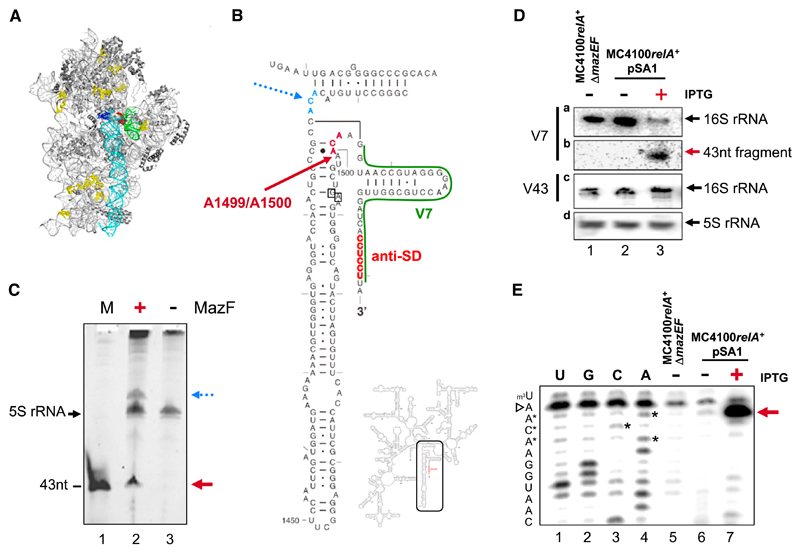
Figure 3. The 16S rRNA of Assembled 70S Ribosomes Represents a Target for MazF Activity
(A) The structure of the 30S ribosomal subunit was modeled employing Polyview 3D (Porollo and Meller, 2007) and PyMOL molecular system software (DeLano, 2002) and PDB file 2AVY (Schuwirth et al., 2005). 16S rRNA (light gray), proteins (dark gray), helix 44 (cyan), and helix 45 (green) are shown. ACA sequences present in 16S rRNA, which are protected by proteins or structural features of rRNA, are indicated in yellow. Two potential MazF cleavage sites at positions 1396–1398 and 1500–1502 are indicated in blue and red, respectively. (B) Secondary structure of 16S rRNA. Decoding region and helices 44 and 45 are enlarged. Potential MazF cleavage sites are indicated in blue and red, as in (A). Site of Colicin E3 cleavage (AG 1493/1494) is boxed, and aSD sequence is shown in red. Primer V7 (indicated in green) complementary to positions 1511–1535 of 16S rRNA was used for northern blot and primer extension analyses. (C) Treatment of 70S ribosomes with MazF in vitro results in cleavage of 16S rRNA at positions indicated in (B). The 3′ end of rRNA was labeled with pC-Cy3. rRNA fragments obtained upon incubation of 70S ribosomes with (lane 2) or without (lane 3) MazF were separated by denaturing PAGE. (Lane 1) In vitro-synthesized Cy3-labeled RNA fragment of 43 nts in length (kindly provided by Dr. U. Bläsi) was used as a size marker. Red and blue arrows indicate fragments corresponding to MazF cleavage at positions shown in (B). The position of 5S rRNA is indicated by a black arrow. (D) To verify MazF-mediated formation of the 43 nt fragment in vivo, total RNA prepared from untreated MC4100relA+ cells harboring plasmid pSA1 (lane 2) and upon induction of mazF expression with IPTG (lane 3) were separated by denaturing PAGE, blotted, and probed with oligonucleotide V7 (Figure 3B and Table S1) to determine the amount of 3′ terminus present in full-length 16S rRNA (a) and the cleaved 3′-terminal fragment (b). To determine the amount of total 16S rRNA, oligonucleotide V43 (Table S1; c) was used. Total RNA prepared from strain MC4100relA+ΔmazEF(lane 1) was included as control. Northern blot analysis of 5S rRNA employing primer R25 (Table S1; d) served as a loading control. (E) The same RNA (D) was used for primer extension analysis employing primer V7 (Figure 3B). In contrast to strains MC4100relA+ΔmazEF (lane 5) and untreated MC4100relA+pSA1 (lane 6), a signal was obtained employing RNA purified upon mazF overexpression (lane 7) that indicates unambiguously the site of MazF cleavage 5′ of ACA between nts A1499 and A1500, thereby removing 43 nts at the 3′ terminus. (Lanes 1–4) Sequencing reactions. The sequence is given to the left; the ACA triplet and the signal corresponding to stop of reverse transcription due to the m3U1498 modification are indicated by asterisks and an open arrowhead, respectively. See also Figure S2.
Figure 4
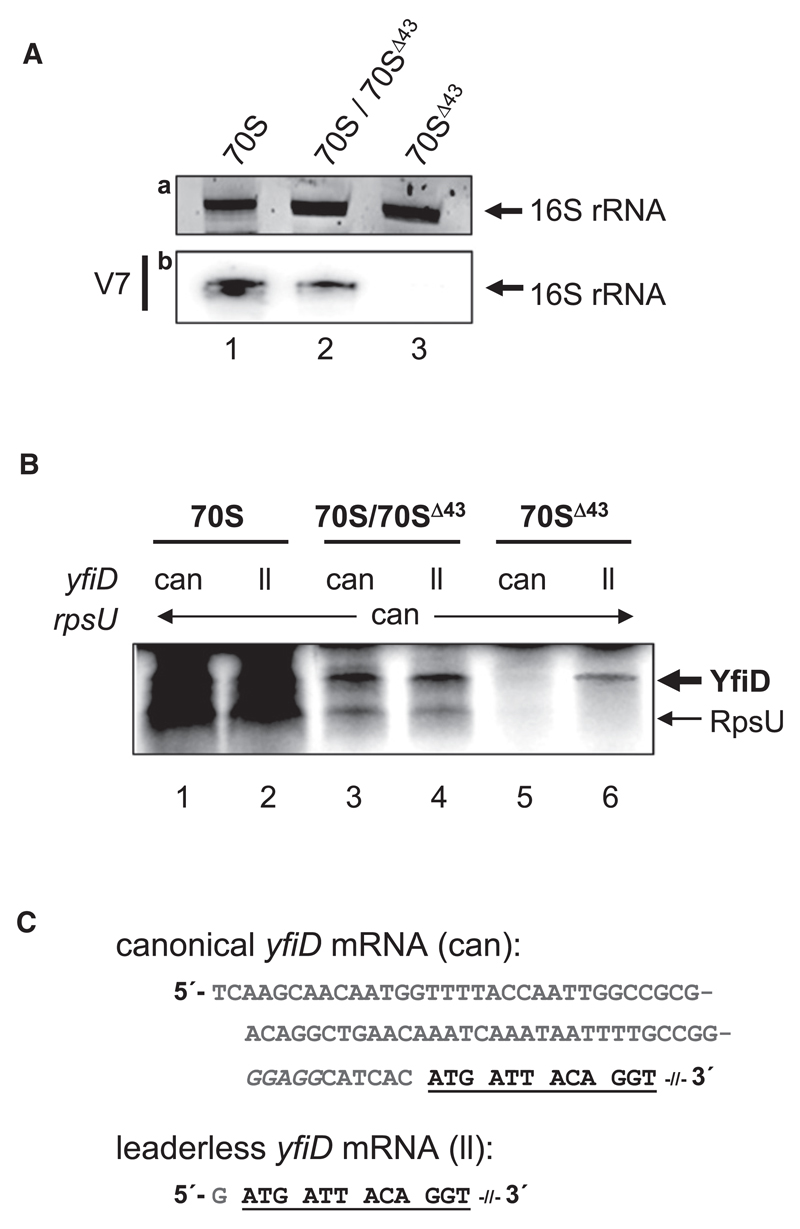
Figure 4. Stress Ribosomes Formed upon Overexpression of mazF In Vivo Selectively Translate Leaderless yfiD mRNA
(A) rRNA prepared from 10 pmoles of ribosomes purified from untreated cells (70S; lane 1) upon overexpression of mazF (70S/70SΔ43; lane 2) and upon further removal of uncleaved ribosomes employing a biotinylated SD-oligonucleotide (70SΔ43; lane 3), which were used for in vitro translation shown in (B), was separated by denaturing PAGE and stained with ethidium bromide (a) to determine amount and integrity of 16S rRNA. The same rRNA was probed using labeled oligonucleotide V7 (b) to verify presence and absence of the 3′-terminal 43 nt fragment in the individual ribosome preparations. (B) In vitro translation of canonical (can; lanes 1, 3, and 5) and leaderless (ll; lanes 2, 4, and 6) variants of yfiD mRNA employing 70S ribosomes purified from untreated E. coli MC4100relA+ cells harboring plasmid pSA1 (70S; lanes 1 and 2), purified upon mazF overexpression (70S/70SΔ43; lanes 3 and 4) and upon removal of uncleaved ribosomes employing immobilized biotinylated SD oligonucleotides (70SΔ43; lanes 5 and 6). In all reactions, equimolar amounts of canonical rpsU mRNA were added as internal control. Positions of YfiD (14.3 kD) and RpsU (8.5 kD) proteins in the autoradiograph are indicated to the right. (C) 5′UTR and proximal coding region (underlined) of canonical and leaderless yfiD mRNAs used for in vitro translation. The SD sequence of the canonical mRNA is indicated in italics. See also Figure S3.
Figure 5
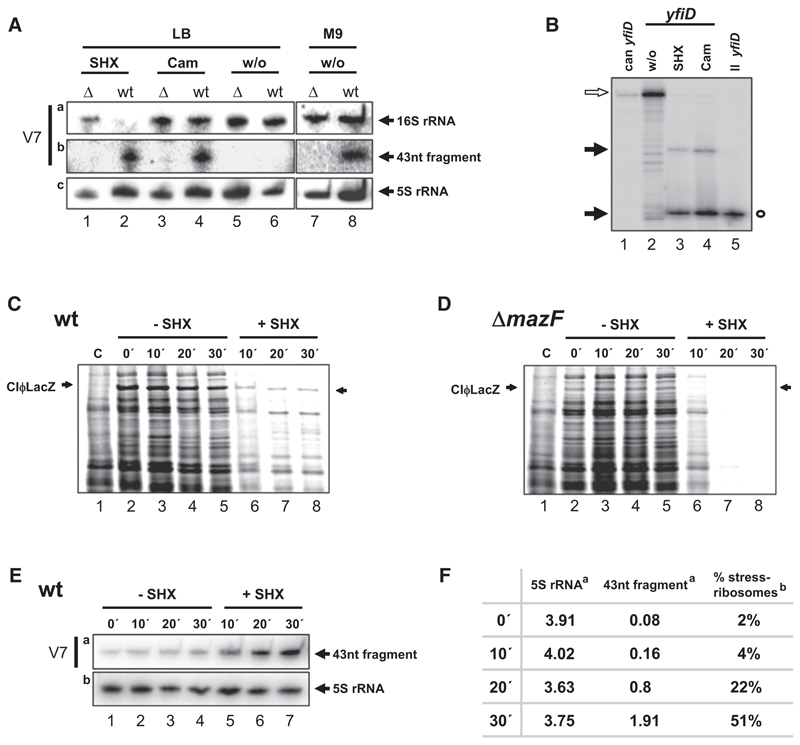
Figure 5. Adverse Conditions Induce the MazF-Dependent Stress Response
(A) Northern blot analyses of total RNA prepared from strains MC4100relA+ (lanes 2, 4, 6, and 8) and MC4100relA+ΔmazEF (lanes 1, 3, 5, and 7) grown in LB medium (lanes 1–6) treated with SHX (lanes 1 and 2), Cam (lanes 3 and 4), untreated (w/o; lanes 5 and 6), or grown in M9 minimal medium without treatment (w/o; lanes 7 and 8). Removal of the 3′ end of 16S rRNA (a) and generation of the 43 nt fragment (b) by MazF was determined using oligonucleotide V7. Northern blot analysis of 5S rRNA served as a loading control (c). (B) Primer extension analysis on total RNA purified from untreated strain MC4100relA+ (lanes 2) upon treatment with SHX (lane 3) or Cam (lane 4) used for northern blotting shown in (A) with a yfiD mRNA-specific primer (Table S1). Extension signals indicate MazF cleavage upstream of the start codon upon stress treatment like shown in Figure 1A (black arrows; lanes 3 and 4). Primer extension of in vitro-transcribed canonical (open arrow; lane 1) and leaderless (open circle; lane 5) yfiD mRNAs serve as controls. (C and D) Pulse labeling of strains MC4100relA+ (C) and MC4100relA+ΔmazEF (D) harboring plasmid pRB381cI encoding the leaderless cI-lacZ fusion gene. Strains were grown in M9 minimal medium and pulsed either in absence (lanes 2–5) or at time points indicated upon addition of SHX (lanes 6–8). (Lane 1) Pulse labeling of strain MC4100relA+ harboring the plasmid pRB381 without cI-lacZ fusion gene to determine the position of the CIΦLacZ fusion protein (indicated by arrows). (E) At time points that pulse labeling was performed in (C), total RNA was isolated and subjected to northern blot analysis using primer V7 (a) and primer R25 (specific for 5S rRNA, b) to determine the amount of 43 nt fragment upon addition of SHX. (F) Quantification of the 43 nt fragment and 5S rRNA present at time points of pulse labeling upon addition of SHX indicated in (E) (Figure S4) to estimate the amount of cleaved and total ribosomes, respectively, given in pmoles (a). The percentage of cleaved ribosomes is given (b).
Figure 6
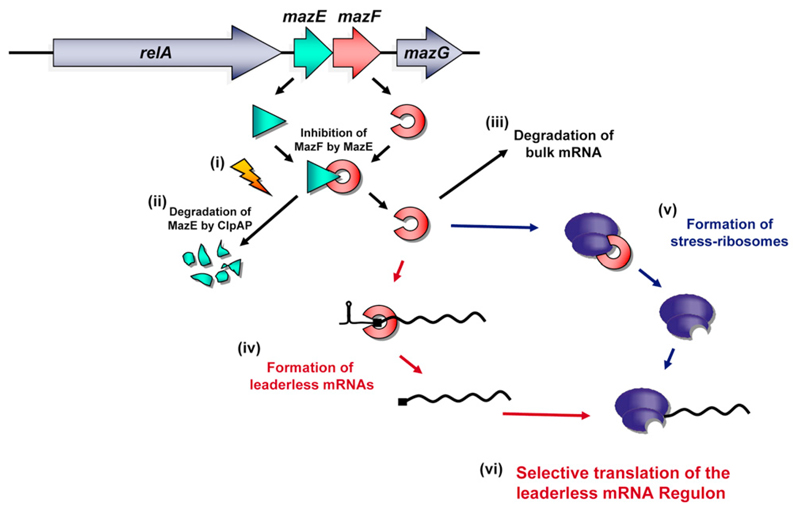
Figure 6. A Model for the Generation of Leaderless mRNAs and Stress Ribosomes by MazF
The mazEF module can be triggered by stressful conditions (i, indicated by an arrow) (Engelberg-Kulka et al., 2006; Christensen et al., 2003), which results in (ii) degradation of the antidote MazE by the ClpAP protease (Aizenman et al., 1996). The activity of released MazF leads to degradation of the majority of transcripts (iii). In addition, it removes the 5′UTR of specific mRNAs, thus rendering them leaderless (iv), and moreover, specifically removes the 3′-terminal 43 nts of 16S rRNA comprising helix 45 as well as the aSD sequence (v), which is essential for the formation of a translation initiation complex on canonical ribosome-binding sites. Consequently, (vi) MazF activity leads to selective translation of a “leaderless mRNA regulon.”

Comment in

References

    1. Agarwal S, Agarwal S, Bhatnagar R. Identification and characterization of a novel toxin-antitoxin module from Bacillus anthracis. FEBS Lett. 2007;581:1727–1734. - PubMed
    1. Aizenman E, Engelberg-Kulka H, Glaser G. An Escherichia coli chromosomal “addiction module” regulated by guanosine [corrected] 3′,5′-bispyrophosphate: a model for programmed bacterial cell death. Proc Natl Acad Sci USA. 1996;93:6059–6063. - PMC - PubMed
    1. Amitai S, Yassin Y, Engelberg-Kulka H. MazF-mediated cell death in Escherichia coli: a point of no return. J Bacteriol. 2004;186:8295–8300. - PMC - PubMed
    1. Amitai S, Kolodkin-Gal I, Hananya-Meltabashi M, Sacher A, Engelberg-Kulka H. Escherichia coli MazF leads to the simultaneous selective synthesis of both “death proteins” and “survival proteins”. PLoS Genet. 2009;5:e1000390. - PMC - PubMed
    1. Baik S, Inoue K, Ouyang M, Inouye M. Significant bias against the ACA triplet in the tmRNA sequence of Escherichia coli K-12. J Bacteriol. 2009;191:6157–6166. - PMC - PubMed

Publication types

MeSH terms