Primary hyperparathyroidism: how many cases are being missed?
- PMID: 21944795
- PMCID: PMC3363079
- DOI: 10.1308/003588411X13020175704352
Primary hyperparathyroidism: how many cases are being missed?
Abstract
Introduction: Primary hyperparathyroidism (PHPT) is a common condition (250 per million population per year) with significant associated morbidity and mortality. Surgery is the only curative option for PHPT; results from medical treatment remain disappointing. The aim of this study was to evaluate the referral patterns of patients with PHPT and identify the number of missed cases with a biochemical diagnosis of PHPT.
Materials and methods: All chemistries for Worcestershire were performed and analysed at the Worcestershire Royal Hospital. Patients with chronic renal failure were identified and excluded. Routes of patient referral were identified and missed cases documented. General practitioners (GPs) were contacted by letter for all patients not referred or treated. Outcomes of diagnosis and specialist assessment were recorded.
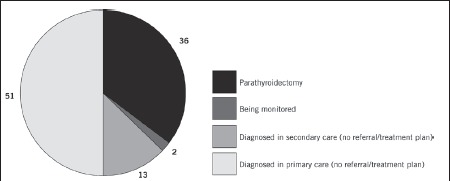
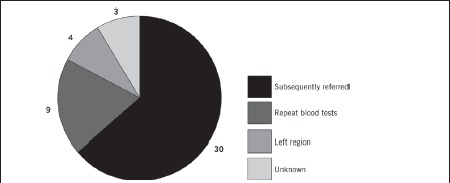
Results: A total of 102 cases of PHPT were identified: 64 (62.7%) remained untreated and without a specialist referral in place, 36 (35.3%) had undergone parathyroidectomy and 2 (2.0%) were being monitored. The GP response rate was 90% (46/51). Of these, 30 (65%) were subsequently referred, 9 (20%) underwent repeat tests with a view to referral and 7 (15%) were lost to follow up.
Conclusions: A significant proportion of patients with PHPT remain in the community untreated and having not seen a specialist. All patients should be referred to a specialist for assessment and consideration of surgical treatment and follow-up. Improvements in GP education and referral systems are required if patients are to benefit.
Figures
References
-
- Mundy GR, Cove DH, Fisken R. Primary hyperparathyroidism: changes in the clinical presentation. Lancet. 1980;1:1,317–1,320. - PubMed
-
- Silverberg SJ, Bilezikian JP, Bone HG, et al. Therapeutic controversies in primary hyperparathyroidism. J Clin Endocrinol Metab. 1999;84:2,275–2,285. - PubMed
-
- Stefenelli T, Mayr H, Bergler-Klein J, et al. Primary hyperparathyroidism: incidence of cardiac abnormalities and partial reversibility after successful parathyroidectomy. Am J Med. 1993;95:197–202. - PubMed
-
- Farr HW, Fahey TJ Jr, Nash AG, Farr CM. Primary hyperparathyroidism and cancer. Am J Surg. 1973;126:539–543. - PubMed
MeSH terms
LinkOut - more resources
Full Text Sources