


FGF signaling regulates rod photoreceptor cell maintenance and regeneration in zebrafish
- PMID: 21945172
- PMCID: PMC3243491
- DOI: 10.1016/j.exer.2011.09.003
FGF signaling regulates rod photoreceptor cell maintenance and regeneration in zebrafish
Abstract
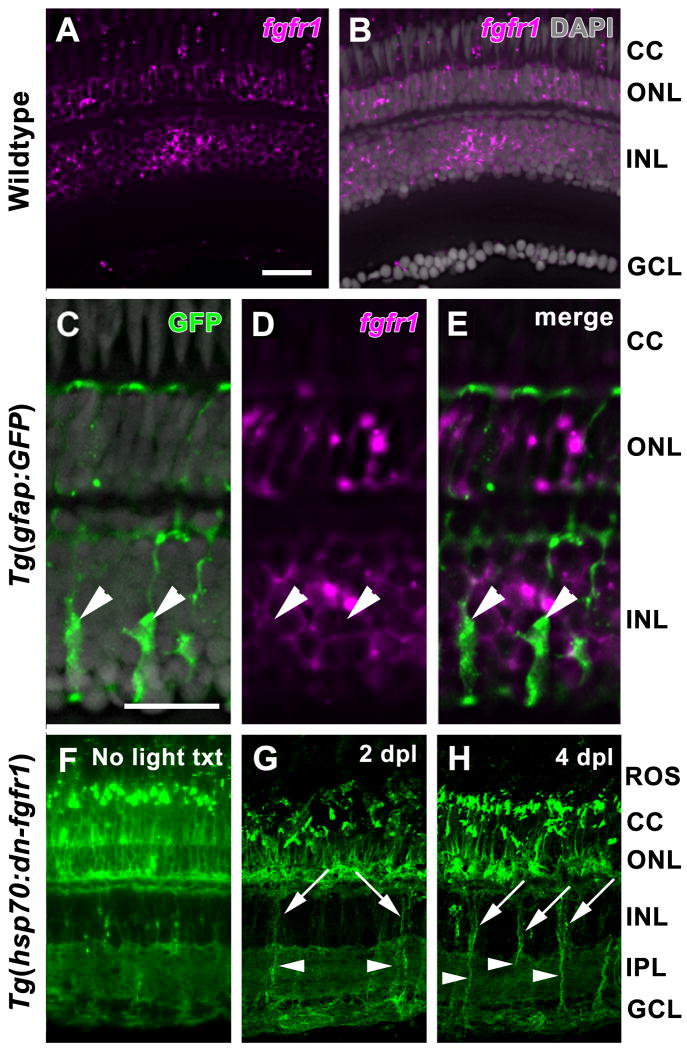
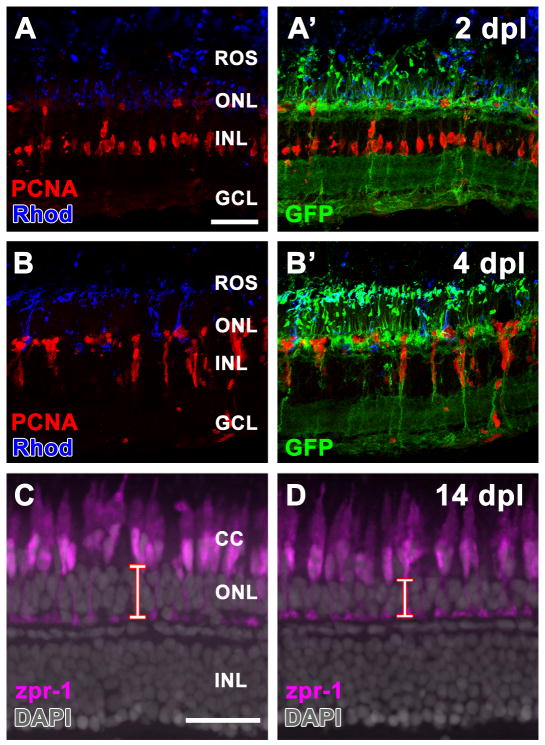
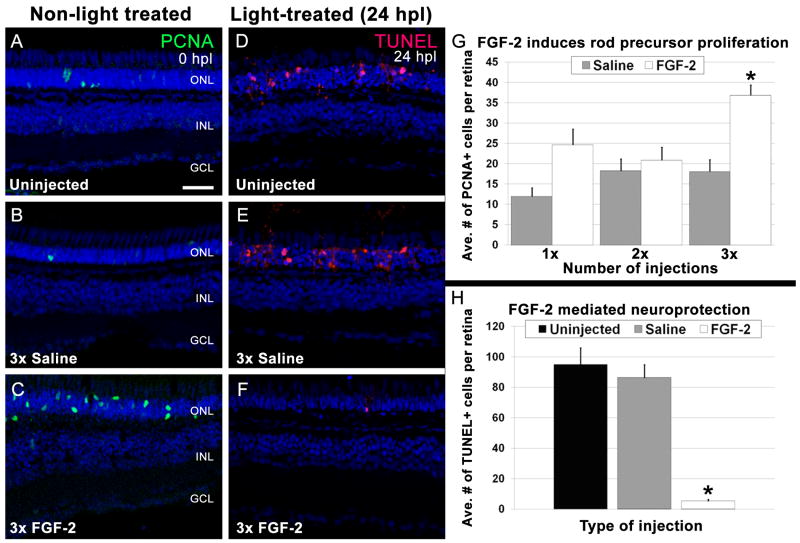
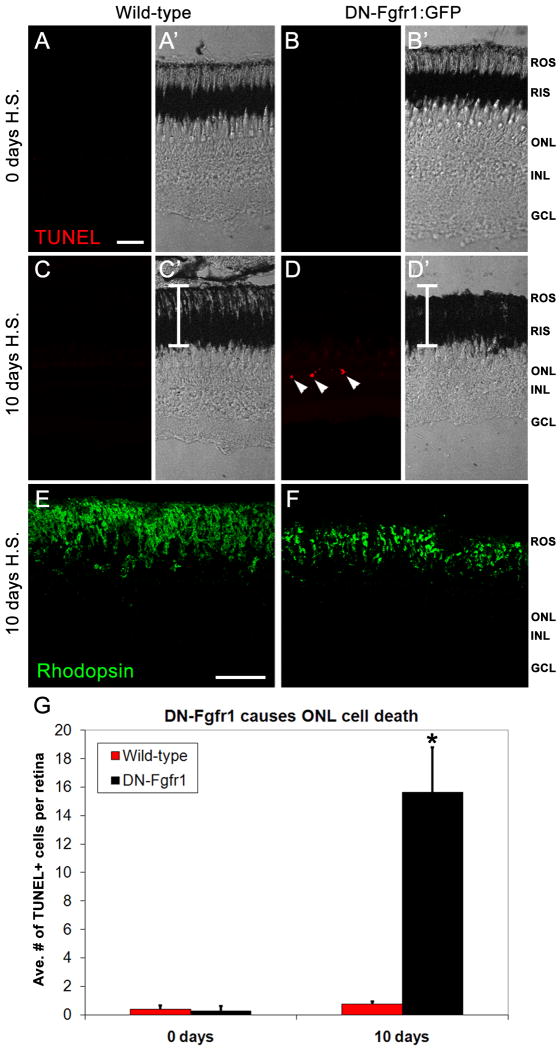
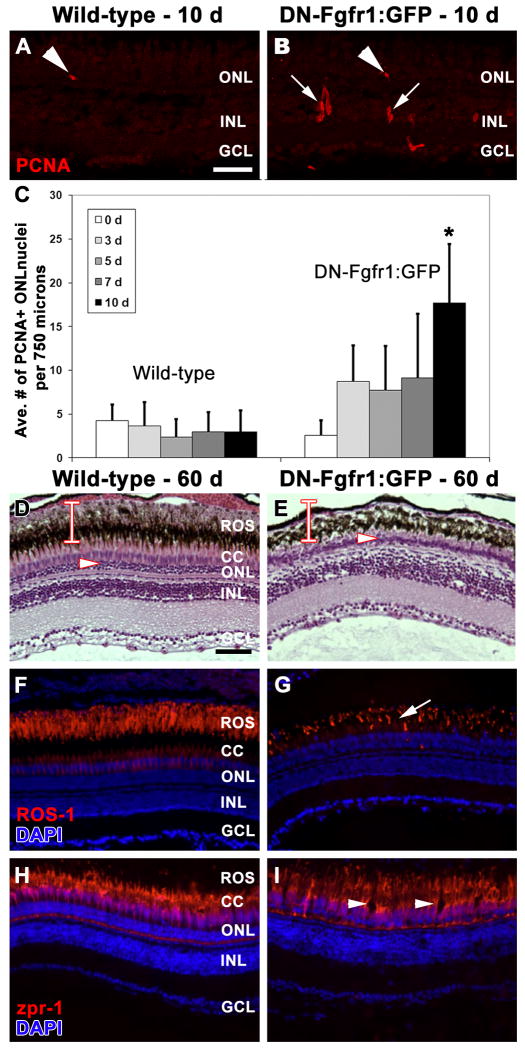
Fgf signaling is required for many biological processes involving the regulation of cell proliferation and maintenance, including embryonic patterning, tissue homeostasis, wound healing, and cancer progression. Although the function of Fgf signaling is suggested in several different regeneration models, including appendage regeneration in amphibians and fin and heart regeneration in zebrafish, it has not yet been studied during zebrafish photoreceptor cell regeneration. Here we demonstrate that intravitreal injections of FGF-2 induced rod precursor cell proliferation and photoreceptor cell neuroprotection during intense light damage. Using the dominant-negative Tg(hsp70:dn-fgfr1) transgenic line, we found that Fgf signaling was required for homeostasis of rod, but not cone, photoreceptors. Even though fgfr1 is expressed in both rod and cone photoreceptors, we found that Fgf signaling differentially affected the regeneration of cone and rod photoreceptors in the light-damaged retina, with the dominant-negative hsp70:dn-fgfr1 transgene significantly repressing rod photoreceptor regeneration without affecting cone photoreceptors. These data suggest that rod photoreceptor homeostasis and regeneration is Fgf-dependent and that rod and cone photoreceptors in adult zebrafish are regulated by different signaling pathways.
Copyright © 2011 Elsevier Ltd. All rights reserved.
Figures
References
-
- Becker T, Wullimann MF, Becker CG, Bernhardt RR, Schachner M. Axonal regrowth after spinal cord transection in adult zebrafish. J Comp Neurol. 1997;377:577–595. - PubMed
-
- Bernardos RL, Raymond PA. GFAP transgenic zebrafish. Gene Expr Patterns. 2006;6:1007–1013. - PubMed
-
- Boilly B, Cavanaugh KP, Thomas D, Hondermarck H, Bryant SV, Bradshaw RA. Acidic fibroblast growth factor is present in regenerating limb blastemas of axolotls and binds specifically to blastema tissues. Dev Biol. 1991;145:302–310. - PubMed
Publication types
MeSH terms
Substances
Grants and funding
LinkOut - more resources
Full Text Sources
Molecular Biology Databases
Miscellaneous
