


Liver precursor cells increase hepatic fibrosis induced by chronic carbon tetrachloride intoxication in rats
- PMID: 21946857
- PMCID: PMC3425737
- DOI: 10.1038/labinvest.2011.143
Liver precursor cells increase hepatic fibrosis induced by chronic carbon tetrachloride intoxication in rats
Abstract
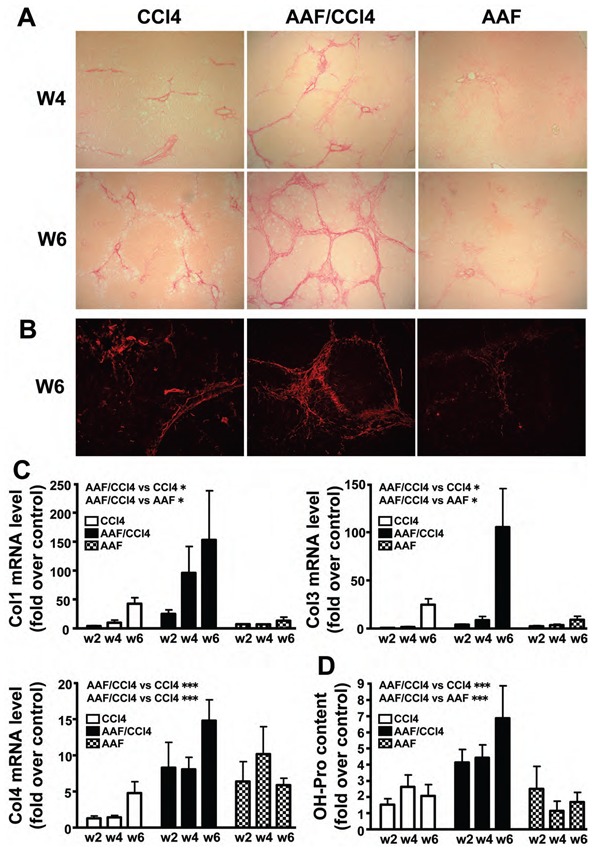
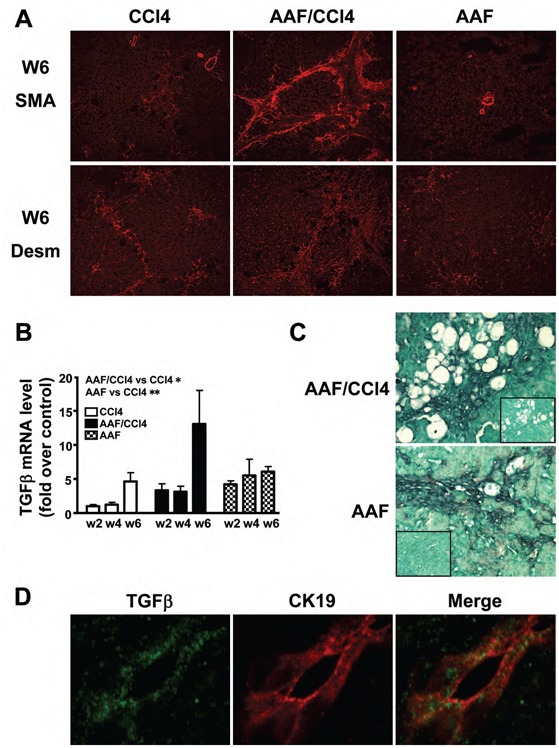
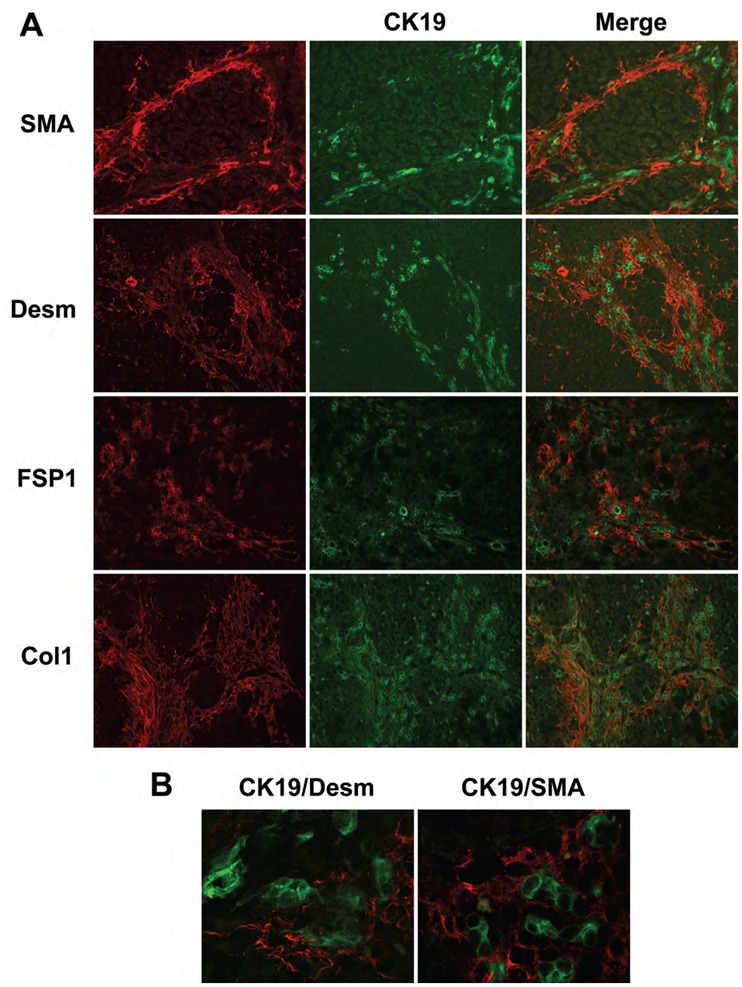
Hepatic fibrosis, the major complication of virtually all types of chronic liver damage, usually begins in portal areas, and its severity has been correlated to liver progenitor cells (LPC) expansion from periportal areas, even if the primary targets of injury are intralobular hepatocytes. The aim of this study was to determine the potential fibrogenic role of LPC, using a new experimental model in which rat liver fibrosis was induced by chronic carbon tetrachloride (CCl(4)) administration for 6 weeks, in combination with chronic acetylaminofluorene treatment (AAF), which promotes activation of LPC compartment. Treatment with CCl(4) alone caused a significant increase in serum transaminase activity as well as liver fibrosis initiating around central veins and leading to formation of incomplete centro-central septa with sparse fibrogenic cells expressing α-smooth muscle actin (αSMA). In AAF/CCl(4)-treated animals, the fibrogenic response was profoundly worsened, with formation of multiple porto-central bridging septa leading to cirrhosis, whereas hepatocellular necrosis and inflammation were similar to those observed in CCl(4)-treated animals. Enhanced fibrosis in AAF/CCl(4) group was accompanied by ductule forming LPC expanding from portal areas, αSMA-positive cells accumulation in the fibrotic areas and increased expression of hepatic collagen type 1, 3 and 4 mRNA. Moreover, CK19-positive LPC expressed the most potent fibrogenic cytokine transforming growth factor-β (TGFβ) without any expression of αSMA, desmin or fibroblast-specific protein-1, demonstrating that LPC did not undergo an epithelial-mesenchymal transition. In this new experimental model, LPC, by expressing TGFβ, contributed to the accumulation of αSMA-positive myofibroblasts in the ductular reaction leading to enhanced fibrosis but also to disease progression and to a fibrotic pattern similar to that observed in humans.
Conflict of interest statement
The authors declare no conflict of interest.
Figures




References
-
- Ramadori G, Saile B. Portal tract fibrogenesis in the liver. Lab Invest. 2004;84(2):153–159. - PubMed
-
- Paku S, Nagy P, Kopper L, et al. 2-acetylaminofluorene dose-dependent differentiation of rat oval cells into hepatocytes: confocal and electron microscopic studies. Hepatology. 2004;39(5):1353–1361. - PubMed
-
- Knight B, Matthews VB, Olynyk JK, et al. Jekyll and Hyde: evolving perspectives on the function and potential of the adult liver progenitor (oval) cell. Bioessays. 2005;27(11):1192–1202. - PubMed
-
- Sell S. Comparison of liver progenitor cells in human atypical ductular reactions with those seen in experimental models of liver injury. Hepatology. 1998;27(2):317–331. - PubMed
Publication types
MeSH terms
Substances
LinkOut - more resources
Full Text Sources
Medical
Research Materials
