


Origin and Functions of Tumor-Associated Myeloid Cells (TAMCs)
- PMID: 21948460
- PMCID: PMC3399067
- DOI: 10.1007/s12307-011-0091-6
Origin and Functions of Tumor-Associated Myeloid Cells (TAMCs)
Abstract
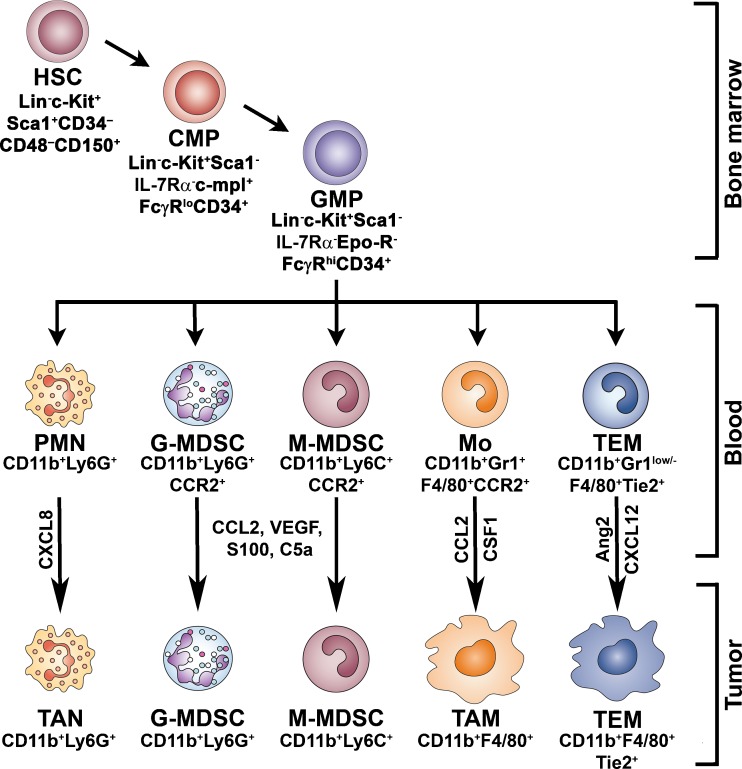
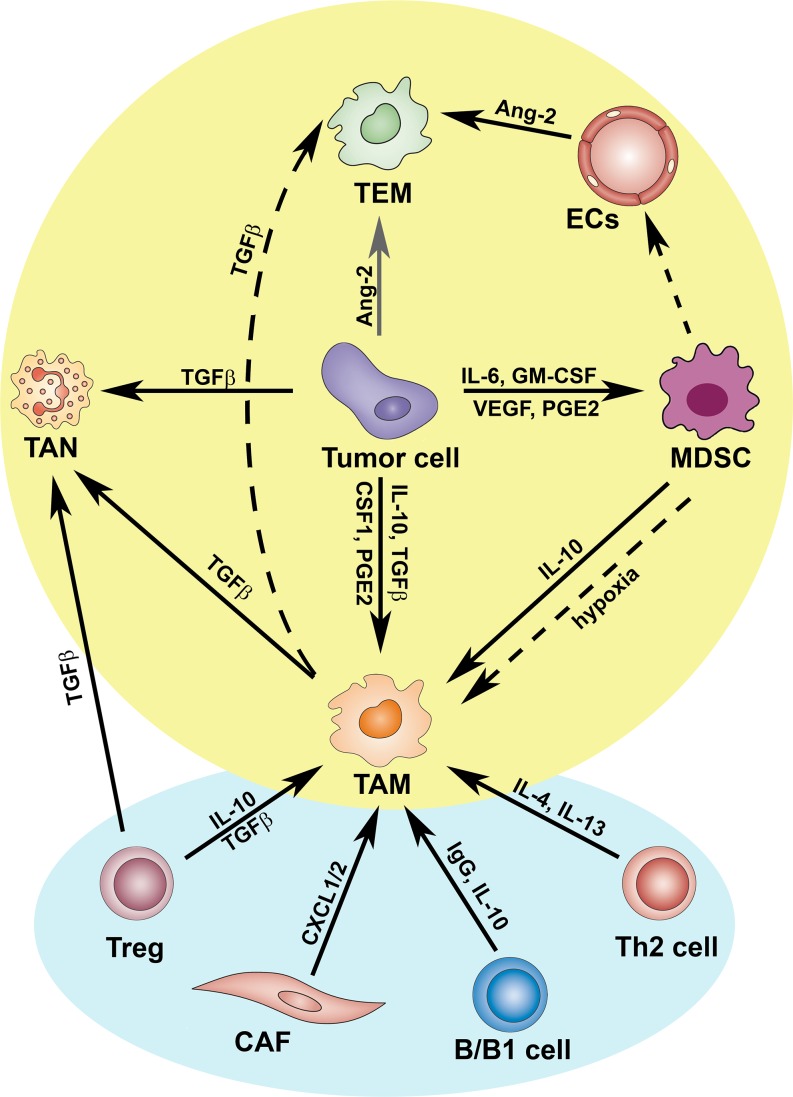
The construction of an inflammatory microenvironment provides the fuel for cancer development and progression. Hence, solid tumors promote the expansion and the recruitment of leukocyte populations, among which tumor-associated myeloid cells (TAMCs) represent a paradigm for cancer-promoting inflammation. TAMCs group heterogeneous phagocytic populations stemming from a common myeloid progenitor (CMP), that orchestrate various aspects of cancer, including: diversion and skewing of adaptive responses; immunosuppression; cell growth; angiogenesis; matrix deposition and remodelling; construction of a metastatic niche and actual metastasis. Several evidence indicate that TAMCs show plasticity and/or functional heterogeneity, suggesting that tumour-derived factors promote their functional "reprogramming" towards protumoral activities. While recent studies have attempted to address the role of microenvironment signals, the interplay between cancer cells, innate and adaptive immunity is now emerging as a crucial step of the TAMCs reprogramming. Here we discuss the evidence for the differentiation of TAMCs during the course of tumor progression and the molecular mechanisms that regulate such event.
Figures
References
-
- Mantovani A, Sica A. Macrophages, innate immunity and cancer: balance, tolerance, and diversity. Curr Opin Immunol. 2010;22:231–237. - PubMed
-
- Vaupel P, Mayer A. Hypoxia in cancer: significance and impact on clinical outcome. Cancer Metastasis Rev. 2007;26:225–239. - PubMed
-
- Mantovani A, Allavena P, Sica A, Balkwill F. Cancer-related inflammation. Nature. 2008;454:436–444. - PubMed
-
- Sica A. Role of tumour-associated macrophages in cancerrelated inflammation. Exp Oncol. 2010;32:153–158. - PubMed
-
- Palma M, Venneri MA, Galli R, Sergi Sergi L, Politi LS, Sampaolesi M, Naldini L. Tie2 identifies a hematopoietic lineage of proangiogenic monocytes required for tumor vessel formation and a mesenchymal population of pericyte progenitors. Cancer Cell. 2005;8:211–226. - PubMed
LinkOut - more resources
Full Text Sources
