


Protein delivery using engineered virus-like particles
- PMID: 21949376
- PMCID: PMC3193192
- DOI: 10.1073/pnas.1101874108
Protein delivery using engineered virus-like particles
Abstract
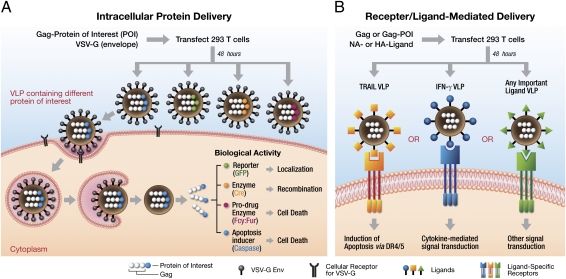
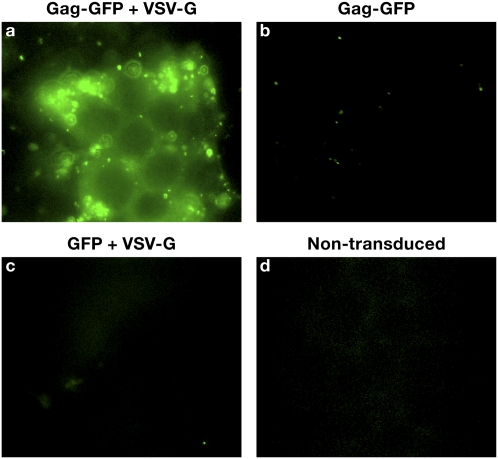
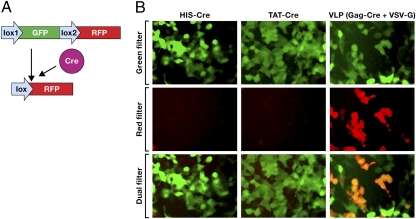
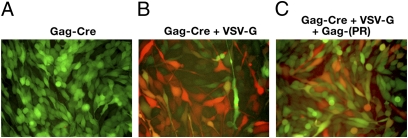
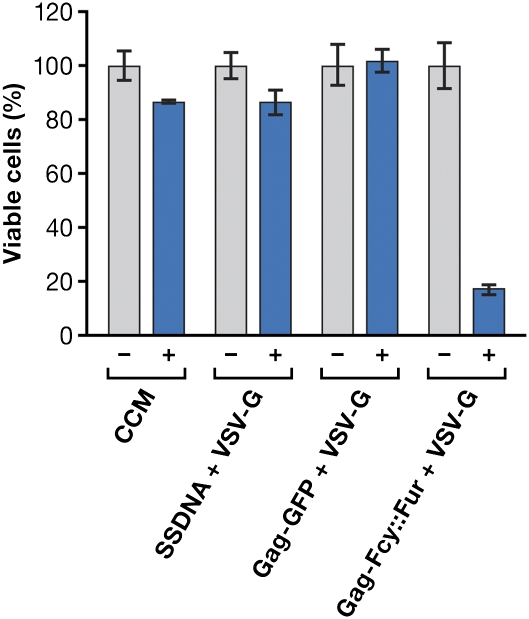
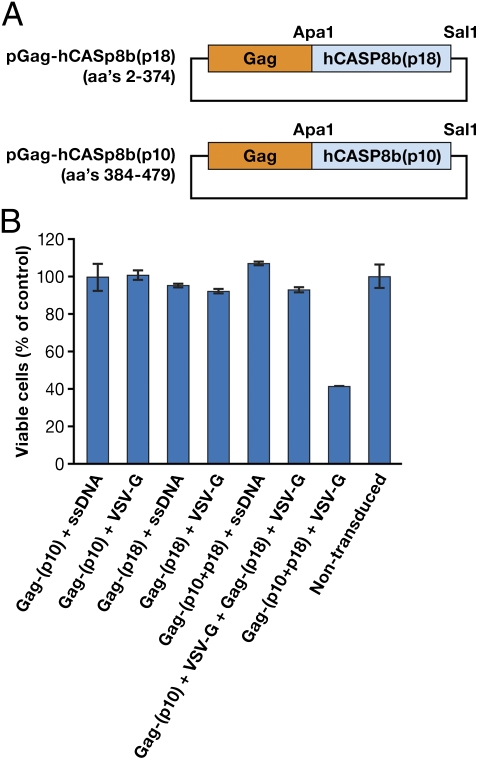
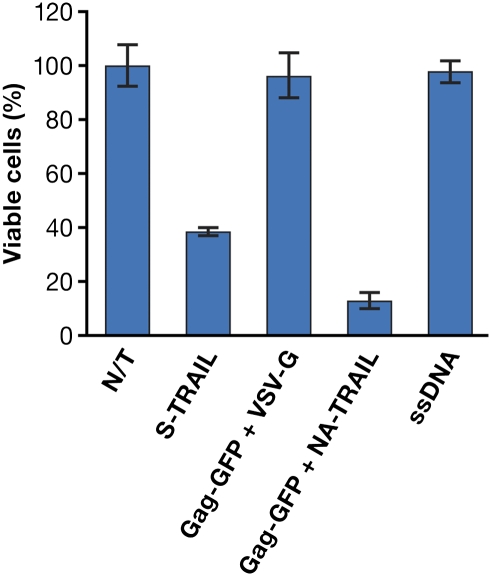
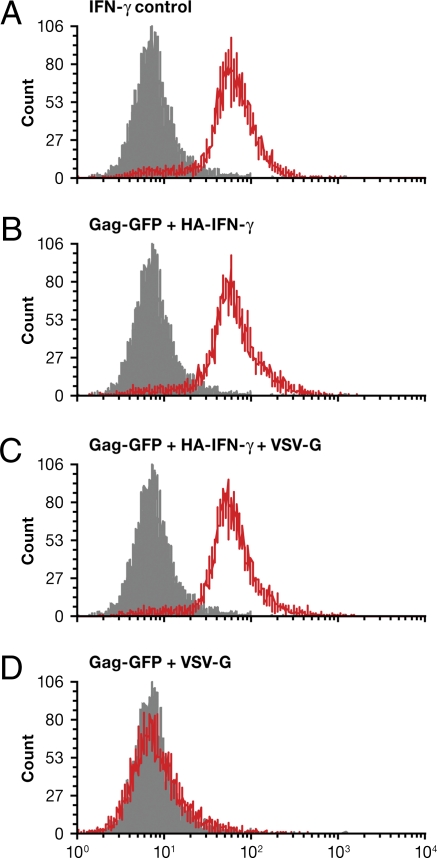
Over the years, researchers have developed several methods to deliver macromolecules into the cytosol and nucleus of living cells. However, there are limitations to all of these methods. The problems include (i) inefficient uptake, (ii) endosomal entrapment, (iii) delivery that is restricted to certain cell types, and (iv) damage to cells in the delivery process. Retroviral vectors are often used for gene delivery; however, integration of the genome of retroviral vector into the host genome can have serious consequences. Here we describe a safe alternative in which virus-like particles (VLPs), derived from an avian retrovirus, are used to deliver protein to cells. We show that these VLPs are a highly adaptable platform that can be used to deliver proteins either as part of Gag fusion proteins (intracellular delivery) or on the surface of VLPs. We generated VLPs that contain Gag-Cre recombinase, Gag-Fcy::Fur, and Gag-human caspase-8 as a proof-of-concept and demonstrated that the encapsidated proteins are active in recipient cells. In addition, we show that murine IFN-γ and human TNF-related apoptosis-inducing ligand can be displayed on the surface of VLPs, and that these modified VLPs can cause the appropriate response in cells, as evidenced by phosphorylation of STAT1 and induction of cell death, respectively.
Conflict of interest statement
The authors declare no conflict of interest.
Figures
References
-
- Bockamp E, et al. Conditional transgenic mouse models: From the basics to genome-wide sets of knockouts and current studies of tissue regeneration. Regen Med. 2008;3:217–235. - PubMed
-
- Huang S, Kawabe Y, Ito A, Kamihira M. Cre recombinase-mediated site-specific modification of a cellular genome using an integrase-defective retroviral vector. Biotechnol Bioeng. 2010;107:717–729. - PubMed
-
- Capecchi MR. High efficiency transformation by direct microinjection of DNA into cultured mammalian cells. Cell. 1980;22:479–488. - PubMed
Publication types
MeSH terms
Substances
Grants and funding
LinkOut - more resources
Full Text Sources
Other Literature Sources
Research Materials
Miscellaneous
