


A multi-site, randomized study of strengths-based case management with substance-abusing parolees
- PMID: 21949490
- PMCID: PMC3157195
- DOI: 10.1007/s11292-011-9123-y
A multi-site, randomized study of strengths-based case management with substance-abusing parolees
Abstract
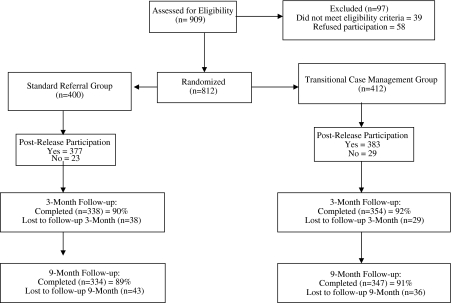
OBJECTIVES: To test whether strengths-based case management provided during an inmate's transition from incarceration to the community increases participation in community substance abuse treatment, enhances access to needed social services, and improves drug use, crime, and HIV risk outcomes. METHODS: In a multi-site trial, inmates (men and women) in four states (n = 812) were randomly assigned (within site) to receive either Transitional Case Management (TCM group), based on strengths-based principles, or standard parole services (SR group). Data were collected at baseline and at 3 and 9 months following release from prison. Analyses compared the two groups with respect to services received and to drug use, crime, and HIV risk behavior outcomes. RESULTS: There were no significant differences between parolees in the TCM group and the SR group on outcomes related to participation in drug abuse treatment, receipt of social services, or drug use, crime, and HIV risk behaviors. For specific services (e.g., residential treatment, mental health), although significant differences were found for length of participation or for number of visits, the number of participants in these services was small and the direction of effect was not consistent. CONCLUSION: In contrast to positive findings in earlier studies of strengths-based case management with mental-health and drug-abuse clients, this study found that case management did not improve treatment participation or behavioral outcomes for parolees with drug problems. The discussion includes possible reasons for the findings and suggestions for modifications to the intervention that could be addressed in future research.
Figures
References
-
- Bryk AS, Raudenbush SW. Hierarchical linear models: Applications and data analysis methods. Thousand Oaks, CA: Sage; 1992.
-
- Carroll KM, Easton CJ, Nich C, Hunkele KA, Neavins TM, Sinha R, et al. The use of contingency management and motivational/skills-building therapy to treat young adults with marijuana dependence. Journal of Consulting and Clinical Psychology. 2006;74(5):955–966. doi: 10.1037/0022-006X.74.5.955. - DOI - PMC - PubMed
-
- de Shazer S. Clues: Investigating solutions in brief therapy. New York: W.W. Norton; 1988.
LinkOut - more resources
Full Text Sources
Medical
Research Materials