


Differential effects of peptidoglycan recognition proteins on experimental atopic and contact dermatitis mediated by Treg and Th17 cells
- PMID: 21949809
- PMCID: PMC3174980
- DOI: 10.1371/journal.pone.0024961
Differential effects of peptidoglycan recognition proteins on experimental atopic and contact dermatitis mediated by Treg and Th17 cells
Abstract
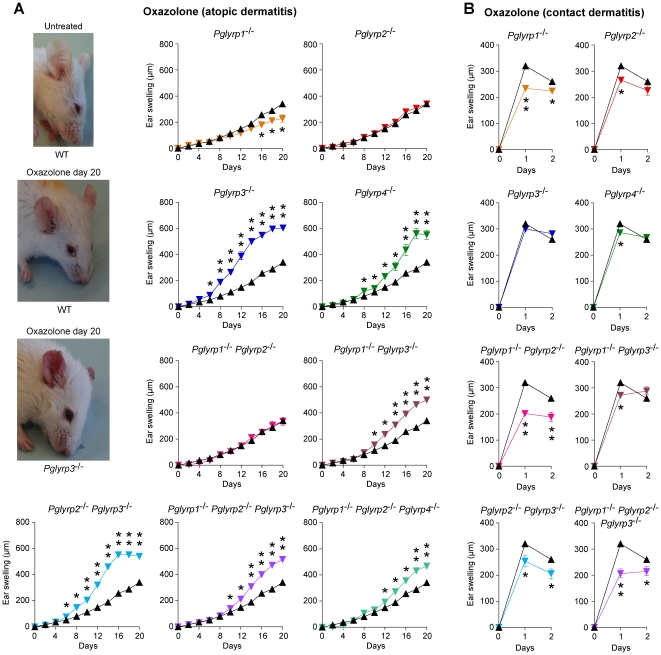
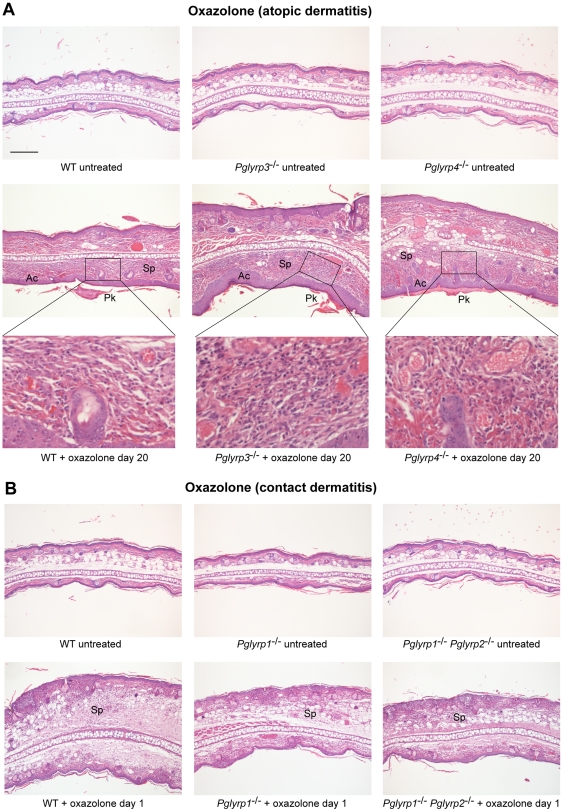
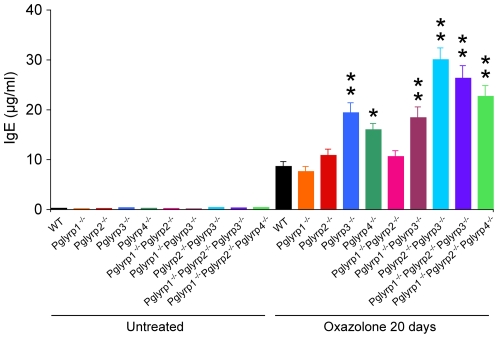
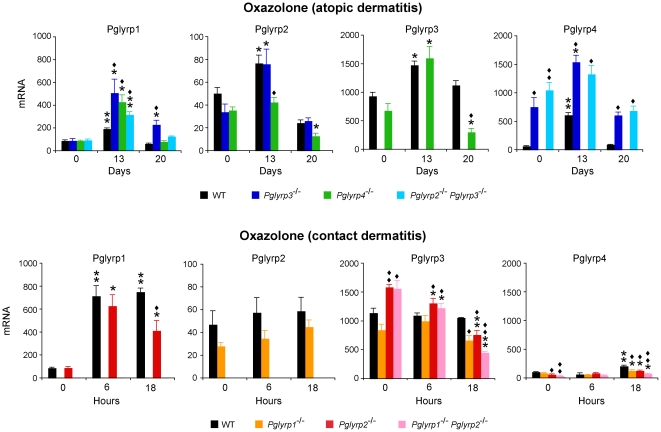
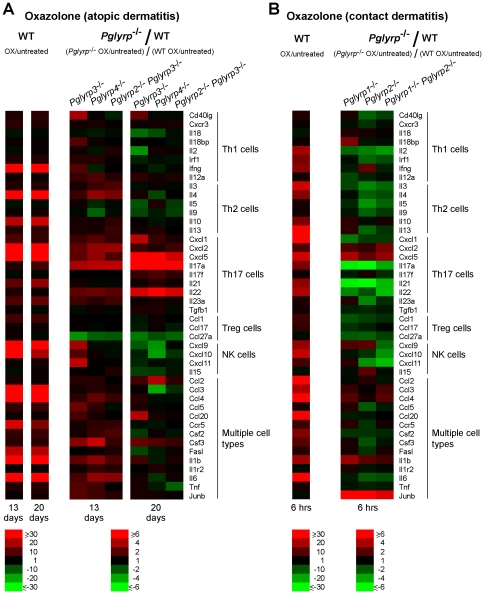
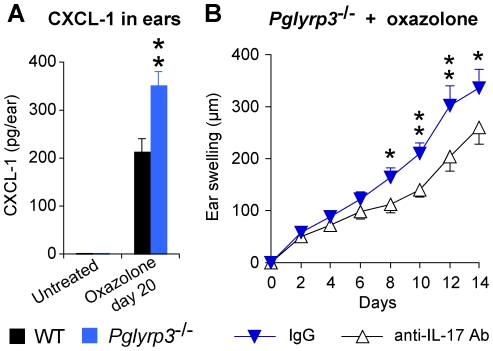
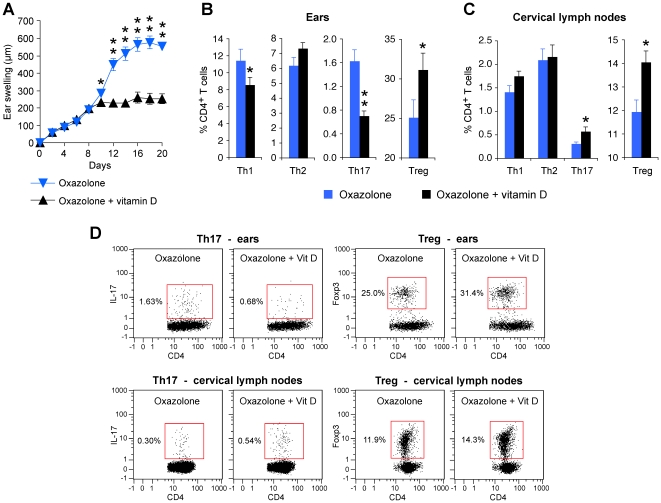
Skin protects the body from the environment and is an important component of the innate and adaptive immune systems. Atopic dermatitis and contact dermatitis are among the most frequent inflammatory skin diseases and are both determined by multigenic predisposition, environmental factors, and aberrant immune response. Peptidoglycan Recognition Proteins (Pglyrps) are expressed in the skin and we report here that they modulate sensitivity to experimentally-induced atopic dermatitis and contact dermatitis. Pglyrp3(-/-) and Pglyrp4(-/-) mice (but not Pglyrp2(-/-) mice) develop more severe oxazolone-induced atopic dermatitis than wild type (WT) mice. The common mechanism underlying this increased sensitivity of Pglyrp3(-/-) and Pglyrp4(-/-) mice to atopic dermatitis is reduced recruitment of Treg cells to the skin and enhanced production and activation Th17 cells in Pglyrp3(-/-) and Pglyrp4(-/-) mice, which results in more severe inflammation and keratinocyte proliferation. This mechanism is supported by decreased inflammation in Pglyrp3(-/-) mice following in vivo induction of Treg cells by vitamin D or after neutralization of IL-17. By contrast, Pglyrp1(-/-) mice develop less severe oxazolone-induced atopic dermatitis and also oxazolone-induced contact dermatitis than WT mice. Thus, Pglyrp3 and Pglyrp4 limit over-activation of Th17 cells by promoting accumulation of Treg cells at the site of chronic inflammation, which protects the skin from exaggerated inflammatory response to cell activators and allergens, whereas Pglyrp1 has an opposite pro-inflammatory effect in the skin.
Conflict of interest statement
Figures



References
-
- De Benedetto A, Agnihothri R, McGirt LY, Bankova LG, Beck LA. Atopic dermatitis: a disease caused by innate immune defects? J Invest Dermatol. 2009;129:14–30. - PubMed
-
- Fonacier LS, Dreskin SC, Leung DY. Allergic skin diseases. J Allergy Clin Immunol. 2010;125(Suppl 2):S138–149. - PubMed
-
- Wang B, Feliciani C, Freed I, Cai Q, Sauder DN. Insights into molecular mechanisms of contact hypersensitivity gained from gene knockout studies. J Leukoc Biol. 2001;70:185–191. - PubMed
-
- Martin SF, Jakob T. From innate to adaptive immune responses in contact hypersensitivity. Curr Opin Allergy Clin Immunol. 2008;8:289–293. - PubMed
Publication types
MeSH terms
Substances
Grants and funding
LinkOut - more resources
Full Text Sources
Molecular Biology Databases
Miscellaneous
