A nonlinear biphasic fiber-reinforced porohyperviscoelastic model of articular cartilage incorporating fiber reorientation and dispersion
- PMID: 21950897
- PMCID: PMC3705837
- DOI: 10.1115/1.4004832
A nonlinear biphasic fiber-reinforced porohyperviscoelastic model of articular cartilage incorporating fiber reorientation and dispersion
Abstract
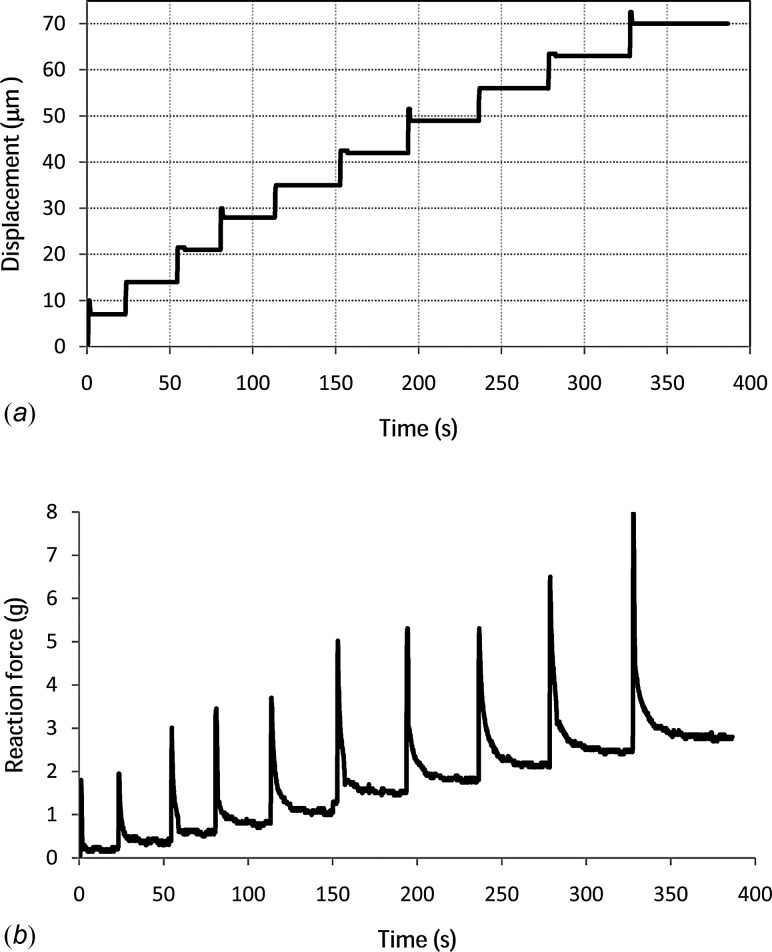
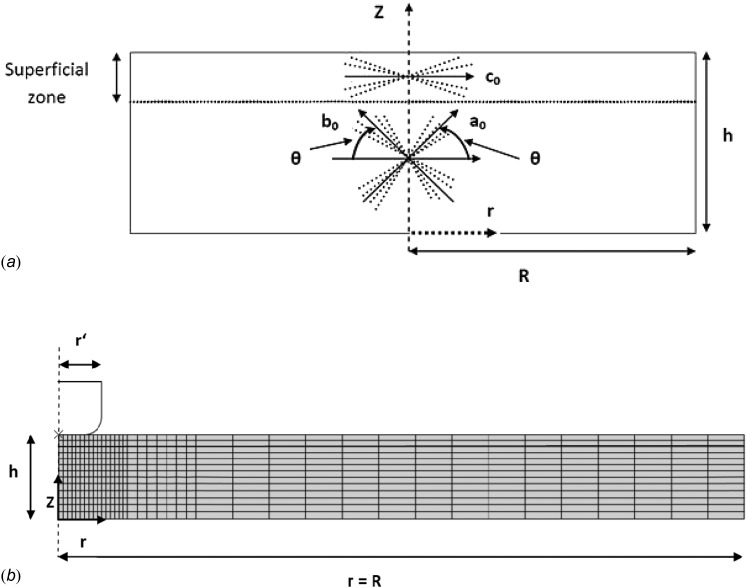
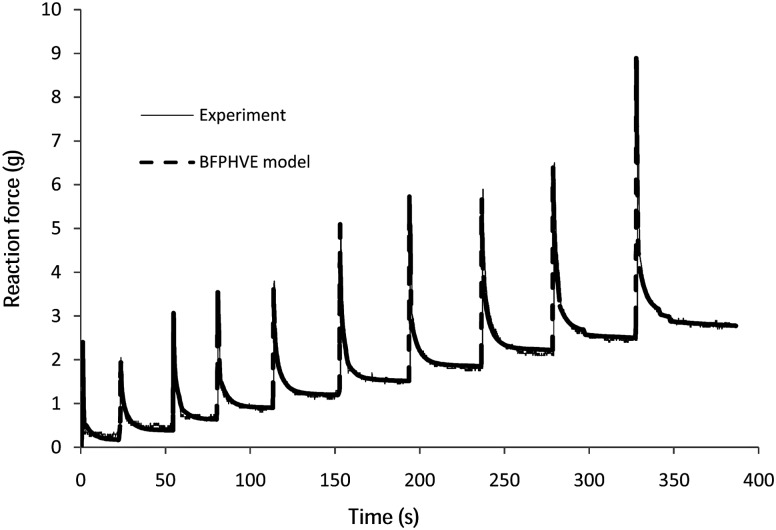
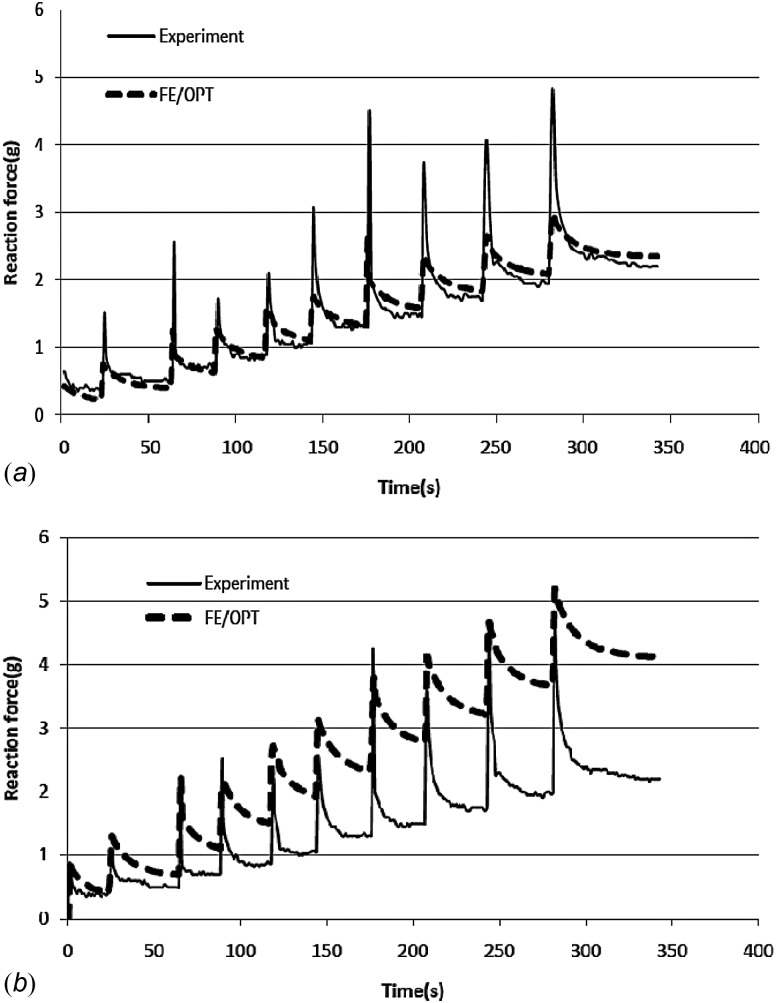
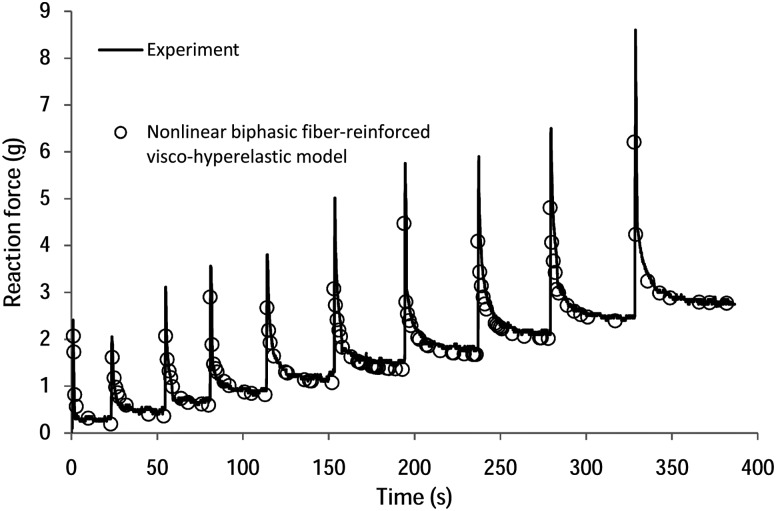
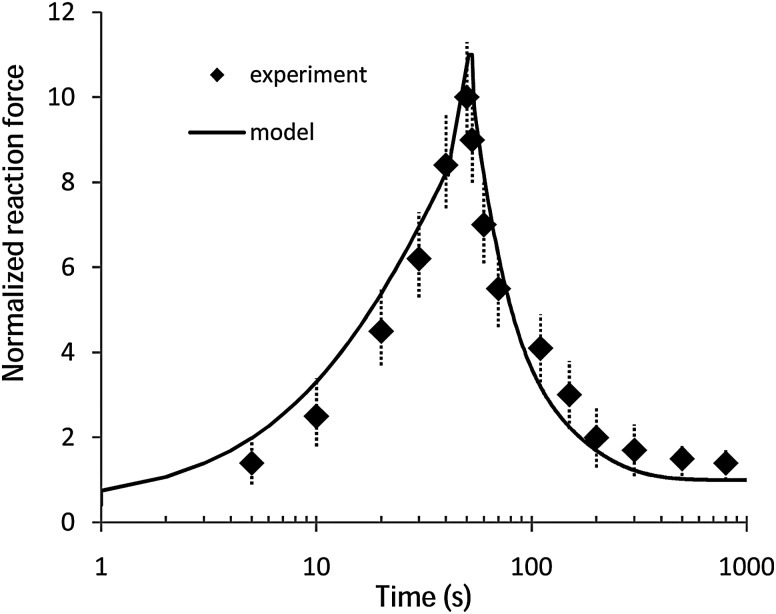
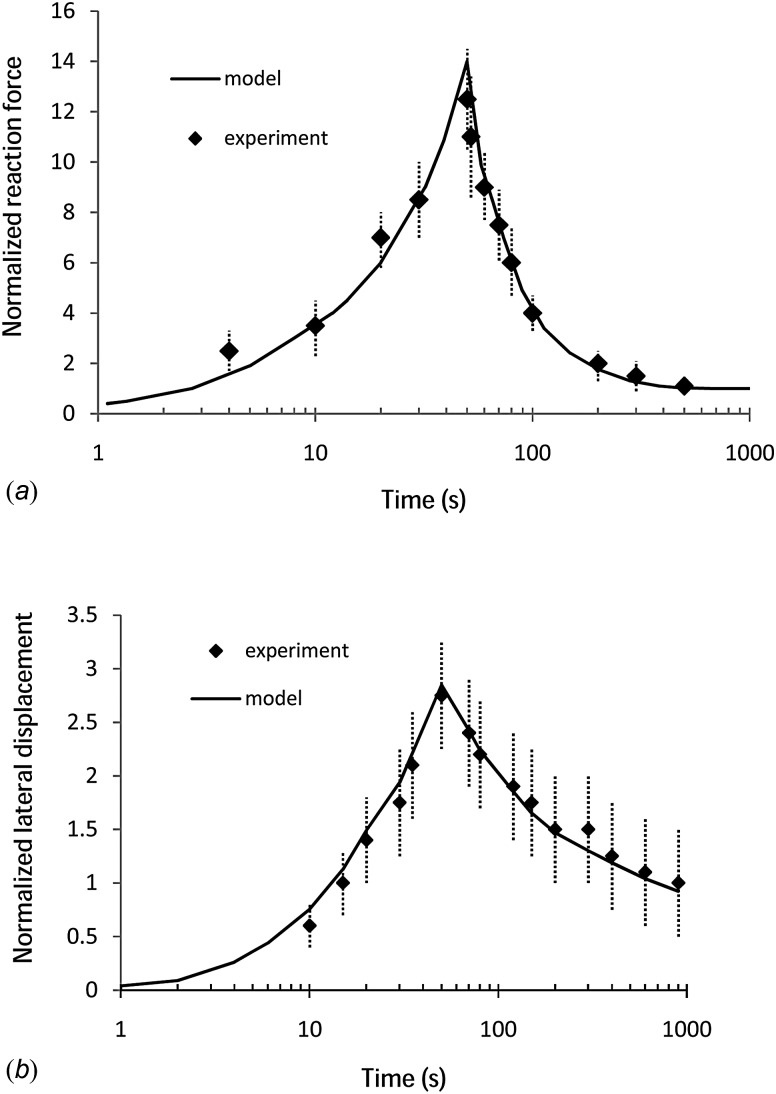
A nonlinear biphasic fiber-reinforced porohyperviscoelastic (BFPHVE) model of articular cartilage incorporating fiber reorientation effects during applied load was used to predict the response of ovine articular cartilage at relatively high strains (20%). The constitutive material parameters were determined using a coupled finite element-optimization algorithm that utilized stress relaxation indentation tests at relatively high strains. The proposed model incorporates the strain-hardening, tension-compression, permeability, and finite deformation nonlinearities that inherently exist in cartilage, and accounts for effects associated with fiber dispersion and reorientation and intrinsic viscoelasticity at relatively high strains. A new optimization cost function was used to overcome problems associated with large peak-to-peak differences between the predicted finite element and experimental loads that were due to the large strain levels utilized in the experiments. The optimized material parameters were found to be insensitive to the initial guesses. Using experimental data from the literature, the model was also able to predict both the lateral displacement and reaction force in unconfined compression, and the reaction force in an indentation test with a single set of material parameters. Finally, it was demonstrated that neglecting the effects of fiber reorientation and dispersion resulted in poorer agreement with experiments than when they were considered. There was an indication that the proposed BFPHVE model, which includes the intrinsic viscoelasticity of the nonfibrillar matrix (proteoglycan), might be used to model the behavior of cartilage up to relatively high strains (20%). The maximum percentage error between the indentation force predicted by the FE model using the optimized material parameters and that measured experimentally was 3%.
Figures
References
-
- Terzaghi, K. , 1951, Theoretical Soil Mechanics, John Wiley and Sons, New York.
-
- Biot, M. A. , 1941, “General Theory of Three-Dimensional Consolidation,” J. Appl. Phys., 12, pp. 155–164.10.1063/1.1712886 - DOI
-
- Biot, M. A. , 1962, “Mechanics of Deformation and Acoustic Propagation in Porous Media,” J. Appl. Phys., 33, pp. 1482–1498.10.1063/1.1728759 - DOI
-
- Kuei, S. C. , Lai, W. M. , and Mow, V. C. , 1978, “A Biphasic Rheological Model of Articular Cartilage,” Advances in Bioengineering, R. C. Eberhardt and Burstein A. H., Eds., ASME, New York, p. 17.
Publication types
MeSH terms
Grants and funding
LinkOut - more resources
Full Text Sources