. 2012 Jan;14(1):95-106.
doi: 10.1111/j.1462-5822.2011.01704.x. Epub 2011 Nov 10.

Pseudomonas aeruginosa Psl polysaccharide reduces neutrophil phagocytosis and the oxidative response by limiting complement-mediated opsonization

Affiliations

Pseudomonas aeruginosa Psl polysaccharide reduces neutrophil phagocytosis and the oxidative response by limiting complement-mediated opsonization

Meenu Mishra et al. Cell Microbiol. 2012 Jan.

Abstract

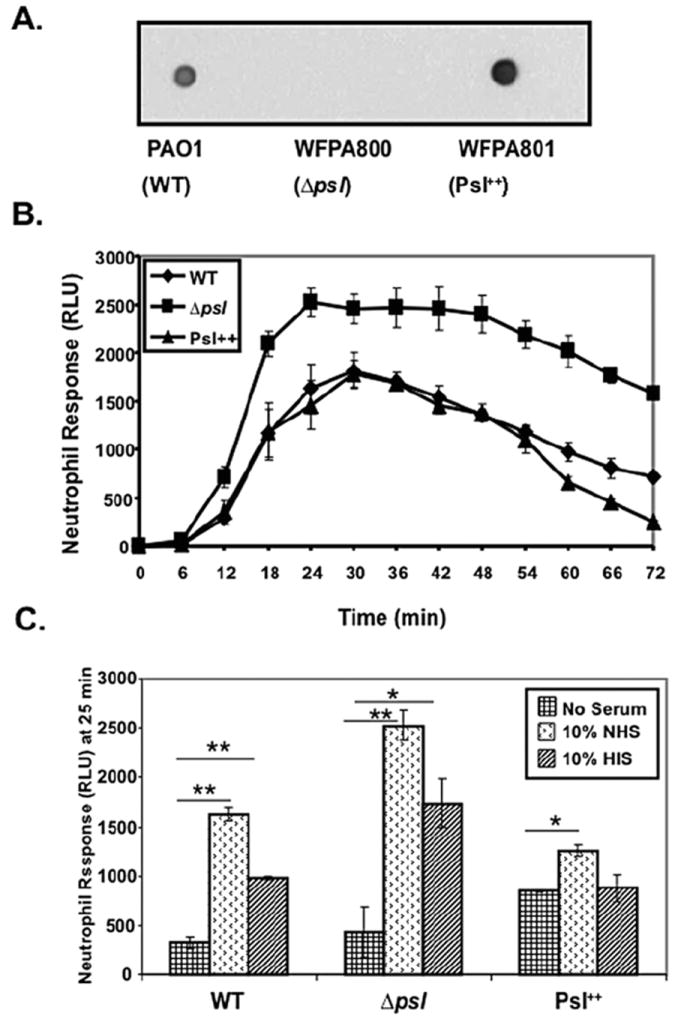
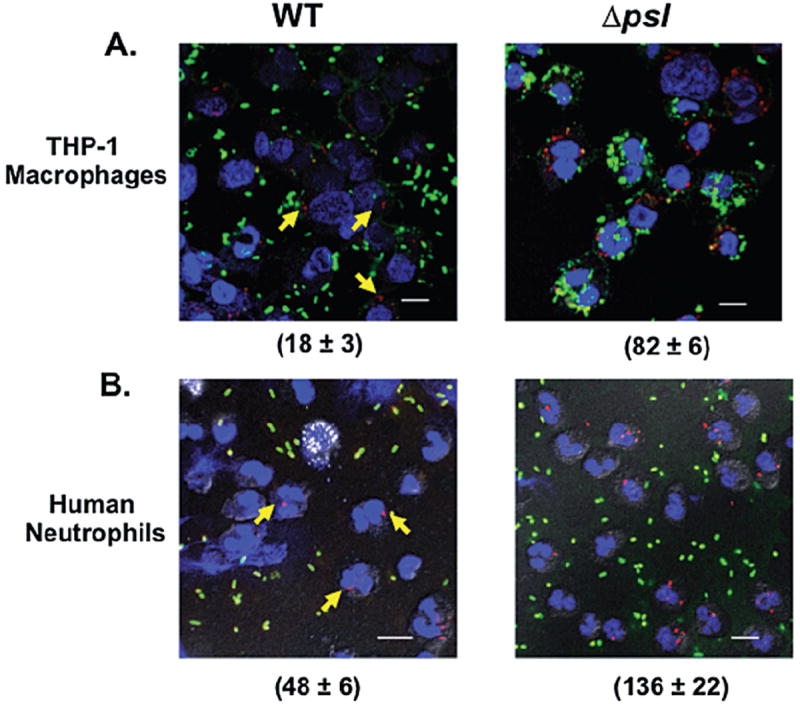
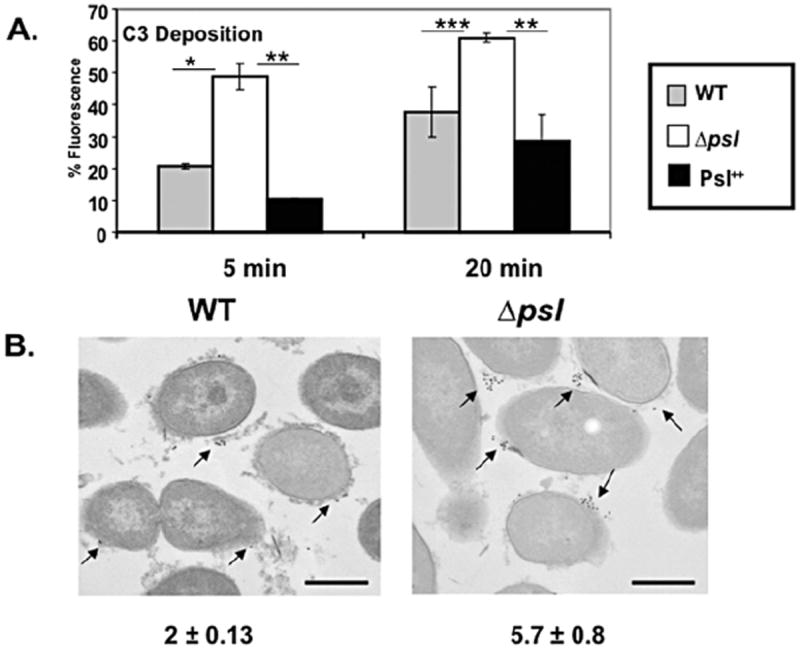
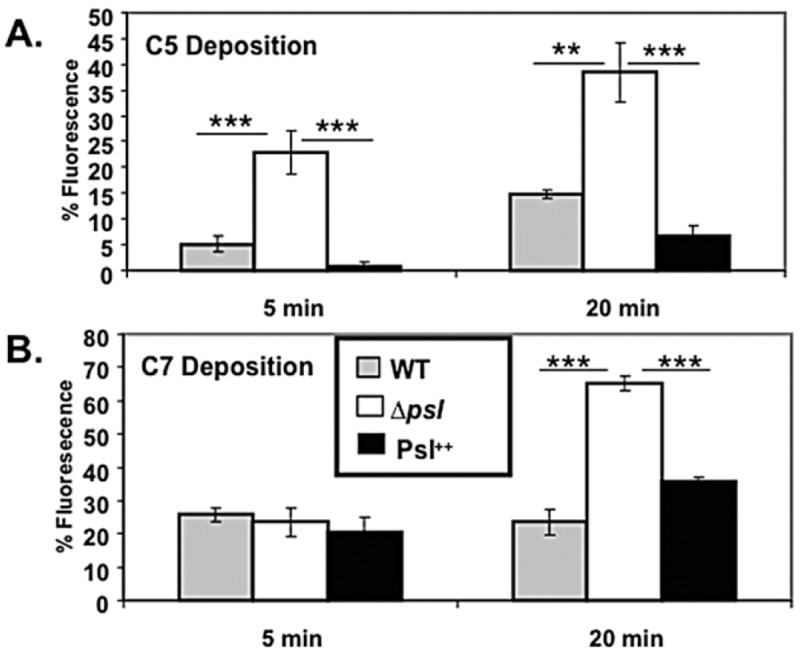
Pseudomonas aeruginosa causes chronic lung infections in the airways of cystic fibrosis (CF) patients. Psl is an extracellular polysaccharide expressed by non-mucoid P. aeruginosa strains, which are believed to be initial colonizers. We hypothesized that Psl protects P. aeruginosa from host defences within the CF lung prior to their conversion to the mucoid phenotype. We discovered that serum opsonization significantly increased the production of reactive oxygen species (ROS) by neutrophils exposed to a psl-deficient mutant, compared with wild-type (WT) and Psl overexpressing strains (Psl(++)). Psl-deficient P. aeruginosa were internalized and killed by neutrophils and macrophages more efficiently than WT and Psl(++) variants. Deposition of complement components C3, C5 and C7 was significantly higher on psl-deficient strains compared with WT and Psl(++) bacteria. In an in vivo pulmonary competition assay, there was a 4.5-fold fitness advantage for WT over psl-deficient P. aeruginosa. Together, these data show that Psl inhibits efficient opsonization, resulting in reduced neutrophil ROS production, and decreased killing by phagocytes. This provides a survival advantage in vivo. Since phagocytes are critical in early recognition and control of infection, therapies aimed at Psl could improve the quality of life for patients colonized with P. aeruginosa.


Figures

Fig. 1
Fig. 1
Serum opsonization of a Psl-deficient mutant of P. aeruginosa increases the oxidative burst by human neutrophils. A. Immunoblot showing expression of Psl from EPS extracts derived from strains PAO1, WFPA800 and WFPA801 (Byrd et al., 2009). These extracts were blotted on a nitrocellulose membrane, probed with anti-Psl antiserum and detected by chemiluminescence using a HRP-conjugated secondary antibody. B. Kinetic analysis of the chemiluminescence response (measurement of oxidative burst) of neutrophils generated against pre-opsonized Psl variant strains of P. aeruginosa. Each experiment was performed in quadruplet wells (n = 3 with 10% fresh normal human serum opsonization). RLU, relative luminescence unit. C. Oxidative burst response of neutrophils induced by Psl variant strains of P. aeruginosa under fresh serum opsonized (NHS), heat-inactivated serum (HIS)-opsonized and non-opsonized conditions. Bacteria were incubated with serum or no serum, washed and then incubated with neutrophils (moi 50:1) at 37°C for 25 min in presence of luminol and the chemiluminescence response of neutrophils was measured. Each experiment was performed in quadruplet wells (n = 5 for 10% NHS opsonization, HIS opsonization and non-opsonization). Values are mean ± SEM for five experiments. A statistical analysis was carried out using an unpaired two-tailed student’s t-test to compare the chemiluminescence response of neutrophils induced by HIS, opsonized and unopsonized bacteria. The asterisks indicate P-values (*P ≤ 0.05; **P ≤ 0.005). RLU, relative luminescence unit.
Fig. 2
Fig. 2
The presence of Psl reduces the uptake of P. aeruginosa by human phagocytic cells. Immunofluorescence images of (A) THP-1 cells and (B) human neutrophils, infected with pre-opsonized WT or a psl-deficient strain of P. aeruginosa. Bacteria were incubated with neutrophils at an moi of 5:1 and processed as described in Experimental procedures. Attached bacteria exposed to the antibodies before permeabilization stained green. Those exposed to the antibodies only after permeabilization stained red (internalized bacteria). Blue (DAPI) fluorescence was used to stain the nuclei of THP-1 cells and neutrophils (60× oil objective). Arrows indicate the internalized bacteria in the PAO1 samples. Scale bar is equal to 10 μm. The number (mean ± SD) of internalized bacteria is indicated in parentheses and is representative of 100 infected cells (neutrophils and macrophages) examined from triplicate coverslips.
Fig. 3
Fig. 3
Increased C3 complement component deposition on psl-deficient P. aeruginosa. A total of 2 × 10⁸ mid-log phase bacteria were opsonized with 20% fresh human serum at 37°C for 5 or 20 min, followed by the addition of 10 mM EDTA to stop the reaction. Bacteria were fixed and stained with anti-human C3 antibody (A) counter stained with fluorescent antibody and analysed by flow cytometry (B) counter stained with 15-nm colloidal gold rabbit anti-goat antibody and analysed by transmission electron microscopy (TEM), as outlined in Experimental procedures. Bar represents 500 nm. Arrows indicate the C3 complement deposition on the bacterial surface. The number in parentheses (mean ± SD) indicated deposition of C3 complement component on individual bacteria (averaged from 100 bacterial cells evaluated). Statistical analysis was carried out using the unpaired two-tailed Student’s t-test to compare the deposition of C3 complement component on the surface of the psl-deficient strain with WT and the Psl++ strains of P. aeruginosa. Mean ± SEM are given (n = 3). The asterisks indicate P-values (*P ≤ 0.05; **P ≤ 0.005; ***P ≤ 0.0005).
Fig. 4
Fig. 4
Psl limits C5 and C7 complement component deposition on P. aeruginosa. A total of 2 × 10⁸ mid-log phase bacteria were opsonized with 20% fresh human serum at 37°C for 5 and 20 min, followed by the addition of 10 mM EDTA to stop the reaction. Bacteria were fixed and stained with (A) anti-human C5 antibody and (B) anti-human C7 antibody as outlined in Experimental procedures. Mean ± SEM are given (n = 3). Statistical analysis was carried out using the unpaired two-tailed Student’s t-test to compare the deposition of C3 complement component on the surface of the psl-deficient strain with WT and the Psl++ strains of P. aeruginosa. The asterisks indicate P-values (**P ≤ 0.005; ***P ≤ 0.0005).
Fig. 5
Fig. 5
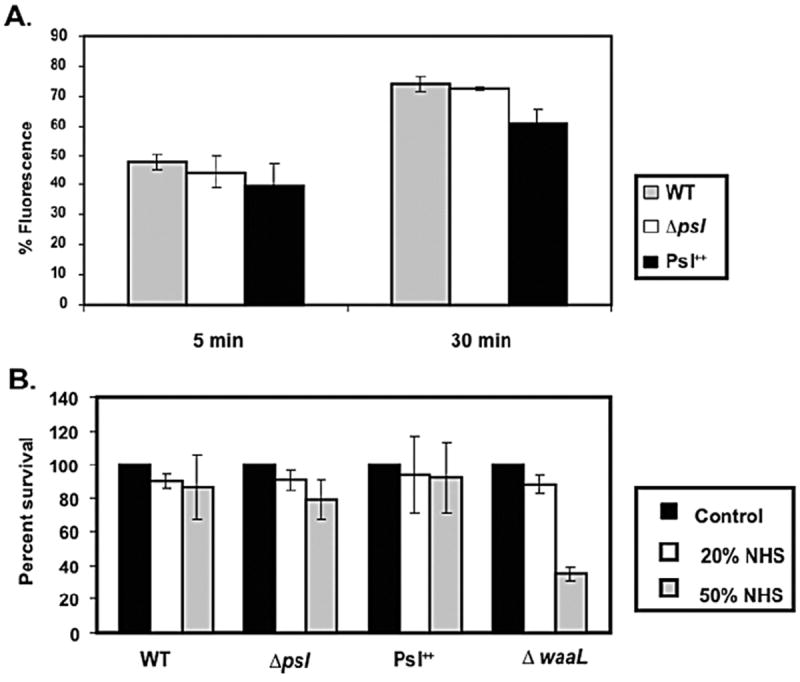
Psl polysaccharide has no effect on C9 deposition and complement-mediated killing. A. C9 complement component deposition was measured on WT, psl-deficient and Psl overexpressing strains of P. aeruginosa. Results are expressed as percentage of fluorescence positive cells as in Fig. 4, which is indicative of complement deposition on the bacterial surface. The experiment shown is representative of three independent experiments performed in triplicate. Data are mean ± SEM. B. Sensitivity of WT, psl-deficient and Psl overexpressing strains of P. aeruginosa to complement-mediated killing in the presence of 0, 20 and 50 percent fresh normal human serum (NHS). Bacterial survival is expressed as the percentage of bacteria recovered from the initial inoculation amount (incubated with buffer only without serum), which is set at 100%. Data represent mean ± SEM from a representative experiment (n = 3).
Fig. 6
Fig. 6
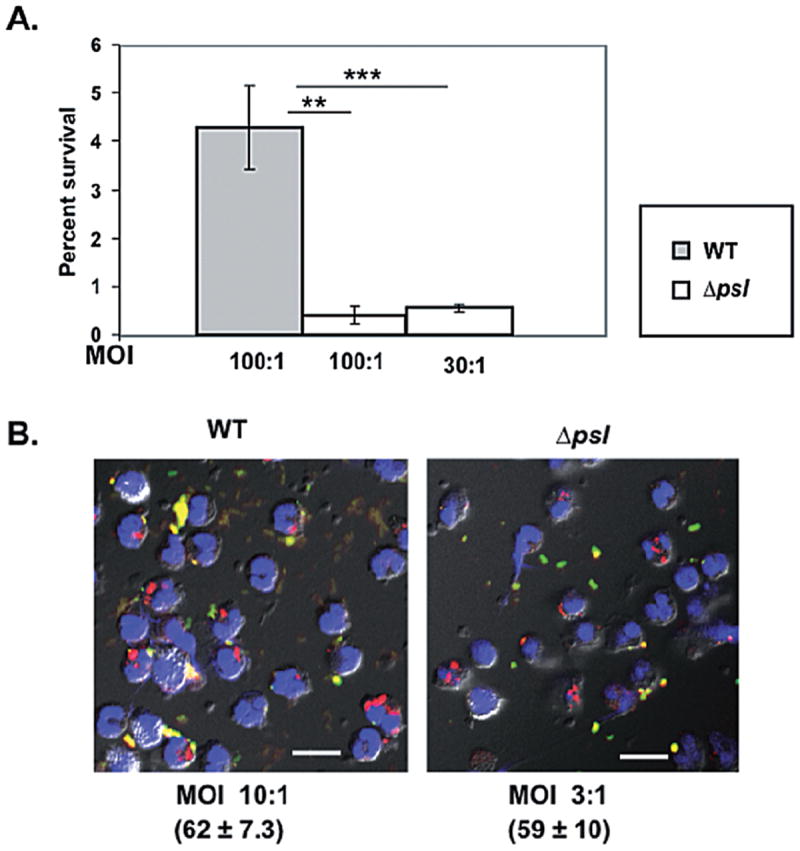
Psl enhances intracellular survival of P. aeruginosa in human neutrophils. A. Opsonized WT PAO1 and psl-deficient P. aeruginosa were incubated with 2 × 10⁵ human neutrophils at the indicated moi for 30 min. Extracellular and attached bacteria were killed by treatment with gentamicin, then neutrophils were lysed with 0.1% Triton X-100 and lysates plated to enumerate viable bacteria. Results are expressed as the percentage of bacteria that survived relative to total cell-associated bacteria and are representative of three independent experiments performed in triplicate. Bars represent mean ± SEM. Statistical analysis was carried out using the unpaired two-tailed Student’st-test. The asterisks indicate P-values (**P ≤ 0.005; ***P ≤ 0.0005). B. Immunofluorescence images (60× oil objective) showing equal uptake of bacteria (stained red) by neutrophils when the moi of WT and psl-deficient bacteria were adjusted. The moi and number of internalized bacteria (mean ± SD) per 100 neutrophils are indicated. Colours indicate: green, attached bacteria; red, internalized bacteria; blue, neutrophil nucleus. Scale bar represent 10 μm.
Fig. 7
Fig. 7
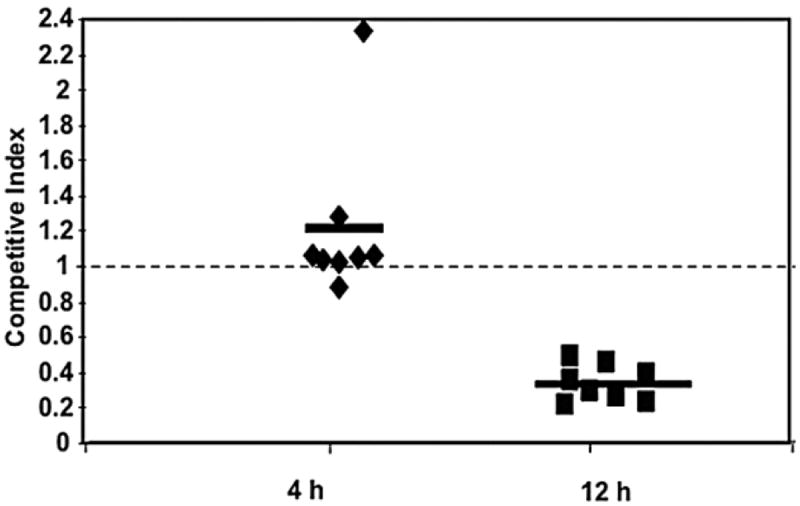
The presence of Psl provides a fitness advantage for P. aeruginosa during an acute murine pulmonary infection. Six-week-old female C57BL/6 mice were co-infected at a 1:1 ratio (total of 108 bacteria) with psl mutant and WT streptomycin resistant P. aeruginosa strains. Bacteria were harvested from the lungs at 4 and 12 h post infection. Viable cell counts and the competitive index (CI) of the two strains were determined as outlined in the Experimental procedures. Dashed line represents a CI of 1.0 (no advantage for WT or psl mutants).

References

    1. Abdul Ajees A, Gunasekaran K, Volanakis JE, Narayana SV, Kotwal GJ, Murthy HM. The structure of complement C3b provides insights into complement activation and regulation. Nature. 2006;444:221–225. - PubMed
    1. Abeyrathne PD, Daniels C, Poon KK, Matewish MJ, Lam JS. Functional characterization of WaaL, a ligase associated with linking O-antigen polysaccharide to the core of Pseudomonas aeruginosa lipopolysaccharide. J Bacteriol. 2005;187:3002–3012. - PMC - PubMed
    1. Balagopal A, MacFarlane AS, Mohapatra N, Soni S, Gunn JS, Schlesinger LS. Characterization of the receptor-ligand pathways important for entry and survival of Francisella tularensis in human macrophages. Infect Immun. 2006;74:5114–5125. - PMC - PubMed
    1. Barker JH, McCaffrey RL, Baman NK, Allen LA, Weiss JP, Nauseef WM. The role of complement opsonization in interactions between F. tularensis subsp. novicida and human neutrophils. Microbes Infect. 2009;11:762–769. - PMC - PubMed
    1. Bloch EF, Schmetz MA, Foulds J, Hammer CH, Frank MM, Joiner KA. Multimeric C9 within C5b-9 is required for inner membrane damage to Escherichia coli J5 during complement killing. J Immunol. 1987;138:842–848. - PubMed

Publication types

MeSH terms

LinkOut - more resources