


Public reporting of cost and quality information in orthopaedics
- PMID: 21952744
- PMCID: PMC3293971
- DOI: 10.1007/s11999-011-2077-6
Public reporting of cost and quality information in orthopaedics
Abstract
Background: Public reporting of patient health outcomes offers the potential to incentivize quality improvement by fostering increased accountability among providers. Voluntary reporting of risk-adjusted outcomes in cardiac surgery, for example, is viewed as a "watershed event" in healthcare accountability. However, public reporting of outcomes, cost, and quality information in orthopaedic surgery remains limited by comparison, attributable in part to the lack of standard assessment methods and metrics, provider fear of inadequate adjustment of health outcomes for patient characteristics (risk adjustment), and historically weak market demand for this type of information.
Questions/purposes: We review the origins of public reporting of outcomes in surgical care, identify existing initiatives specific to orthopaedics, outline the challenges and opportunities, and propose recommendations for public reporting of orthopaedic outcomes.
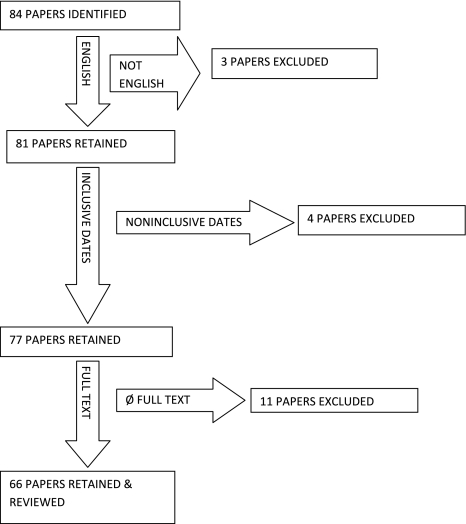
Methods: We performed a comprehensive review of the literature through a bibliographic search of MEDLINE and Google Scholar databases from January 1990 to December 2010 to identify articles related to public reporting of surgical outcomes.
Results: Orthopaedic-specific quality reporting efforts include the early FDA adverse event reporting MedWatch program and the involvement of surgeons in the Physician Quality Reporting Initiative. Issues that require more work include balancing different stakeholder perspectives on quality reporting measures and methods, defining accountability and attribution for outcomes, and appropriately risk-adjusting outcomes.
Conclusions: Given the current limitations associated with public reporting of quality and cost in orthopaedic surgery, valuable contributions can be made in developing specialty-specific evidence-based performance measures. We believe through leadership and involvement in policy formulation and development, orthopaedic surgeons are best equipped to accurately and comprehensively inform the quality reporting process and its application to improve the delivery and outcomes of orthopaedic care.
Figures
Comment in
-
Re: Public reporting of cost and quality information in orthopaedics.Clin Orthop Relat Res. 2012 Jul;470(7):2055; author reply 2056-7. doi: 10.1007/s11999-012-2384-6. Clin Orthop Relat Res. 2012. PMID: 22576933 Free PMC article. No abstract available.
References
-
- AMA. Principles for Pay for Performance Programs. 2005. Available at: http://www.ama-assn.org/ama1/pub/upload/mm/368/principles4pay62705.pdf. Accessed November 2010.
-
- AQA. Principles for Public Reports on Health Care. 2006. Available at: http://www.aqaalliance.org/files/ProviderPrinciplesMay06.doc. Accessed November 2010.
Publication types
MeSH terms
LinkOut - more resources
Full Text Sources
