


Human puberty: salivary melatonin profiles in constant conditions
- PMID: 21953482
- PMCID: PMC4167613
- DOI: 10.1002/dev.20605
Human puberty: salivary melatonin profiles in constant conditions
Abstract
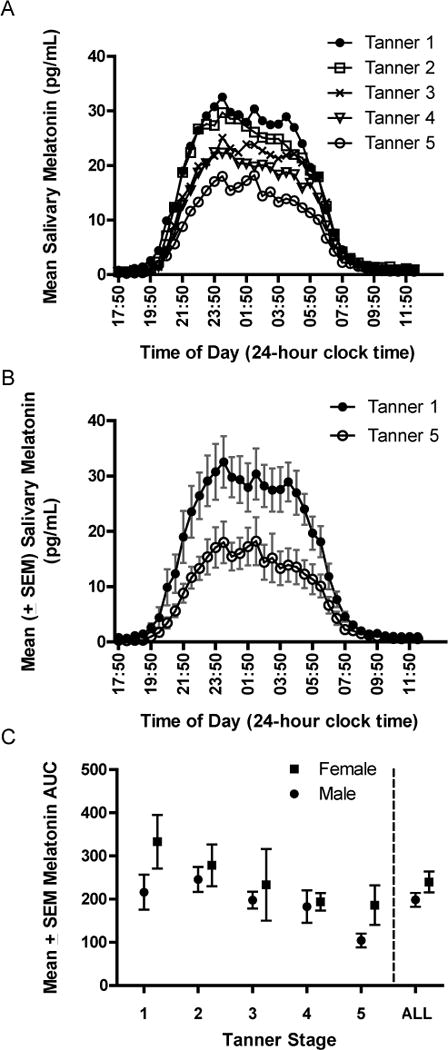
This analysis examined the relative contributions of sex, age, body mass index (BMI), and puberty (Tanner) stage on salivary melatonin amplitude. Sixty-nine children and adolescents (30 females; 9.6-17.8 years) were examined for Tanner stage. Serial salivary melatonin samples were collected in controlled conditions, from which these melatonin amplitude measures were derived: area under the curve (AUC) and maximum value (MAX). AUC declined with advancing Tanner stage. This melatonin decline was similar between boys and girls, but girls secreted more melatonin compared to boys. Tanner stage and sex explained AUC variability, but age and BMI did not; similar results emerged for MAX. These results indicate that puberty stage may either mediate the decline of melatonin, or the decrease in melatonin amplitude may be an indicator of pubertal progression. These findings also indicate that the melatonin decline during puberty is not entirely accounted for by body mass or by age.
Copyright © 2011 Wiley Periodicals, Inc.
Figures
References
-
- Acebo C, Labyak SE, Carskadon MA. Dim light melatonin profiles during constant routines: amplitude and development. Sleep. 2003;26:A113–114.
-
- Aeschbach D, Sher L, Postolache TT, Matthews JR, Jackson MA, Wehr TA. A longer biological night in long sleepers than in short sleepers. Journal of Clinical Endocrinology and Metabolism. 2003;88:26–30. - PubMed
-
- Attanasio A, Borrelli P, Gupta D. Circadian rhythms in serum meltonin from infancy to adolescence. Journal of Clinical Endocrinology and Metabolism. 1985;61(2):388–390. - PubMed
-
- Berga SL, Jones KL, Kaufmann S, Yen SS. Nocturnal melatonin levels are unaltered by ovarian suppression in girls with central precocious puberty. Fertil Steril. 1989;52(6):936–941. - PubMed
