


Quantitative proteomics analysis of adsorbed plasma proteins classifies nanoparticles with different surface properties and size
- PMID: 21956884
- PMCID: PMC3252235
- DOI: 10.1002/pmic.201100037
Quantitative proteomics analysis of adsorbed plasma proteins classifies nanoparticles with different surface properties and size
Abstract
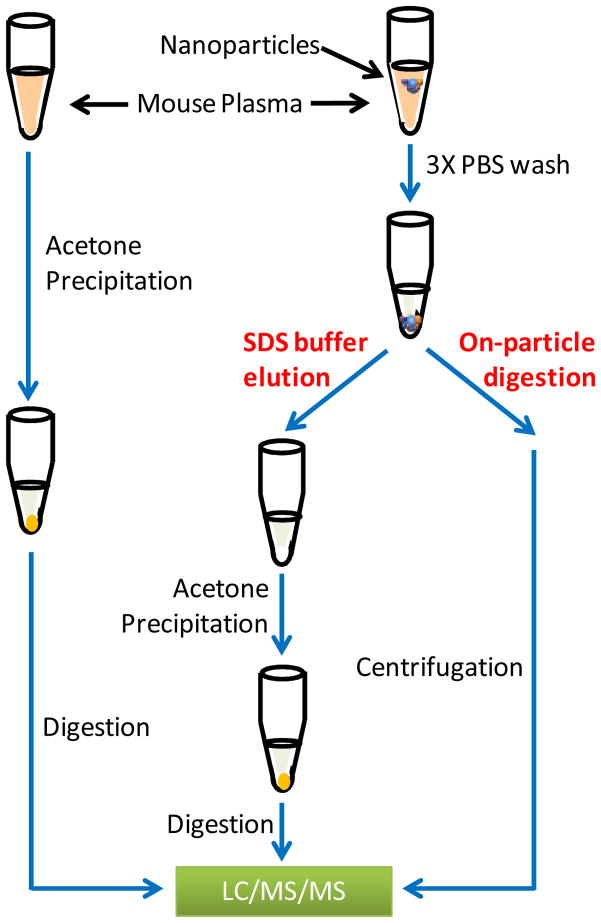
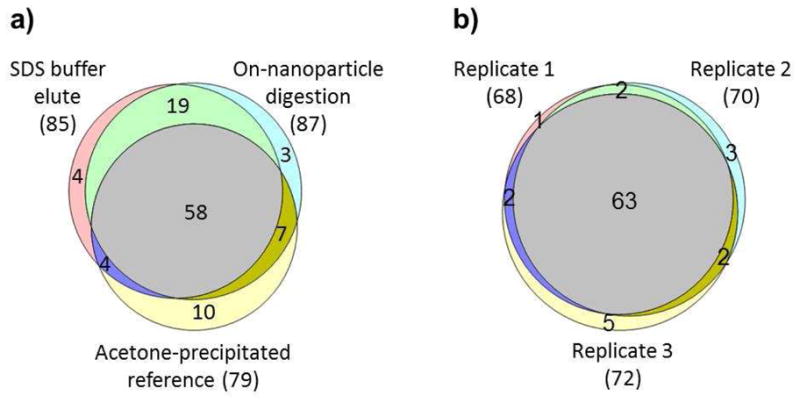
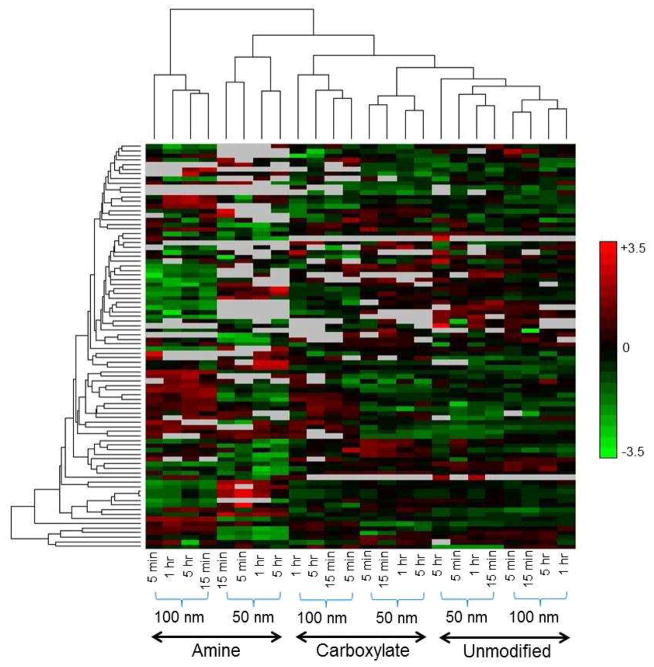
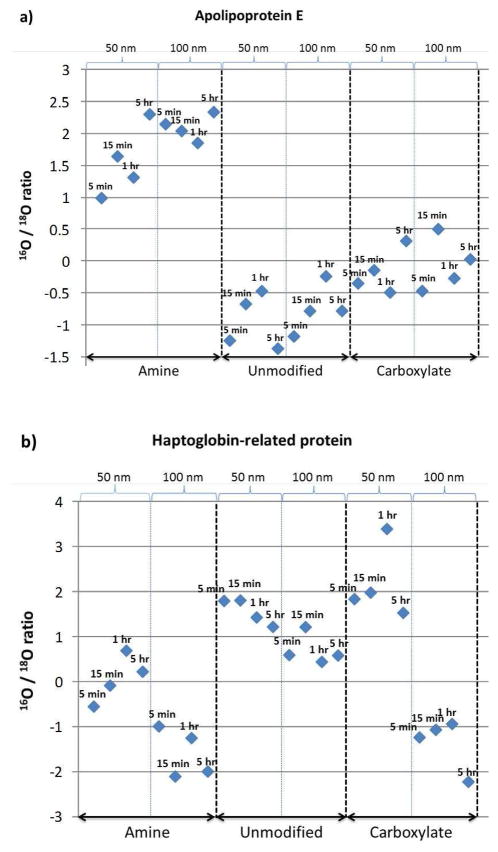
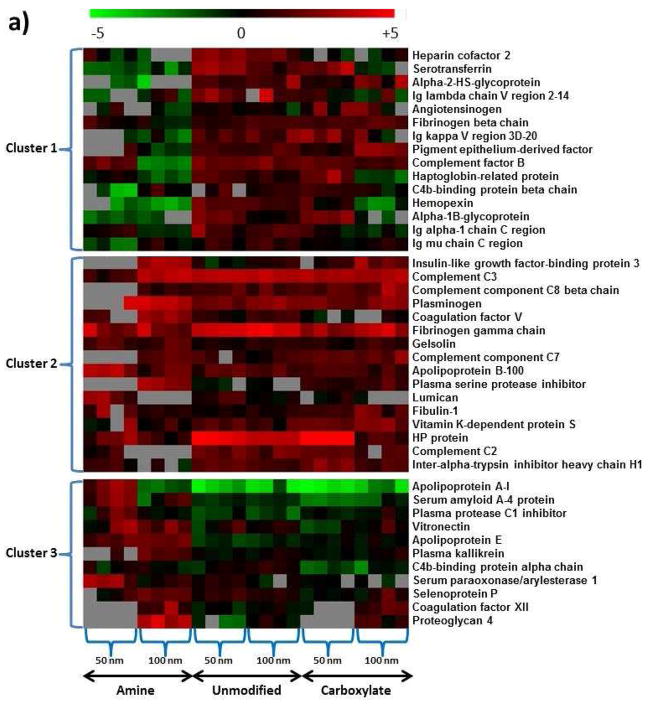
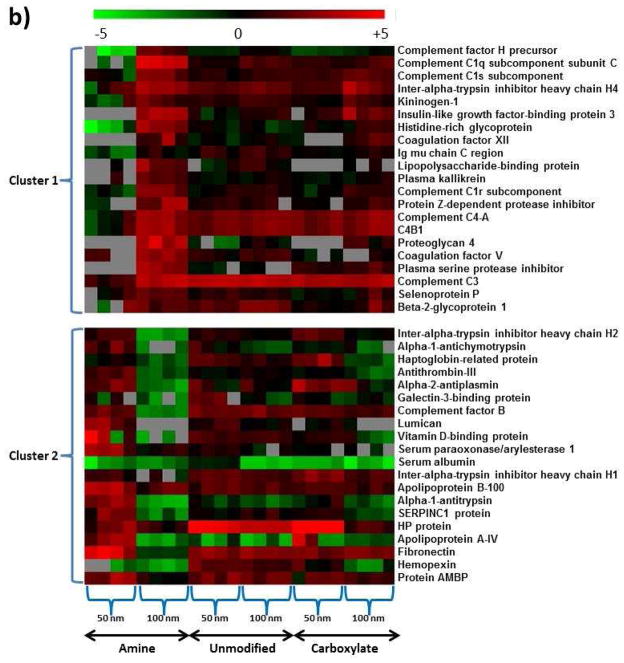
Nanoparticle biological activity, biocompatibility and fate can be directly affected by layers of readily adsorbed host proteins in biofluids. Here, we report a study on the interactions between human blood plasma proteins and nanoparticles with a controlled systematic variation of properties using (18)O-labeling and LC-MS-based quantitative proteomics. We developed a novel protocol to both simplify isolation of nanoparticle bound proteins and improve reproducibility. LC-MS analysis identified and quantified 88 human plasma proteins associated with polystyrene nanoparticles consisting of three different surface chemistries and two sizes, as well as, for four different exposure times (for a total of 24 different samples). Quantitative comparison of relative protein abundances was achieved by spiking an (18)O-labeled "universal" reference into each individually processed unlabeled sample as an internal standard, enabling simultaneous application of both label-free and isotopic labeling quantification across the entire sample set. Clustering analysis of the quantitative proteomics data resulted in distinctive patterns that classified the nanoparticles based on their surface properties and size. In addition, temporal data indicated that the formation of the stable protein corona was at equilibrium within 5 min. The comprehensive quantitative proteomics results obtained in this study provide rich data for computational modeling and have potential implications towards predicting nanoparticle biocompatibility.
Copyright © 2011 WILEY-VCH Verlag GmbH & Co. KGaA, Weinheim.
Conflict of interest statement
The authors have declared no conflict of interest.
Figures
References
-
- Nel A, Xia T, Madler L, Li N. Toxic potential of materials at the nanolevel. Science. 2006;311:622–627. - PubMed
-
- Blunk T, Hochstrasser DF, Sanchez JC, Muller BW, Muller RH. Colloidal carriers for intravenous drug targeting: plasma protein adsorption patterns on surface-modified latex particles evaluated by two-dimensional polyacrylamide gel electrophoresis. Electrophoresis. 1993;14:1382–1387. - PubMed
-
- Gessner A, Waicz R, Lieske A, Paulke B, et al. Nanoparticles with decreasing surface hydrophobicities: influence on plasma protein adsorption. Int J Pharm. 2000;196:245–249. - PubMed
-
- Labarre D, Vauthier C, Chauvierre C, Petri B, et al. Interactions of blood proteins with poly(isobutylcyanoacrylate) nanoparticles decorated with a polysaccharidic brush. Biomaterials. 2005;26:5075–5084. - PubMed
Publication types
MeSH terms
Substances
Grants and funding
LinkOut - more resources
Full Text Sources
Other Literature Sources
