


Harvesting of microalgae by bio-flocculation
- PMID: 21957329
- PMCID: PMC3172406
- DOI: 10.1007/s10811-010-9591-x
Harvesting of microalgae by bio-flocculation
Abstract
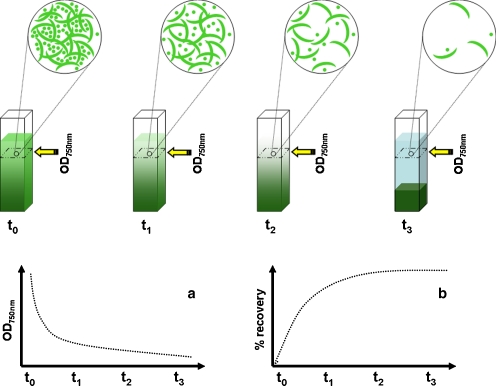
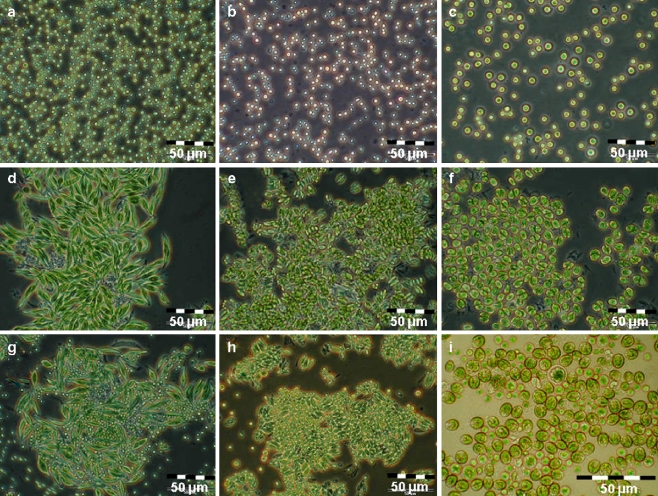
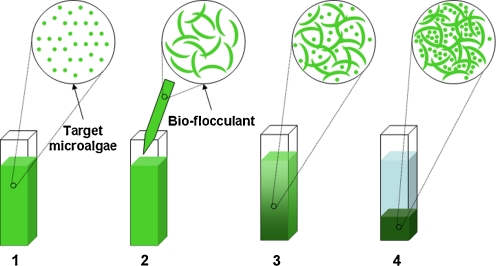
The high-energy input for harvesting biomass makes current commercial microalgal biodiesel production economically unfeasible. A novel harvesting method is presented as a cost and energy efficient alternative: the bio-flocculation by using one flocculating microalga to concentrate the non-flocculating microalga of interest. Three flocculating microalgae, tested for harvesting of microalgae from different habitats, improved the sedimentation rate of the accompanying microalga and increased the recovery of biomass. The advantages of this method are that no addition of chemical flocculants is required and that similar cultivation conditions can be used for the flocculating microalgae as for the microalgae of interest that accumulate lipids. This method is as easy and effective as chemical flocculation which is applied at industrial scale, however in contrast it is sustainable and cost-effective as no costs are involved for pre-treatment of the biomass for oil extraction and for pre-treatment of the medium before it can be re-used.
Figures


References
-
- Benemann JR. Feasibility analysis of photobiological hydrogen production. Int J Hydrogen Energy. 1997;22:979–987. doi: 10.1016/S0360-3199(96)00189-9. - DOI
-
- Benemann JR, Oswald WJ (1996) Systems and economic analysis of microalgae ponds for conversion of carbon dioxide to biomass. 4th Quarterly Technical Progress Report, Department of Energy, Pittsburgh Energy Technology Centre, Report CONF-9409207-2: 105–109
-
- Benemann JR, Weissman JC, Koopman BL, Oswald WJ. Energy production by microbial photosynthesis. Nature. 1977;268:19–23. doi: 10.1038/268019a0. - DOI
-
- Buelna G, Bhattarai KK, de la Noue J, Taiganides EP. Evaluation of various flocculants for the recovery of algal biomass growth on pig-waste. Bio Wastes. 1990;31:211–222. doi: 10.1016/0269-7483(90)90160-T. - DOI
-
- De la Nouë J, Laliberte G, Proulx D. Algae and waste water. J Appl Phycol. 1992;4:247–254. doi: 10.1007/BF02161210. - DOI
LinkOut - more resources
Full Text Sources
Other Literature Sources