Negative pressure pulmonary edema revisited: Pathophysiology and review of management
- PMID: 21957413
- PMCID: PMC3168351
- DOI: 10.4103/1658-354X.84108
Negative pressure pulmonary edema revisited: Pathophysiology and review of management
Abstract
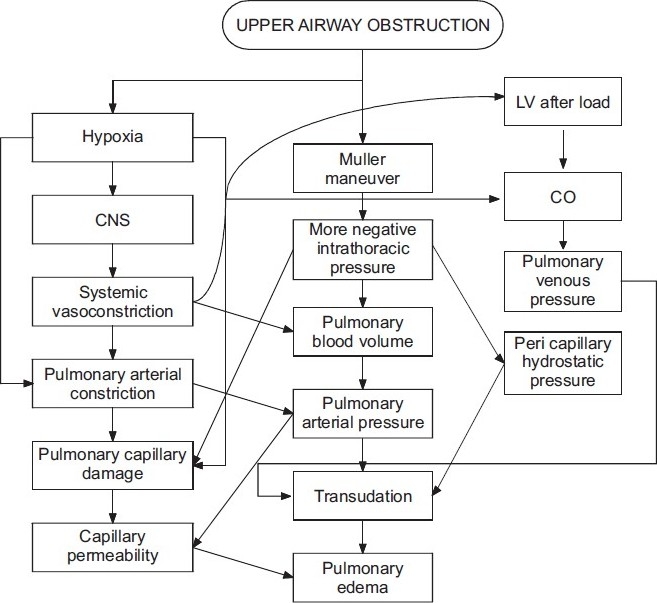
Negative pressure pulmonary edema (NPPE) is a dangerous and potentially fatal condition with a multifactorial pathogenesis. Frequently, NPPE is a manifestation of upper airway obstruction, the large negative intrathoracic pressure generated by forced inspiration against an obstructed airway is thought to be the principal mechanism involved. This negative pressure leads to an increase in pulmonary vascular volume and pulmonary capillary transmural pressure, creating a risk of disruption of the alveolar-capillary membrane. The early detection of the signs of this syndrome is vital to the treatment and to patient outcome. The purpose of this review is to highlight the available literature on NPPE, while probing the pathophysiological mechanisms relevant in both the development of this condition and that involved in its resolution.
Keywords: Airway obstruction; negative pressure; negative pressure pulmonary edema; postoperative.
Conflict of interest statement
Figures
References
-
- Timby J, Reed C, Zeilender S, Glauser FL. “Mechanical” causes of pulmonary edema. Chest. 1990;98:973–9. - PubMed
-
- McConkey PP. Postobstructive pulmonary oedema: A case series and review. Anaesthesia Intensive Care. 2000;28:72–6. - PubMed
-
- Tami TA, Chu F, Wildes TO, Kaplan M. Pulmonary edema and acute upper airway obstruction. Laryngoscope. 1986;96:506–9. - PubMed
-
- Dicpinigaitis PV, Mehta DC. Postobstructive pulmonary edema induced by endotracheal tube occlusion. Intensive Care Med. 1995;21:1048–50. - PubMed