


Delivery of nicotine in an extract of a smokeless tobacco product reduces its reinforcement-attenuating and discriminative stimulus effects in rats
- PMID: 21960181
- PMCID: PMC3363290
- DOI: 10.1007/s00213-011-2514-y
Delivery of nicotine in an extract of a smokeless tobacco product reduces its reinforcement-attenuating and discriminative stimulus effects in rats
Abstract
Rationale: Animal models of tobacco addiction rely on administration of nicotine alone or nicotine combined with isolated constituents. Models using tobacco extracts derived from tobacco products and containing a range of tobacco constituents might more accurately simulate tobacco exposure in humans.
Objective: To compare the effects of nicotine alone and an aqueous smokeless tobacco extract in several addiction-related animal behavioral models.
Methods: Nicotine alone and nicotine dose-equivalent concentrations of extract were compared in terms of their acute effects on intracranial self-stimulation (ICSS) thresholds, discriminative stimulus effects, and effects on locomotor activity.
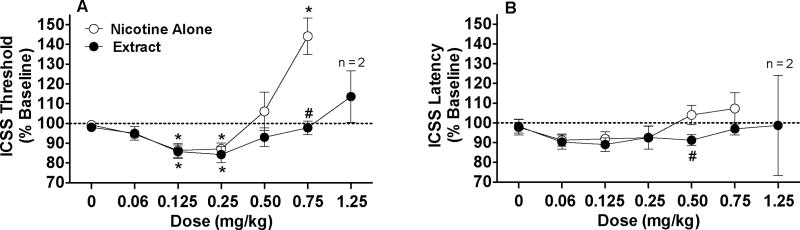
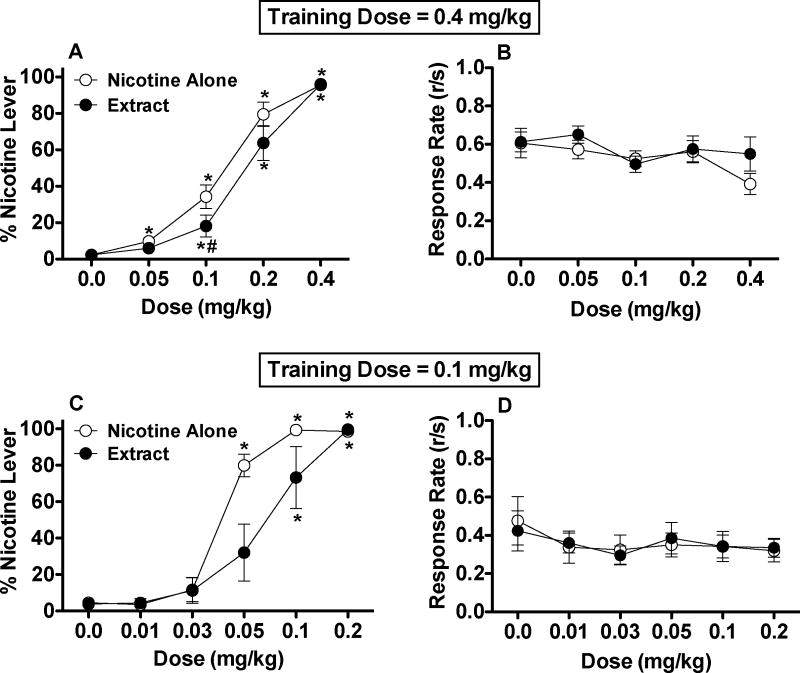
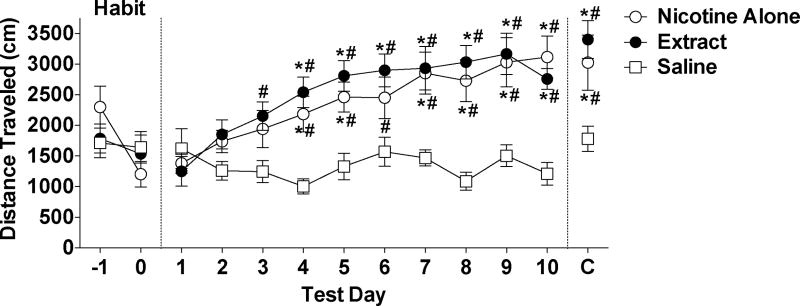
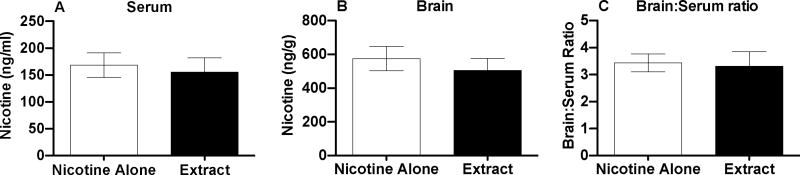
Results: Similar levels of nicotine and minor alkaloids were achieved using either artificial saliva or saline for extraction, supporting the clinical relevance of the saline extracts used in these studies. Extract produced reinforcement-enhancing (ICSS threshold-decreasing) effects similar to those of nicotine alone at low to moderate nicotine doses, but reduced reinforcement-attenuating (ICSS threshold-increasing) effects at a high nicotine dose. In rats trained to discriminate nicotine alone from saline, intermediate extract doses did not substitute for the training dose as well as nicotine alone. Locomotor stimulant effects and nicotine distribution to brain were similar following administration of extract or nicotine alone.
Conclusions: The reinforcement-attenuating and discriminative stimulus effects of nicotine delivered in an extract of a commercial smokeless tobacco product differed from those of nicotine alone. Extracts of tobacco products may be useful for evaluating the abuse liability of those products and understanding the role of non-nicotine constituents in tobacco addiction.
Conflict of interest statement
No conflicts of interest.
Figures
References
-
- Agatsuma S, Lee M, Zhu H, Chen K, Shih JC, Seif I, Hiroi N. Monoamine oxidase A knockout mice exhibit impaired nicotine preference but normal responses to novel stimuli. Hum Mol Genet. 2006;15:2721–31. - PubMed
-
- Ambrose V, Miller JH, Dickson SJ, Hampton S, Truman P, Lea RA, Fowles J. Tobacco particulate matter is more potent than nicotine at upregulating nicotinic receptors on SH-SY5Y cells. Nicotine Tob Res. 2007;9:793–9. - PubMed
-
- Bardo MT, Green TA, Crooks PA, Dwoskin LP. Nornicotine is self-administered intravenously by rats. Psychopharmacology (Berl) 1999;146:290–6. - PubMed
-
- Battig K. Differential effects of nicotine and tobacco smoke alkaloids on swimming endurance in the rat. Psychopharmacologia. 1970;18:300–4. - PubMed
-
- Bauco P, Wise RA. Potentiation of lateral hypothalamic and midline mesencephalic brain stimulation reinforcement by nicotine: examination of repeated treatment. J Pharmacol Exp Ther. 1994;271:294–301. - PubMed
Publication types
MeSH terms
Substances
Grants and funding
LinkOut - more resources
Full Text Sources
Medical
