


Mitochondrial antiviral signaling protein (MAVS) monitors commensal bacteria and induces an immune response that prevents experimental colitis
- PMID: 21960441
- PMCID: PMC3198352
- DOI: 10.1073/pnas.1107114108
Mitochondrial antiviral signaling protein (MAVS) monitors commensal bacteria and induces an immune response that prevents experimental colitis
Abstract
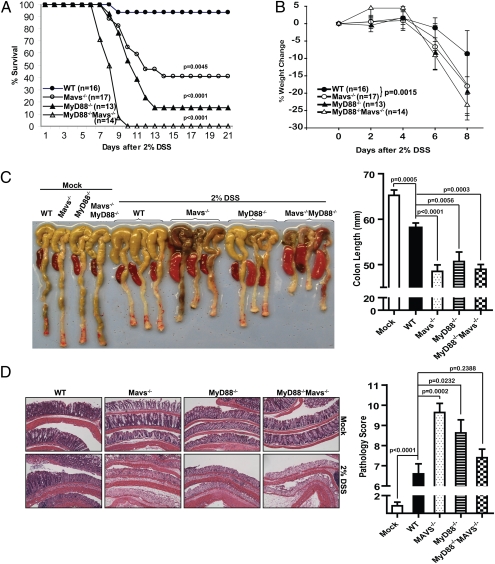
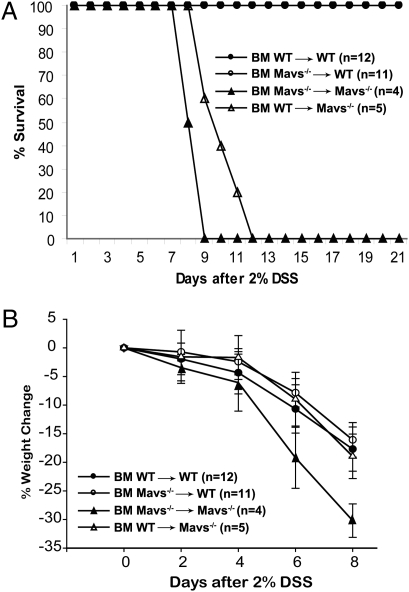
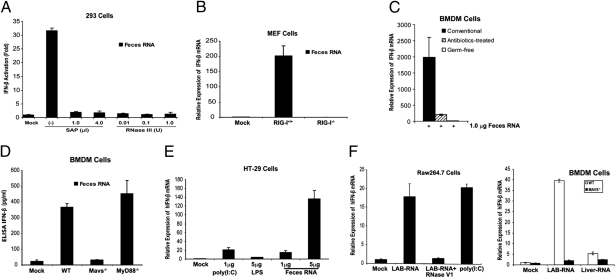
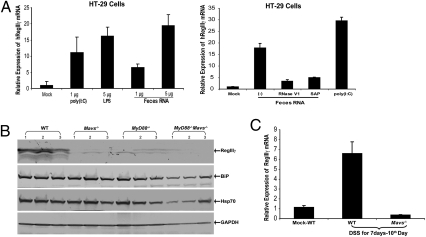
RIG-I-like receptors (RLRs) activate host innate immune responses against virus infection through recruiting the mitochondrial adaptor protein MAVS (also known as IPS1, VISA, or CARDIF). Here we show that MAVS also plays a pivotal role in maintaining intestinal homeostasis. We found that MAVS knockout mice developed more severe mortality and morbidity than WT animals in an experimental model of colitis. Bone marrow transplantation experiments revealed that MAVS in cells of nonhematopoietic origin plays a dominant role in the protection against colitis. Importantly, RNA species derived from intestinal commensal bacteria activate the RIG-I-MAVS pathway to induce the production of multiple cytokines and antimicrobial peptides, including IFN-β and RegIIIγ. These results unveil a previously unexplored role of MAVS in monitoring intestinal commensal bacteria and maintaining tissue homeostasis.
Conflict of interest statement
The authors declare no conflict of interest.
Figures

References
-
- Duerkop BA, Vaishnava S, Hooper LV. Immune responses to the microbiota at the intestinal mucosal surface. Immunity. 2009;31:368–376. - PubMed
-
- Xavier RJ, Podolsky DK. Unravelling the pathogenesis of inflammatory bowel disease. Nature. 2007;448:427–434. - PubMed
-
- Takeuchi O, Akira S. Pattern recognition receptors and inflammation. Cell. 2010;140:805–820. - PubMed
Publication types
MeSH terms
Substances
Grants and funding
LinkOut - more resources
Full Text Sources
Other Literature Sources
Molecular Biology Databases
Miscellaneous
