


The PD-1/PD-L1 (B7-H1) pathway in chronic infection-induced cytotoxic T lymphocyte exhaustion
- PMID: 21960736
- PMCID: PMC3180079
- DOI: 10.1155/2011/451694
The PD-1/PD-L1 (B7-H1) pathway in chronic infection-induced cytotoxic T lymphocyte exhaustion
Abstract
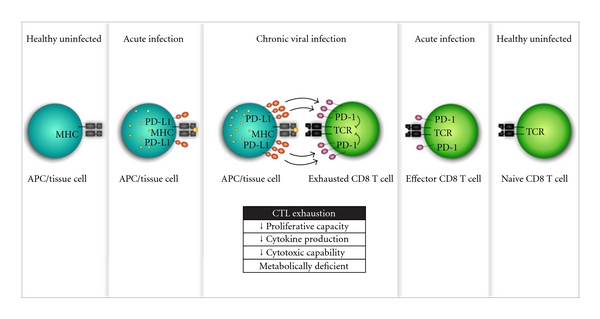
Cytotoxic CD8 T lymphocytes (CTLs) play a pivotal role in the control of infection. Activated CTLs, however, often lose effector function during chronic infection. PD-1 receptor and its ligand PD-L1 of the B7/CD28 family function as a T cell coinhibitory pathway and are emerging as major regulators converting effector CTLs into exhausted CTLs during chronic infection with human immunodeficiency virus, hepatitis B virus, hepatitis C virus, and other pathogens capable of establishing chronic infections. Importantly, blockade of the PD-1/PD-L1 pathway is able to restore functional capabilities to exhausted CTLs and early clinical trials have shown promise. Further research will reveal how chronic infection induces upregulation of PD-1 on CTLs and PD-L1 on antigen-presenting cells and other tissue cells and how the PD-1/PD-L1 interaction promotes CTLs exhaustion, which is crucial for developing effective prophylactic and therapeutic vaccination against chronic infections.
Figures
References
-
- Zang X, Allison JP. The B7 family and cancer therapy: costimulation and coinhibition. Clinical Cancer Research. 2007;13(18, part 1):5271–5279. - PubMed
-
- Agata Y, Kawasaki A, Nishimura H, et al. Expression of the PD-1 antigen on the surface of stimulated mouse T and B lymphocytes. International Immunology. 1996;8(5):765–772. - PubMed
-
- Vibhakar R, Juan G, Traganos F, Darzynkiewicz Z, Finger LR. Activation-induced expression of human programmed death-1 gene in T- lymphocytes. Experimental Cell Research. 1997;232(1):25–28. - PubMed
Publication types
MeSH terms
Substances
Grants and funding
LinkOut - more resources
Full Text Sources
Other Literature Sources
Research Materials
