


Case Reports
doi: 10.1155/2011/407523.
Epub 2011 Sep 22.
An incidentaloma: primitive neuroectodermal tumor of the thymus
Affiliations
- PMID: 21961013
- PMCID: PMC3180864
- DOI: 10.1155/2011/407523
Item in Clipboard
Case Reports
An incidentaloma: primitive neuroectodermal tumor of the thymus
Case Rep Med.
2011.
Abstract
After presenting for a routine screening exam, and 57-year-old man was diagnosed with an incidentaloma-a primitive neuroectodermal tumor (PNET) of the thymus. A member of the Ewing sarcoma family of tumors, a PNET is typically regarded as a malignancy of childhood and adolescence, usually occurring in the central nervous system. In the case at hand, our patient had an extremely unusual presentation, given his age and tumor location. Initial presentation is the only predictor for long-term survival. Current treatment recommendations advocate complete surgical resection whenever possible, radiation therapy, and adjuvant versus neoadjuvant chemotherapy.
Figures
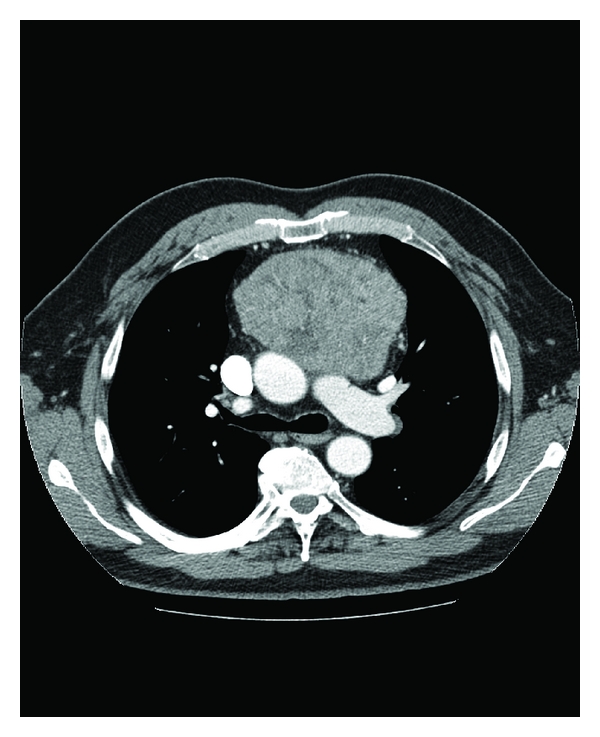
CT scan of the chest revealing a large heterogenous mass in the anterior mediastinum.
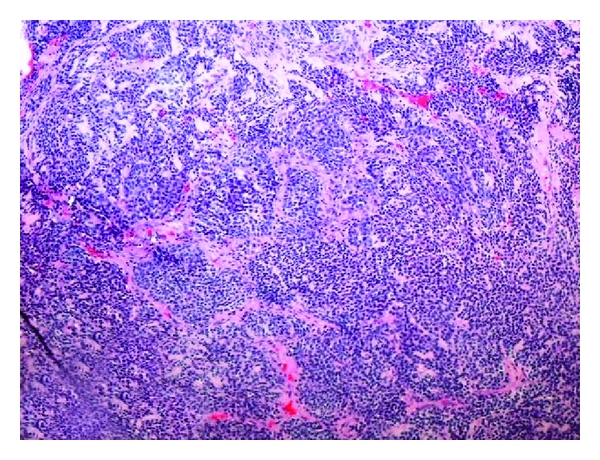
Pathology slide revealing a CD99+ poorly differentiated trabecular neoplasm consistent with a neuroendocrine tumor.
References
-
- Schweigert M, Meyer C, Wolff F, Stein HJ. Peripheral primitive neuroectodermal tumor of the thymus. Interactive CardioVascular and Thoracic Surgery. 2010;12(2):303–305. - PubMed
-
- Scurr M, Judson I. How to treat the Ewing’s family of sarcomas in adult patients. Oncologist. 2006;11(1):65–72. - PubMed
-
- Luo W, Xiao EH. CT, MRI and pathologic features of peripheral primitive neuroectodermal tumors: a report of eight cases with literature review. Ai Zheng. 2008;27(6):627–632. - PubMed
-
- Winer-Muram HT, Kauffman WM, Gronemeyer SA, Jennings SG. Primitive neuroectodermal tumors of the chest wall (Askin tumors): CT and MR findings. American Journal of Roentgenology. 1993;161(2):265–268. - PubMed
-
- Martin RC, Brennan MF. Adult soft tissue ewing sarcoma or primitive neuroectodermal tumors: predictors of survival? Archives of Surgery. 2003;138(3):281–285. - PubMed
Publication types
LinkOut - more resources
Full Text Sources
